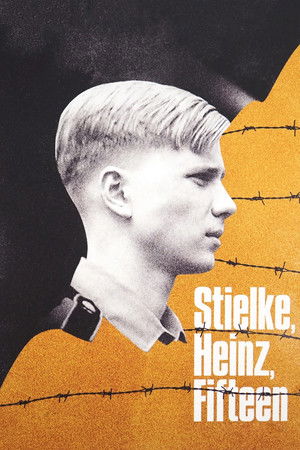
A group of German boys are ordered to protect a small bridge in their home village during the waning months of the second world war. Truckloads of defeated, cynical Wehrmacht soldiers flee the approaching American troops, but the boys, full of enthusiasm for the "blood and honor" Nazi ideology, stay to defend the useless bridge. The film is based on a West German anti-war novel of the same name, written by Gregor Dorfmeister.
A Jewish woman named Jettel Redlich flees Nazi Germany with her daughter Regina, to join her husband, Walter, on a farm in Kenya. At first, Jettel refuses to adjust to her new circumstances, bringing with her a set of china dishes and an evening gown. While Regina adapts readily to this new world, forming a strong bond with her father's cook, an African named Owuor.
What would your family reminiscences about dad sound like if he had been an early supporter of Hitler’s, a leader of the notorious SA and the Third Reich’s minister in charge of Slovakia, including its Final Solution? Executed as a war criminal in 1947, Hanns Ludin left behind a grieving widow and six young children, the youngest of whom became a filmmaker. It's a fascinating, maddening, sometimes even humorous look at what the director calls "a typical German story." (Film Forum)
A Russian village struggles through the German occupation during World War II in this tense drama from the Soviet Union. As the town doctor finds his home has been taken by German troops, his daughter becomes involved in the anti-Axis resistance, and his son -- confined to a mental hospital -- escapes to fight the invading armies.
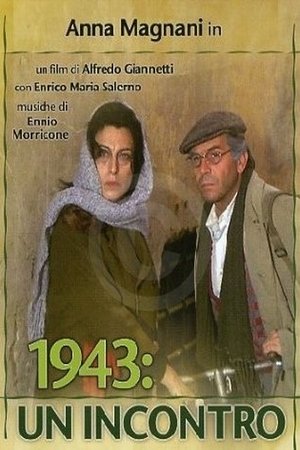
Russian front, January, 1943. It's hell: the flurries of sleet take the breath away and Sergeant Bisi can make out nothing in the landscape in front of him.
The story of Hitler’s final hours told by people who were there. This special features exclusive forgotten interviews, believed lost for 65 years, with members of Hitler’s inner circle who were trapped with him in his bunker as the Russians fought to take Berlin. These unique interviews from figures such as the leader of the Hitler Youth Artur Axmann and Hitler’s secretary Traudl Junge, have never before been seen outside Germany. Using rarely seen archive footage and dramatic reconstruction, this special tells the story of Adolf Hitler’s final days in his Berlin bunker.
Orphaned after a Nazi air raid, Paulette, a young Parisian girl, runs into Michel, an older peasant boy, and the two quickly become close. Together, they try to make sense of the chaotic and crumbling world around them, attempting to cope with death as they create a burial ground for Paulette's deceased pet dog. Eventually, however, Paulette's stay with Michel's family is threatened by the harsh realities of wartime.
Four corrupted fascist libertines round up 9 teenage boys and girls and subject them to 120 days of sadistic physical, mental and sexual torture.
After the Germans flooded large parts of The Netherlands towards the end of WWII, the Brouwer family find themselves trapped in their attic surrounded by water. With their rations dwindling, tensions arise within the household.
Just 80 years ago, the peaceful sea was a battlefield. Soldiers continued to fight, dreaming of returning home, and their families continued to pray and wait for their safety. What stories were there in each of their lives, and what were they each thinking?
The story of a resistance fighter in the Nazi era: Communist Hans Löning was arrested in 1933, imprisoned in a concentration camp and tortured. The Gestapo plans to smash the resistance group around Löning. Despite the imminent threat to his life, Löning, together with his wife, organized the passive resistance of the Hamburg workers against the Hitler regime. In 1944, Löning was again taken and killed.
The movie tells the story of Franz, a Waffen-SS soldier who deserts, and Polina, a Belarusian woman whose village is razed and people massacred.
Le Temps des assassins
A bitter battle is fought between Australian and Japanese soldiers along the Kokoda trail in New Guinea during World War II.
Filmed in 1962 but not released in the US until 1966 (with 20 of its 108 minutes removed), Conquered City is an all-star World War II drama financed in Italy and filmed in Greece. An Athens hotel, full of refugees and expatriates of all nationalities, is captured by Allied troops in the closing days of the War. British Major David Niven has been ordered to prevent a cache of weapons hidden in the hotel from falling into the hands of renegade troops. He cannot allow himself to trust anyone--not even the most innocent-looking (or attractive) of guests. Originally titled La Citta Prigioniera. Conquered City was released in English-speaking countries outside the U.S. as Captive City.
Who knows Berthold Beitz? Fewer and fewer people. He shaped the history of Germany like no other, be it as the leading industrial manager of Krupp or as the rescuer of numerous Jews during National Socialism.
Young Tom and his misfit friends fight to save 'Buster' the baby elephant during the German air raid bombings of Belfast in 1941.
The plot of the film tells about the events of the war era, where the stories of ordinary people are intertwined. The characters were Stalin, Hitler, Churchill, Hess, Ribbentrop, Molotov and Uzbek heroes. The film shows the role of government leaders in the country's domestic and foreign policy, and how their decisions affected the fate of ordinary people.
Rommel, chef de guerre
A wartime short encouraging workers to join free, government-organised engineering training schemes.