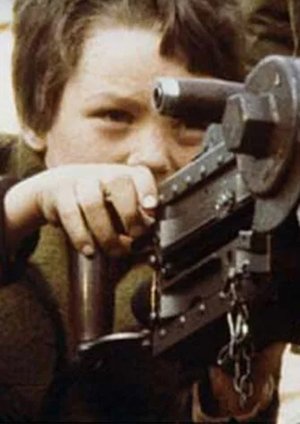
In 1937, eight hundred Chinese soldiers fight under siege from a warehouse in the middle of the Shanghai battlefield, completely surrounded by the Japanese army.
An experimental documentary that explores Saudi Arabia's relationship with the U.S. and the role this has played in the war in Afghanistan.
Stompin' Tom performs live at the Horseshoe Tavern on Queen St. in Toronto.
This feature documentary offers a behind-the-scenes look at political decision-making in Ontario, the most populated Canadian province. A candid study of Ontario Premier Bill Davis and his Cabinet profiles the political process—a daily round of committee meetings, budget tabling, and media relations initiatives. Born into a political dynasty, Davis has the power and resources of the “big blue machine” behind him as he initiates political manoeuvres that tackle everything from unemployment to provincial-federal relations. The film reveals key aspects of Davis's political philosophy, one that kept the Conservatives in power in Ontario for 36 consecutive years.
Filmed in 1987, this documentary chronicles the journey of Via Rail's The Canadian as it makes its way across Canada.
In the autumn of 2014, in the ATO zone, an intelligence group headed by experienced captain Anton Saienko (called by nickname "Banderas") tries to prevent sabotage and neutralize the Russian saboteur.
The story of the sinking of the Lusitania in 1915 after she was torpedoed off the Irish coast. The story is told from the perspective of Prof. Holbourn (a passenger), the German U-boat and its captain and crew, and other passengers, crew and Admiralty staff
Achtung Kinder Pumm
Lonely young Lord Billy, who misses his dear departed mother, has nothing to do but lounge about the castle all day while his father, the Earl, attends to important affairs of state – until the noble lad joins the Army Cadets. Rising through the ranks to become the Lance Corporal of his squad, patrolling undefended points along the English coast, he's soon on the trail of German marauders.
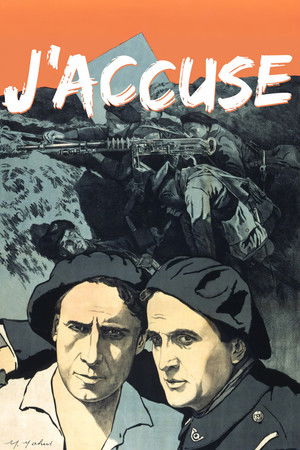
The story of two men, one married, the other the lover of the other's wife, who meet in the trenches of the First World War, and how their tale becomes a microcosm for the horrors of war.
14 September 1943: The legendary submarine Y1 “Katsonis” was sunk north of the island of Skiathos by the German submarine chaser UJ 2101. Through the book of XO Elias Tsoukalas who escaped capture and had to swim for nine hours to reach shore, secret documents, and crew members’ diaries, the documentary unfolds the human stories woven around the submarine. Seventy-five years later, with the support of the Hellenic Navy, we search for the submarine sunk at 253 metres depth and film the wreck for the very first time.
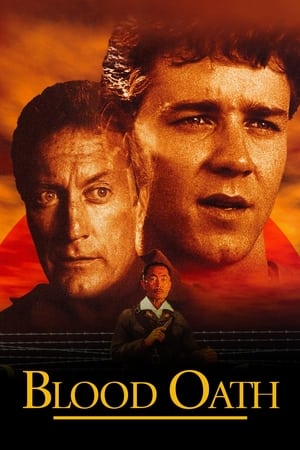
On an obscure Pacific Island just north of Australia, the Japanese Empire has operated a prisoner of war camp for Australian soldiers. At the close of World War II, the liberated POWs tell a gruesome tale of mass executions of over eight hundred persons as well as torture style killings of downed Australian airmen. In an attempt to bring those responsible to justice, the Australian Army establishes a War Crimes Tribunal to pass judgement on the Japanese men and officers who ran the Ambon camp. In an added twist, a high ranking Japanese admiral is implicated, and politics become involoved with justice as American authorities in Japan lobby for the Admiral's release. Written by Anthony Hughes
The sinking of the German fleet interned at Scapa-Flow (Orkney Islands), June 21, 1919. We know that one of the stipulations of the armistice signed with Germany on November 11, 1918 was that that power's surface warships were to be "immediately decommissioned and interned in neutral or Allied ports, and remain there under the supervision of the Allies and the United States, guard detachments only being maintained on board". In fact, all the ships designated by the Allies - 11 battleships, 5 battlecruisers, 7 light cruisers and 50 destroyers - had, a few days after the armistice, been assembled in Scapa-Flow Bay, in the center of the Orkney archipelago, i.e. north of Scotland, and had remained there ever since, under the supervision of the English naval authorities, but under the effective authority of German Admiral von Reuter.
Mamuk Meshkanat
Lii Michif Niiyanaan: We Are Métis is a documentary that addresses the invisibility of the Metis by shining a new light on the historical and contemporary experience of Métis people in Canada and providing a space for Métis people to share their diverse perspectives on what it means to be Métis today.
This documentary from Min Sook Lee follows a poverty-stricken father from Central Mexico, along with several of his countrymen, as they make their annual migration to southern Ontario to pick tomatoes. For 8 months a year, the town's population absorbs 4,000 migrant workers who toil under conditions, and for wages, that no local would accept. Yet despite a fear of repercussions, the workers voice their desire for dignity and respect.
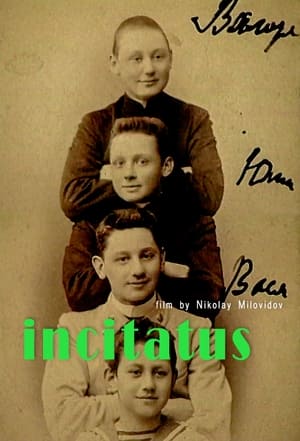
The film features the wonderful poet of the early 20th century, Count Vasily Komarovsky. The poets Nikolai Gumilyov, Anna Akhmatova and Osip Mandelstam, among other celebrities, were not only his acquaintances but he had a considerable influence on their work. The poet’s extraordinary life gave birth to legends, whose plausibility will also be dwelt upon. Komarovsky’s niece will share her recollections with the viewer. The film is based on unique documents previously unknown to Russian and foreign scholars.
A sharecropper and his daughter, a swarthy beauty, flee from the hacienda on which they live and join the Mexican Revolution.
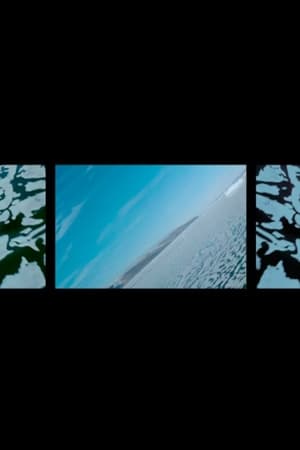
Polar Life’s novelty was its theatre, with the audience seated on a central rotating turntable in the middle of eleven fixed screens. Viewers have described the intricate juxtaposition of screen images and narration and the complex relationship created between moving spectators and multiple screens. Documentation images and scripts of the bilingual narration by Lise Payette and Patrick Watson show elaborate temporal and spatial representations of the Arctic and Antarctic regions: the Inuit in daily activities in the Canadian North; other northern peoples of Alaska, Lapland, and Siberia; and settlers from the South, scientists, explorers, and other inhabitants of the landscape, including reindeer, bears, and birds. Archival film footage of early northern explorers, combined with newly shot documentary footage, was edited across the various screens to create spatial relationships that are sometimes coherent, sometimes fragmented.
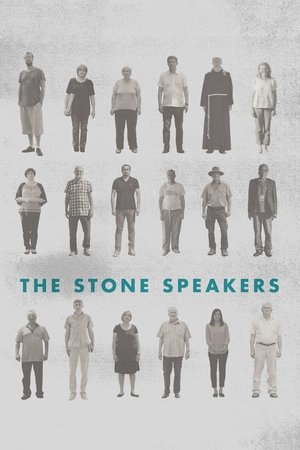
In present-day Bosnia and Herzegovina, economically depressed towns turn themselves into tourist destinations in order to survive—deliberately forming their own cultural narratives. Centering on four different locations, The Stone Speakers interrogates a nation’s contradictory memories. Made with subtlety and tactful distance, director Igor Drljaca’s film reveals the traumatic consequences of being a country that is stuck in a postwar identity crisis.