When adults are ineffectual, children have to grow up quickly. Ola is 14 and she takes care of her dysfunctional father, autistic brother and a mother who lives apart from them and is mainly heard the phone. Most of all she wants to reunite a family that simply doesn’t work — like a defective TV set. She lives in the hope of bringing her mother back home. Her 13 year old brother Nikodem’s Holy Communion is a pretext for the family to meet up. Ola is entirely responsible for preparing the perfect family celebration. “Communion” reveals the beauty of the rejected, the strength of the weak and the need for change when change seems impossible. This crash course in growing up teaches us that failure is not final. Especially when love is in question.
Junha is one of the most difficult children at the school. His autism causes him to attack his classmates and even teachers without warning. Each outburst further isolates Junha from his community as his teachers and peers struggle to find a way to live "with" Junha. The camera provides an intimate look into this society, leaving the question; what is human entity and how is it connected?
Following young Anders and his father, Dr. Grant Bruno, of the Samson Cree Nation, this documentary gives viewers unique access to the world of an autistic child, and to follow his father’s journey to bring back traditional First Peoples perspectives in our contemporary world.
In 'Wretches & Jabberers and Stories from the Road', two men with autism embark on a global quest to change prevailing attitudes about disability and intelligence. With limited speech, Tracy Thresher, 42, and Larry Bissonnette, 52, both faced lives of mute isolation in mental institutions or adult disability centers. When they learned as adults to communicate by typing, their lives changed dramatically. Their world tour message is that the same possibility exists for others like themselves. At each stop, they dissect public attitudes about autism and issue a hopeful challenge to reconsider competency and the future. Along the way, they reunite with old friends from the USA, expand the isolated world of a talented young painter and make new allies in their cause.
From the creators of You Can Heal Your Life: The Movie comes a compelling portrait of three modern lives in need of new direction and new meaning. In his first-ever movie, Wayne Dyer explores the spiritual journey in the second half of life when we long to find the purpose that is our unique contribution to the world. The powerful shift from the ego constructs we are taught early in life by parents and society—which promote an emphasis on achievement and accumulation—are shown in contrast to a life of meaning, focused on serving and giving back. Filmed on coastal California’s spectacular Monterey Peninsula, The Shift captures every person’s mid-life longing for a more purposeful, soul-directed life.
When filmmaker Yoshifumi Tsubota learns about his slightly autistic uncle who lives alone, he decides to visit him. Drawn to his uncle’s unique personality, he begins to roll his camera as he visits him over the years. Tsubota himself had been diagnosed with a developmental disability and so understanding his uncle is also an act of understanding himself. Through intimate and personal footage, this charming film is gem of a documentary that also highlights contemporary social issues surrounding aging and social care for the disabled.
For the past 20 years, the world has seen an alarming decrease in IQ and a rise of autism and behavioral disorders. This international scientific investigation reveals how chemicals in objects surrounding us affect our brain, and especially those of fetuses.
Upon learning of his father's terminal illness diagnosis, a young, autistic, hearing-impaired artist travels back to Taiwan with a filmmaker to make a film in his honour.
Based on the book by Naoki Higashida, filmmaker Jerry Rothwell examines the lives of five non-speaking, autistic youngsters.
In Columbus, Ohio, a group of autistic teenagers and young adults role-play this transition by going through the deceptively complex social interactions of preparing for a spring formal. Focusing on several young women as they go through an iconic American rite of passage, we are given intimate access to people who are often unable to share their experiences with others. With humor and heartbreak, How to Dance in Ohio shows the daily courage of people facing their fears and opening themselves to the pain, worry, and joy of the social world.
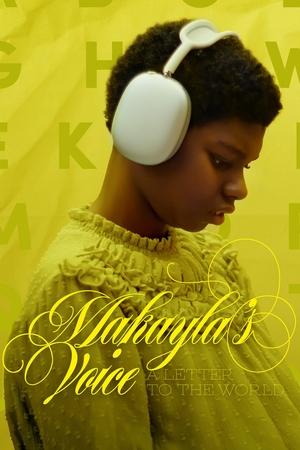
A teen with autism unlocks a joyous world of self-expression as she shares her voice for the first time using a letter board.
Au cœur du Papotin
An exploration of the powers of the human mind and how hypnosis could hold the key to unlocking them.
Robert Rooy's documentary follows DJ Savarese ("Deej"), a nonspeaking autistic writer and poet. The film explores his difficult early life, his quest for an education, and his advocacy for other nonspeaking autistics.
10-year-old Austin Eletto has autism. He’s also an aspiring stand-up comic. This short documentary spotlights the struggle of growing up with labels, and how Austin uses comedy to embrace and overcome them. Through the intimate story of Austin as he faces adversity and hardships, our audience will be thoroughly connected to his childhood experience, making the inevitable laughs bigger and more inspired.
The Hugo's Brain is a French documentary-drama about autism. The documentary crosses authentic autistic stories with a fiction story about the life of an autistic (Hugo), from childhood to adulthood, portraying his difficulties and his handicap.
Filmmaker Michel Orion Scott captures a magical journey into a little-known world, in a documentary which chronicles Rupert Isaacson and Kristin Neff's personal odyssey to make sense of their child's autism, and find healing for him and themselves in the unlikeliest of places.
A group of educators led by Fernand Deligny are working to create contact with autistic children in a hamlet of the Cevennes.
For 18-year-old Finnish–Kosovan Fatu, a simple visit to the grocery store feels as nerve-racking as a lunar expedition: for the first time in his life, he’s wearing makeup in public. Luckily his best friend Rai, a young woman on the spectrum of autism, is there to ferociously support him through the voyage.
Through unique artistic approach, the director reveals the world of autism - bringing the audience closer to the main characters - talented and creative children with a fascinating way of thinking.