El rey y la reina
In this propaganda film intended to raise money for republicans fighting in the Spanish Civil War, Henri Cartier-Bresson first presents the achievements of the Spanish Republic in the field of public health. He then shows how members of the public and organizations across the world were supporting the fighters.
Anxo returns to his home village in the Galician countryside. There, he is greeted with concern by the victorious and the defeated, who see in him the danger of diving back into their silenced memories.
Hans, a German director, is in Madrid to film a television production about the capital and the Civil War, 50 years after it occurred. Accompanied by Lucía, his editor, and Goyo, his cinematographer, he films shots of the modern city, searching for spaces and people related to its past. At the same time, he views materials related to the past. In this search, Hans questions the point of his project, and disagrees with his producers until he discovers a project that he is passionate about.
In post–civil war Spain, 10-year-old Ofelia moves with her pregnant mother to live under the control of her cruel stepfather. Drawn into a mysterious labyrinth, she meets a faun who reveals that she may be a lost princess from an underground kingdom. To return to her true father, she must complete a series of surreal and perilous tasks that blur the line between reality and fantasy.
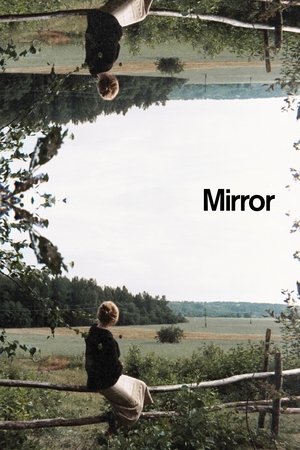
A dying man in his forties recalls his childhood, his mother, the war and personal moments that tell of and juxtapose pivotal moments in Soviet history with daily life.
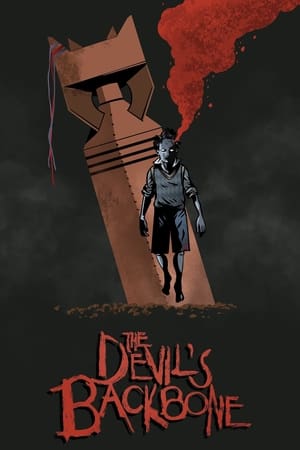
Spain, 1939. In the last days of the Spanish Civil War, the young Carlos arrives at the Santa Lucía orphanage, where he will make friends and enemies as he follows the quiet footsteps of a mysterious presence eager for revenge.
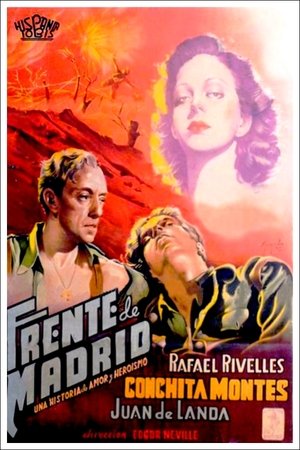
Manuela is left behind when her husband Justo fights for his ideals against Franco's Nationalists during the Spanish Civil War. He is deported to a concentration camp, and upon his release, continues the fight against nationalism in the French resistance. Years pass without a word from him, but his wife never gives up hope of seeing him again.
The theatre as a courtroom, the courtroom as a theatre. Alejo Moguillansky’s film draws loosely on Raúl Quirós Molina’s El pan y la sal (The Bread and the Salt), a 2015 verbatim theatre piece compiled from the testimonies provided during the 2012 trial of Judge Baltasar Garzon, for investigating the forced disappearances of the Spanish Civil War and the Franco regime. Juxtaposing the testimonies of the relatives of those who lost loved ones with references to Argentina’s and Chile’s recent dictatorships, this film explores issues around international law and forced disappearance - tracing a line between Francisco Franco, Augusto Pinochet and Jorge Videla’s Military Junta: Garzón has investigated Argentine torturers and criminal perpetrators and had Pinochet arrested in London in 1998 for crimes against humanity.
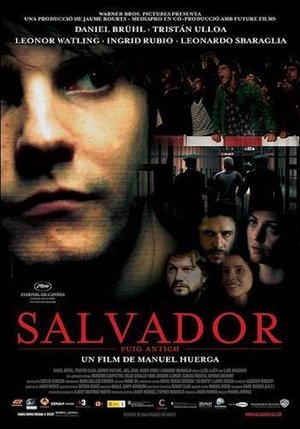
The story of Salvador Puig Antich, one of the last political prisoners to be executed under Franco's Fascist State in 1974.
Bela Frankl, a young Hungarian, is taken prisoner by Russia during the First World War, defects to the side of the revolution and some time later, under the pseudonym Mate Zalka, becomes a famous Soviet writer. In 1936, having arrived as a volunteer in Spain, he becomes General Lukacs, forms the 12th International Brigade of non-professional fighters and takes the first heavy battles with Franco's cadre formations...
In 1940, in the immediate aftermath of the Spanish Civil War, a young girl living on the Castilian plain is haunted after attending a screening of James Whale's 1931 film Frankenstein and hearing from her sister that the monster is not dead, instead existing as a spirit inhabiting a nearby barn.
On his way from Madrid to Paris, Diego, a chief of the Spanish Communist Party, is arrested at the border for an ID check but manages to flee. When he arrives in Paris, he searches for one of his comrades to prevent him from going to Madrid where he could be arrested.
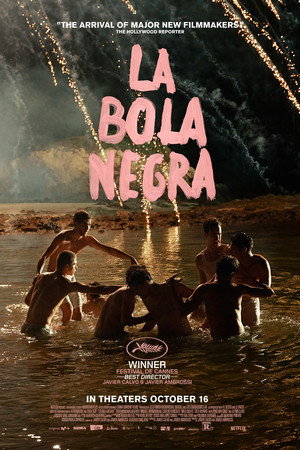
When, in a very strict Catholic school, a teacher enters a bathroom and surprises two students engaged in forbidden sexual practices, some of their classmates do not know whether to remain silent or rat out their own friends when questioned by school authorities.
Los ojos perdidos
At the end of the Spanish civil war, Fando, a boy of about ten, tries to make sense of war and his father's arrest. His mother is religious, sympathetic to the Fascists; his father is accused of being a Red. Fando discovers that his mother may have aided in his father's arrest. Sometimes we witness Fando imagining explanations for what's going on; sometimes we see him at play, alone or with his friend Thérèse. Oedipal fantasies and a lad's natural curiosity about sex and death mix with his search for his mother's nature and his father's fate. Will Fando survive the search?
Gilda Bessé shares her Paris apartment with an Irish schoolteacher, Guy Malyon, and Mia, a refugee from Spain. As the world drifts toward war, Gilda defiantly pursues her hedonistic lifestyle and her burgeoning career as a photographer. But Guy and Mia feel impelled to join the fight against fascism, and the three friends are separated.
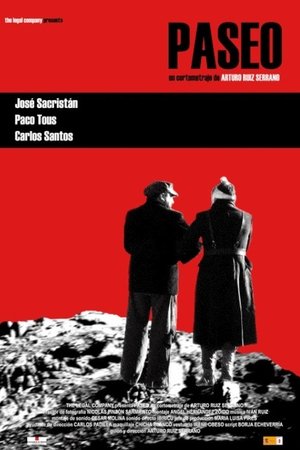
Paseo
Spain, March 1939. The war is dying down. At the Port of Alicante thousands of people are piling, waiting for the arrival of ships that will carry them to exile. Moored, the freighter Stanbrook is witnessing the desperation.
The sailor Quico Carola, alleged war hero of the Francoist side, emigrated to America and amassed a great fortune. Fifteen years later he returns to Ferrera (Asturias), his homeland, in search of a wife who makes him forget his late girlfriend. There he will see his old friends and Armandina, the widow of a Republican shot during the Spanish civil war.