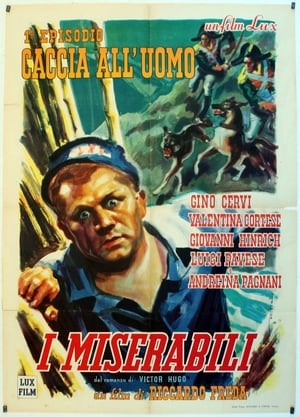
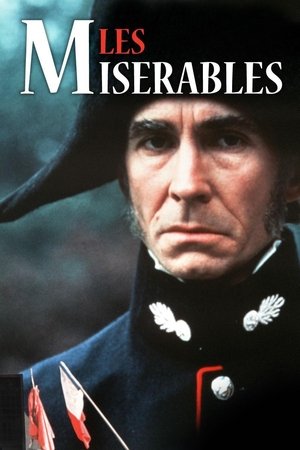
Set against the conditions leading up to the French Revolution and the Reign of Terror, French doctor Alexandre Manette serves an 18-year imprisonment in the Bastille in Paris, followed by his release to live in London with the daughter he has never met.
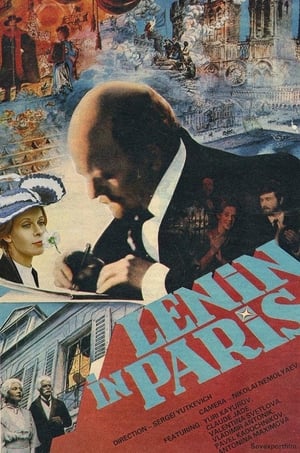
1911. Lenin organizes the first Bolshevik party school near Paris, in the small town of Longjumeau. Through a chain of historical parallels and associations, this time is intertwined with the events of the Paris Commune, the October Revolution and the political struggles of the post-revolutionary years.
La Passion de Camille et Lucile Desmoulins
After serving as an embassy secretary in London at the end of 1787, a position he didn't exactly enjoy, the poet André Chénier returns to Paris. When the Revolution breaks out, he becomes enthusiastic about it, and never ceases to express his love of liberty and high principles. But he also speaks out against excesses and troublemakers. For her part, the beautiful Aimée de Coigny, who has just divorced the Duc de Fleury, leads a dissolute life. In 1793, the Convention decides to put "the Terror on the agenda". Aimée de Coigny and her new lover, Casimir de Montrond, are arrested. At the Saint-Lazare prison, their life together is preserved. Six months later, Chénier is arrested and imprisoned. Dazzled by the young woman's beauty, the poet dedicates his most beautiful verses to her. But Aimée remains unmoved by his love.
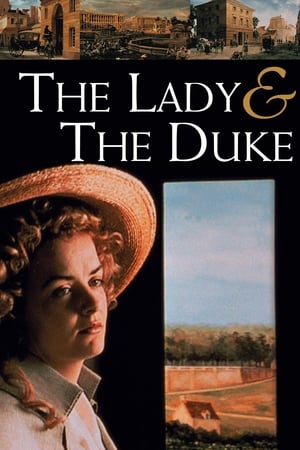
Grace Dalrymple Elliot is a British aristocrat trapped in Paris during the French Revolution. Determined to maintain her stiff upper lip and pampered life despite the upheaval, Grace continues her friendship with the Duke of Orléans while risking her life and liberty to protect a fugitive.
Twenty Four year-old Corsican refugee Napoleon Bonaparte is a lowly artillery captain in the French army at the siege of Toulon. Destitute and relying on his success in the new and dangerous revolutionary society, his mother and siblings become embroiled in Napoleon's struggle. The opponents are the English but the enemy are the revolutionaries authorities who seek to keep him in his place. Using his astonishing tactical mind, his sheer audacity and extraordinary military bravery, Napoleon emerges victorious and sets out on a path that would one day lead him to the throne of France.
“In a world that often demands certainty, Dialogues des Carmélites invites us to sit with profound questions that have no easy answers: What makes a life worthy? How can we be truly prepared for our inevitable end? What does security mean when everything familiar is threatened? What sustains us when our institutions crumble? … Rather than imposing answers, the opera creates room for reflection on how faith manifests not as abstract doctrine, but as lived experience under extraordinary pressure.” — Louisa Muller, Director’s Note. Juilliard Opera directed by Louisa Muller. Matthew Aucoin conducts the Juilliard Orchestra. Performed and recorded on April 26, 2025 at the Peter Jay Sharp Theater. Dialogues des Carmélites, an opera by Francis Poulenc. Libretto adapted by the composer.
The French Revolution, 1794. The Marquis de Lafayette asks Charles D'Aubigny to infiltrate the Jacobin Party to overthrow Maximilian Robespierre, who, after gaining supreme power and establishing a reign of terror ruled by death, now intends to become the dictator of France.
Oscar François de Jarjayes was born female, but her father insisted she be raised as a boy as he had no sons. She becomes the captain of the guards at Versailles under King Louis XVI and Marie Antonette. Her privileged, noble life comes under fire as she discovers the hard life of the poor people of France. She is caught up in the French Revolution, and must choose between her loyalty and love.
France, on the eve of the French Revolution. Henriette and Louise have been raised together as sisters. When the plague that takes their parents' lives causes Louise's blindness, they decide to travel to Paris in search of a cure, but they separate when a lustful aristocrat crosses their path.
A biopic of Napoleon Bonaparte, tracing the Corsican's career from his schooldays (where a snowball fight is staged like a military campaign) to his flight from Corsica, through the French Revolution (where a real storm is intercut with a political storm) and the Terror, culminating in his triumphant invasion of Italy in 1797.
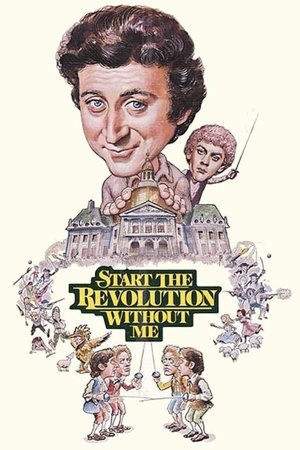
Two sets of identical twins are accidentally switched at birth. One pair, Phillipe and Pierre DeSisi, are aristocratic and haughty, while the other, Charles and Claude Coupé, are poor and dim-witted. On the eve of the French Revolution, both sets find themselves entangled in palace intrigue.
The time is the French Revolution; the place is the village of Travers, ensconsed in neutral Switzerland. Prussian aesthete Herman Beyer is on the verge of divorcing wife Corinna Harfouch. Radical writer Uwe Kokisch, Corinna's lover, hopes to find a way of smoothing out animosities. What follows, however, is a nonstop drinking binge. The film subliminally addresses the then-prevalent issue of a divided Germany. Whether or not it succeeds is unimportant; Treffen in Travers (Reunion in Travers) has proven to be a crowd pleaser wherever it has been shown.
During the French Revolution, a surprising company shares a coach, trying to catch up something - the time itself, perhaps.
Madame Sans-Gène
Montage of still photos with lighting effects.
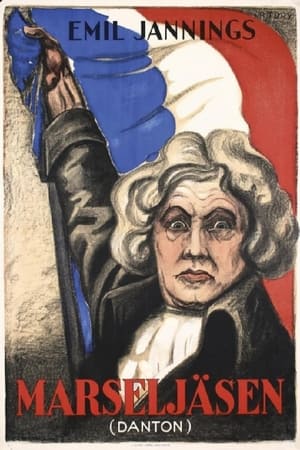
Danton and Robespierre were close friends and fought together in the French Revolution, but by 1793 Robespierre was France's ruler, determined to wipe out opposition with a series of mass executions that became known as the Reign of Terror. Danton, well known as a spokesman of the people, had been living in relative solitude in the French countryside, but he returned to Paris to challenge Robespierre's violent rule and call for the people to demand their rights. Robespierre, however, could not accept such a challenge, even from a friend and colleague, and he blocked out a plan for the capture and execution of Danton and his allies.
At the height of Reign of Terror Maximilien Robespierre orchestrates the trial and execution of several of his fellow leading French revolutionaries including Georges Danton.
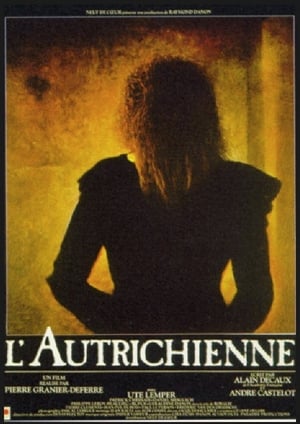
A woman is detained at La Conciergerie. She's 37 but her hair are already white. She's suffering from terrible haemorraghe. Her name is Marie-Antoinette of Lorraine, from Austria, and she's living her last four days.
A history of the French Revolution beginning from the decision of the king to convene the Etats-Generaux in 1789 in order to deal with France's debt problem. Part one spans the event until August 10, 1792 (when the King Louis XVI lost all authority and was imprisoned). Part two carries the story through the end of the terror in 1794.