Seven Women, Seven Sins (1986) represents a quintessential moment in film history. The women filmmakers invited to direct for the seven sins were amongst the world's most renown: Helke Sander (Gluttony), Bette Gordon (Greed), Maxi Cohen (Anger), Chantal Akerman (Sloth), Valie Export (Lust), Laurence Gavron (Envy), and Ulrike Ottinger (Pride). Each filmmaker had the liberty of choosing a sin to interpret as they wished. The final film reflected this diversity, including traditional narrative fiction, experimental video, a musical, a radical documentary, and was delivered in multiple formats from 16, super 16, video and 35mm.
A strange but beautiful young woman washed ashore on an island becomes the desire of all men. Her presence causes jealousy, intrigue, and a series of deaths in the town.
Luise, called Pünktchen, and Anton are closest of friends. Being the daughter of a wealthy surgeon, young Pünktchen lives in a great house. Her mother, who always travels through the world more for public relation reasons than for the social tasks she pretends to fulfill, is never available to her as a mother. Anton, son of a single and sick mother in financial trouble, does his best to help her out of it by working late. Pünktchen decides to help her only friend (as nobody else would anyway) and starts singing in public places. Trouble arises when Anton can't resist stealing a golden lighter and Pünktchen's secret life is discovered by her parents. Two troubled families finally can see the need for actions to be taken.
Mifti is a teenager as beautiful as she is reckless. Mentally unstable, fed up with her dysfunctional family, oblivious to the youthful world, and aware of the sexual magnetism she gives off with her peculiar appearance, she wanders through the dark path of several bohemian adults with questionable lifestyles.
A journalist investigates a woman with the name of China Doll. Soon, he discovers his knowledge of her turns out to be dangerous.
It ain't easy bein' green -- especially if you're a likable (albeit smelly) ogre named Shrek. On a mission to retrieve a gorgeous princess from the clutches of a fire-breathing dragon, Shrek teams up with an unlikely compatriot -- a wisecracking donkey.
After World War II, Antonia and her daughter, Danielle, go back to their Dutch hometown, where Antonia's late mother has bestowed a small farm upon her. There, Antonia settles down and joins a tightly-knit but unusual community. Those around her include quirky friend Crooked Finger, would-be suitor Bas and, eventually for Antonia, a granddaughter and great-granddaughter who help create a strong family of empowered women.
The episodically connected lives of four college friends unfold throughout the incipient martial law years, as they struggle to define their sexual and professional desires and how best to attain them.
In a time in the Philippines when the concept of divorce does not exist, a young woman has an affair with a married man. Eventually, they move in together, and that is when the problems start.
It is a supernatural melodrama of a woman's misfortune and suffering interwoven with the legend of the Pasig. The legend itself is inspired by the immortal kundiman of the director's brother, Nicanor Abelardo.
Faced with Philippine President Rodrigo Duterte’s bloody murders and brazen lies, ethically conflicted police lieutenant Hermes Papauran continues his struggle to find a resolution to a 15-year-old case around a volcanic ash-laden landscape and an impenetrable lake.
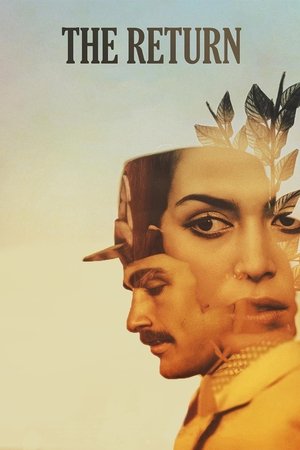
After ten years abroad, Catherine returns to Luxembourg, to catch up with her daughter Alba, brought up by Catherine’s mother Elisabeth. Alba is cold and distant with this stranger showing up unexpectedly in her life, so is Elisabeth, keen to keep her protégée to herself. One day, Catherine cannot take it anymore. She kidnaps Alba and takes her on a trip to a lake up North. Begins an unsettling journey into the puzzling world of motherly love, only to find out that sometimes the true opponent is yourself.
Meis is fifteen, lives in the back of beyond and aspires to a grand and stirring life, but all that happens is the passing of the time, waiting for the next car to run into the front of the house.
Two filmmakers try to create a film venturing on the life of Jose Rizal. Before they do that, they try to investigate on the heroism of the Philippine national hero. Of particular focus is his supposed retraction of his views against the Roman Catholic Church during the Spanish regime in the Philippines which he expressed primarily through his two novels Noli Me Tangere and El Filibusterismo. The investigation was done mainly by "interviewing" key individuals in the life of Rizal such as his mother Teodora Alonso, his siblings Paciano, Trinidad, and Narcisa, his love interest and supposed wife Josephine Bracken, and the Jesuit priest who supposedly witnessed Rizal's retraction, Fr. Balaguer. Eventually, the two filmmakers would end up "interviewing" Rizal himself to get to the bottom of the issue.
A contemporary story of love, rejection, and triumph as a young Māori girl fights to fulfill a destiny her grandfather refuses to recognize.
After the death of his mother, a young boy calls a radio station in an attempt to set his father up on a date. Across the country, an engaged woman becomes convinced that they belong together, despite their never having met. Will their paths collide despite the odds?
On Christmas Day, 15 year old David finds out that his boyfriend, Jonathan has taken another lover. The discovery leads him on the brink of depression making him think of ways to have him back at all cost. He has invited Jonathan to see him on this day for the last time.
Since they were both five, Ryosuke has been stalked by Momoko - the ugliest girl in the village. Her love for Ryosuke is so boundless that she has her face surgically altered to suit his taste - but still he wants nothing to do with her. Ryosuke goes in for fleeting romance - for example, with the girlfriend of a gangster boss. But when he finds out about their affair, he has Ryosuke's little finger hacked off. Magically, the finger falls into Momoko's hands, and she uses it to clone Ryosuke, so she can finally have him (or almost him) for herself. And this is just the first five minutes of Lisa Takeba's short-but-powerful feature debut. Just like in her previous short films, the director - who cut her teeth in the advertising world and as the writer of a video game - throws a lot of genres and techniques into the mix: from science fiction to gangster films, from hospital eroticism to animation. Hectic and absurd, but with its heart in the right place. © IFFR
A story about Celing and her kid brother Pidingare recently orphaned and they come to Manila to find work in the home of their late parents' hacienda landlord. But they are treated miserably by the landlord's ill-tempered wife, Doña Esperanza.
‘E-e-emil!’ shouts father across the small farm in Katthult, the boy is up to his old tricks and will have to be banished to the woodshed. Except that Emil doesn’t see this as punishment – on the contrary: he locks the door from inside so that he can continue undisturbed to carve another of his wooden figures, of which he has a whole collection. His little sister Ida also wants to sit inside the shed, but she’s too well-behaved. This new adaptation of Astrid Lindgren’s beloved tales from her book ‘Emil of Lönneberga’ portrays the sunny side of life in the country at the beginning of the twentieth century.