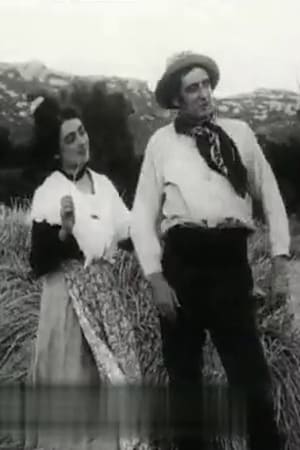
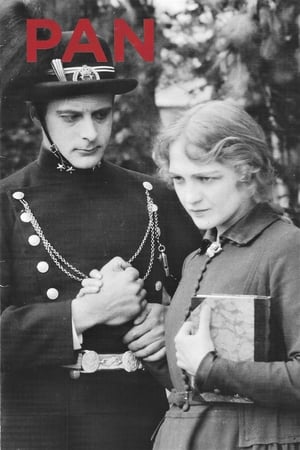
Rural comedy of the intrigues and stratagems involving a country wedding. From a comedy by Alexis Kivi.
Mo Geum-san is a barber living in the rural area, who once aspired to be an actor. He starts to have doubts about his humdrum life after the village health center advises him to be examined at a larger hospital. He comes up with a plan to give a gift to his beloved ones in the coming Christmas. The plan is to invite everyone to the local culture center and to screen his self-made comedy movie based on his own tragic life.
Set in Spanish colonial Philippines. Pedro is tasked to wed a wife whilst his activist friend is considering him to join the revolution. Through a raunchy and campy path of winning the love of his life, Pedro is met with a daunting revelation.
A tramp enters a cabaret and orders a drink, but then is thrown out when he cannot pay for it. After trying again, he is told by the manager that if he wants to avoid being charged and sent to jail, he will have to work.
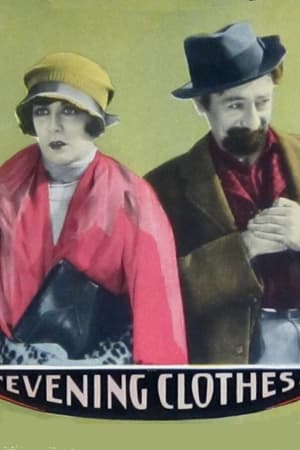
Honey Skinner is proud of her successful husband. When he tells her he's going to ask for a raise, she knows he'll get it. He asks his boss just as their big client announces he's not renewing his contract. He doesn't get the raise, but he's too embarrassed to tell his wife the truth. She starts making plans to spend that extra $10 a week; the first thing is a new dress suit for him and a new outfit for her so they can fit in at a swanky party. They're the hit of the party, and Honey is embraced by the 'smart set.' Meanwhile, business is bad and Skinner loses his job. The tailor is after him for payment on the suit, and Honey is still spending the salary he doesn't have.
Robin Hood is a 1912 film made by Eclair Studios when it and many other early film studios in America's first motion picture industry were based in Fort Lee, New Jersey at the beginning of the 20th century. The movie's costumes feature enormous versions of the familiar hats of Robin and his merry men, and uses the unusual effect of momentarily superimposing images different animals over each character to emphasize their good or evil qualities. The film was directed by Étienne Arnaud and Herbert Blaché, and written by Eustace Hale Ball. A restored copy of the 30-minute film exists and was exhibited in 2006 at the Museum of Modern Art in New York City.
Cameo Kirby is a 1914 American drama silent film directed by Oscar Apfel and written by Clara Beranger and William C. deMille. The film stars Dustin Farnum, Fred Montague, James Neill, Jode Mullally, Winifred Kingston and Dick La Reno. It is based on the play Cameo Kirby by Booth Tarkington and Harry Leon Wilson. The film was released on December 24, 1914, by Paramount Pictures.
The devil is bored in his kingdom. He makes up his mind to descend to earth and get familiar with the kind of life people lead. He chooses the city of Sofia for his excursion. His first contacts are by no means encouraging. Strolling along the streets in the capital in his outlandish Mephistophelean costume, he is chased and stoned. Then the devil puts into operation his tiny machine for printing money. Dressed in the latest fashion he continues his walk unmolested. Money opens the doors of the richest homes for him and he soon becomes a member of the capital city's high life. The devil chooses a prostitute as his partner, who introduces him to her family. The father is a thief and a drunkard so that the mother is forced to be the bread-winner. Satan and the prostitute find themselves in the whirl of easy life.
A housewife tires of her husband's annoying behavior and returns to her mother. At first, the husband is quite pleased to have the house all to himself. But he quickly discovers that even the most basic domestic chores can be fraught with difficulty.
When Madge, a clerk in a flower shop, is sent to a bachelor's apartment to deliver and arrange a bouquet, she discovers a guest, young and handsome Bradley Lane, taking a bath. She loses her job and becomes a playgirl until Bradley, her true love, asks her to marry him.
In Scotland, a young man, Lochinvar insists on marrying Ellen, the woman he loves in spite of the fact that she is betrothed to another.
Dr. Spencer's wife becomes intensely jealous when she finds, in her husband's coat, a note signed "Mary," which asks him to visit the writer at the Hotel Mum. The woman carries her tale of woe to Attorney Thomas, a family friend. In his effort to make light of the matter, Thomas soothingly places his arm about Mrs. Spencer's shoulder. Dr. Spencer's office is directly across the court. Glancing out of the window, the doctor sees his wife apparently being embraced by Thomas. The attorney consents to accompany Mrs. Spencer to the Mum and meet "Mary." The doctor trails the two. As luck would have it, Mrs. Thomas passes the Mum just as her husband and Mrs. Spencer enter. The doctor and Mrs. Thomas meet and make their way after their other halves, bent on vengeance bent.
Two old tars, retired from service, live alone in a cottage by the sea. They sail along on an even keel, until a buxom and comely widow projects herself on the scene when one old tar breaks one of their unwritten laws and falls in love with her. The other old fellow objects strenuously.
A fortuneteller informs Monte that he will marry the first girl he meets. After several false starts, he meets what he is sure is "the" girl. She takes him to jail, hits him with a book, and affects her brother's escape, leaving Monte inside. He finally gets out, a chase occurs and he swears off girls forever, only to be snared again.
Mary Davis, alone and destitute in New York City, pilfers a meal from a restaurant and eludes the police by ducking into the Cafe Royale, where she is shuffled along a line of aspiring chorines awaiting job interviews. In desperation, Mary agrees to impersonate Mademoiselle Fanchon, formerly of the Folies-Bergère, who has walked out on her contract. Reporter Kenneth Ward interviews Mary, believing her to be the notorious Frenchwoman, and due to a misunderstanding, she rushes wildly into his arms. When Robert Ryan, a bachelor friend of the real Fanchon, investigates Mary’s deception, she violently repels his advances and believes she has killed him. Later, the real Fanchon threatens to kill Robert. Following a series of amusing complications, Mary finds love with Kenneth.
After a spectacular college football career, John Harkless leaves the university to pursue a place in Indiana politics. He buys the failing Plattville Herald and, using the newspaper to expose various illegal activities, sets out to rid the county of all mobsters and corrupt officials.
A divorced couple try to pretend they are still happily married in order to get $100,000 from the woman's divorce-disapproving aunt.
The timid youngest son of the most important family in town must use his wits to win the respect of his strong father and the love of a beautiful new woman in town.
Marcia Kane, daughter of an American capitalist, is persuaded by her father to marry the expatriated Russian Grand Duke Sergei, and believing Wally, her real love, to be dead, she consents. Discovering after the ceremony that her father has tricked her, Marcia vows to be the duke's wife in name only, though she refuses Wally's proposal that she go away with him.
Fannie joins Johnny to perform a music-hall act which becomes a success, until two Broadway producers catch the act and offer Fannie a job on their latest show; however, they have no place for Johnny, so Fannie turns down the offer. (Film considered lost.)