Tarachime is a documentary film which observes 'life' through childbirth. Kawase Naomi, a film director working under the theme of family, life and death, presents the bond of life through her own childbirth experience. "First, I was planning to film from the day I conceived a child and to the moment I gave birth. But I realized, while filming, that this is not the story of "one life." In the end, the film sublimed to a higher stage on which we can witness the knot tying one life with another."
Two bodies and one mind, this is the extraordinary story of one pair of conjoined twins in today's world.
A spiritual journey into the highlands of Harar, immersed in the rituals of khat, a leaf Sufi Muslims chewed for centuries for religious meditations – and Ethiopia’s most lucrative cash crop today. A tapestry of intimate stories offers a window into the dreams of youth under a repressive regime.
The image of a mysterious, solitary filmmaker - a cineaste maudit - who flees from both the media and the public, is unrelentingly bound to the figure of Leos Carax, in France. Elsewhere, the real focus is on his films and he is considered to be an icon of world cinema. Mr.X dives into the poetic and visionary world of an artist who was already a cult figure from his very first film. Punctuated by interviews and unseen footage, this documentary is most of all a fine-tuned exploration of the poetic and visionary world of Leos Carax, alias "Mr.X".
Drawing on the collections of major Russian institutions, contributions from contemporary artists, curators and performers and personal testimony from the descendants of those involved, the film brings the artists of the Russian Avant-Garde to life. It tells the stories of artists like Chagall, Kandinsky and Malevich - pioneers who flourished in response to the challenge of building a new art for a new world, only to be broken by implacable authority after 15 short years and silenced by Stalin's Socialist Realism.
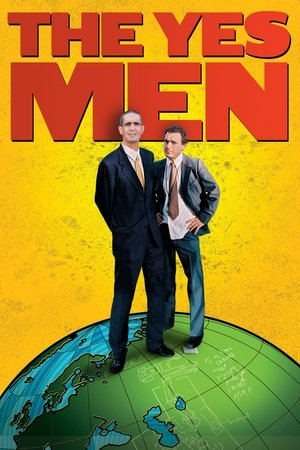
A comic, biting and revelatory documentary following a small group of prankster activists as they gain worldwide notoriety for impersonating the World Trade Organization (WTO) on television and at business conferences around the world.
The story of the Northern Ireland Troubles through the unflinching testimony of two men who played key roles on opposite sides of that bloody conflict. Nearly ten years ago the two paramilitary leaders told their stories on condition that they could never be revealed while they were still alive. The stories told by the Irish Republican Army's Brendan Hughes and Ulster Volunteer Force's David Ervine tell us of the motivations of the participants, the planning of campaigns of violence, the misery of a hunger strike, the tracking and killing of informers and the duplicity that ended a conflict that had lasted too long. It is also a narrative of the fate of combatants when their wars are over.
‘Podwórka’ captures six groups of neighbourhood youth as they play in seemingly deserted yards, offering an intimate portrait of daily life in Łódź, Poland. Shot with a fixed camera, this single-channel video projection highlights American artist Sharon Lockhart’s concern for the interrelationship between the still and the moving image.
For over 50 years, the Kahnawake Mohawks, of Quebec, Canada occupied a 10 square block area in the North Gowanus section of Brooklyn, which became known as Little Caughnawaga. The men, skilled ironworkers, came to New York in search of work and brought their wives, children and often, extended family with them. The story of the Mohawk ironworkers is an important one and is one that has been told and continues to be told through documentaries, newspaper and magazine articles. Yet the stories of Kahnawake Mohawk women who lived in Brooklyn have gone untold.
"If buildings could talk, what would they say about us?" CATHEDRALS OF CULTURE offers six startling responses. This 3D film project about the soul of buildings allows six iconic and very different buildings to speak for themselves, examining human life from the unblinking perspective of a manmade structure. Six acclaimed filmmakers bring their own visual style and artistic approach to the project. Buildings, they show us, are material manifestations of human thought and action: the Berlin Philharmonic, an icon of modernity; the National Library of Russia, a kingdom of thoughts; Halden Prison, the world's most humane prison; the Salk Institute, an institute for breakthrough science; the Oslo Opera House, a futuristic symbiosis of art and life; and the Centre Pompidou, a modern culture machine. CATHEDRALS OF CULTURE explores how each of these landmarks reflects our culture and guards our collective memory.
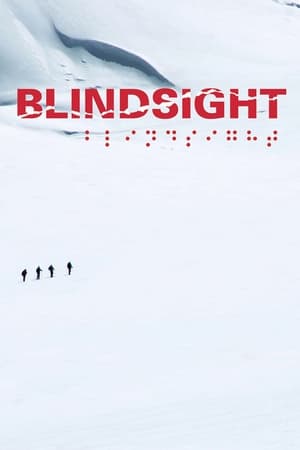
Six blind Tibetan teenagers climb the Lhakpa-Ri peak of Mount Everest, led by seven-summit blind mountain-climber Erik Weihenmayer.
In the summer of 2000, federal fishery officers appeared to wage war on the Mi'gmaq fishermen of Burnt Church, New Brunswick. Why would officials of the Canadian government attack citizens for exercising rights that had been affirmed by the highest court in the land? Alanis Obomsawin casts her nets into history to provide a context for the events on Miramichi Bay.
A documentary on the history of sex education
A documentary that explores the potential dangers of toxic chemicals in consumer products and the recent spike in unexplained health phenomena.
Started as a class project in what was likely the first filmmaking course ever taught at Harvard, Marathon documents the running of the 1964 Boston Marathon.
Spies of Mississippi tells the story of a secret spy agency formed by the state of Mississippi to preserve segregation and maintain white supremacy. The anti-civil rights organization was hidden in plain sight in an unassuming office in the Mississippi State Capitol. Funded with taxpayer dollars and granted extraordinary latitude to carry out its mission, the Commission evolved from a propaganda machine into a full blown spy operation. How do we know this is true? The Commission itself tells us in more than 146,000 pages of files preserved by the State. This wealth of first person primary historical material guides us through one of the most fascinating and yet little known stories of America's quest for Civil Rights.
Vienna’s Prater is an amusement park and a desire machine. No mechanical invention, no novel idea or sensational innovation could escape incorporation into the Prater. The diverse story-telling in Ulrike Ottinger’s film “Prater” transforms this place of sensations into a modern cinema of attractions. The Prater’s history from the beginning to the present is told by its protagonists and those who have documented it, including contemporary cinematic images of the Prater, interviews with carnies, commentary by Austrians and visitors from abroad, film quotes, and photographic and written documentary materials. The meaning of the Prater, its status as a place of technological innovation, and its role as a cultural medium are reflected in texts by Elfriede Jelinek, Josef von Sternberg, Erich Kästner and Elias Canetti, as well as in music devoted to this amusement venue throughout the course of its history.
A descent into Eastern Europe's haunted woodlands uncovers the secrets, fairy tales, and bloody histories that shape our understanding of man's place in nature.
The planet’s busiest maternity hospital is located in one of its poorest and most populous countries: the Philippines. There, poor women face devastating consequences as their country struggles with reproductive health policy and the politics of conservative Catholic ideologies.
Documentary about the role of Native Americans in popular music history, a little-known story built around the incredible lives and careers of the some of the greatest music legends.