The Perils of Pauline is a motion picture serial shown in weekly installments featuring the actress Pearl White playing the title character. Pauline has often been cited as a famous example of a damsel-in-distress, although viewers will find her character more resourceful and less helpless than the classic 'damsel' stereotype. Nine episodes (from a condensed 1916 re-release) survive to this day.
Famous Russian screen actors play themselves in this drama about the lives of actors. Thirteen minutes of the film survive.
His Last Race
Three bachelor buddies, David Clark (Jack Conway), Dick Porter (Richard LeReno), and Jerry Mathers (George Webb) adopt three Belgian children who have been orphaned by the war. David winds up with Rene Lescere (Ella Hall), who -- much to his dismay -- comes with a pet goat and chicken. But Rene comes to love her foster father and vice versa. In fact, she's determined to find him a wife who will also serve as a foster mom for her.
When housewife Trina wins the lottery, her comfortable life with her dentist husband John slowly deteriorates, in part by her own increasing paranoia and partly by the machinations of villainous acquaintance Marcus.
At a mountain resort, Kenneth Scott falls in love with Marie Beauchamp, an older woman who merely amuses herself with him. When she deserts him to open a roadhouse, he sadly leaves the mountains and, in the company of an old wandering poet named "Doc" Podden, travels to a little village in the woods.
Left alone and penniless after her father dies, Eileen Orton attempts suicide. Douglas Seward, who must be married to obtain the position he seeks, befriends Eileen and offers to support her if she will pose as his wife.
Based on the play Miss Julie by August Strindberg.
Sashka The Seminarian
"Half-breed" trapper Jacques LaRouge is infatuated with Memory Baird (Fritzi Brunette), the daughter of the owner of the trading post. When fugitive Joseph Treffery (Captain C.A. Van Auker) happens into town, Memory hides him from the police.
The story of two feuding Irish immigrant families living in a tenement.
This partially-extant silent film focuses on the lives of people in rural China during the early twentieth century. Wang Guisheng (played by Wang Yuanlong) is an orphan who grew up at his uncle's, working as a farmhand. Since childhood, he has been close with his female cousin, Li Ah Zhen (played by Li Minghui), and they expect to marry. But when her mother dies of illness and overwork, Ah Zhen's father re-marries, and the evil stepmother connives to marry Ah Zhen off to the stepmother's nephew. Then a government representative comes to the village recruiting peasants to establish a new settlement on the borderlands, she persuades the despondent Guisheng to sign up. Guisheng leaves his love behind, only to find hardship on the frontier. Ah Zhen, who has fallen ill, is set upon by her groom on her wedding night...BUT the next morning his stabbed corpse is found in the bridal chamber and a body in a bridal gown is found down a well. WHAT HAS HAPPENED?!?!?!?!!
Two friends, Fritz and Theodor, make the acquaintance of Christine and Mizzi, who are also friends. Fritz is immediately captivated by Christine, who is bashful and modest as opposed to the eager, effervescent Mizzi. But even though the love between the two grows, Christine is not the only woman in Fritz’s life. His affair with a married woman will prove to have fatal consequences.
Fathers and Sons
Jaffery Chayne is the spectacular one of four chums, the others being Hilary Freeth, a literary man, Adrian Boldero, a short story writer, and Tom Castleton, a playwright. The story opens with Tom Castleton going on a voyage for his health and leaving with his friend, Adrian, the manuscript of the first novel he ever attempted. Shortly after Castleton's trip, he dies at sea and when word is received by Adrian of his friend's death, the temptation to secure the girl he loves by publishing his friend's novel and taking the money and credit from it is so strong that he succumbs and becomes the "literary lion of the hour."
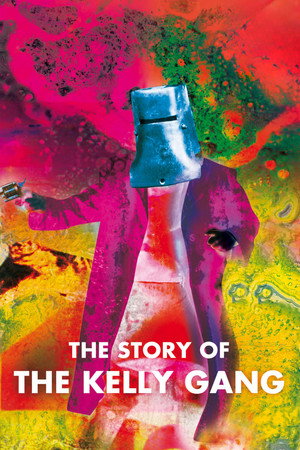
Just as Galeen and Wegener's Der Golem (1915) can be seen as a testament to early German film artistry, The Story of the Kelly Gang (1906) symbolizes both the birth of the Australian film industry and the emergence of an Australian cinema identity. Even more significantly, it heralds the emergence of the feature film format. However, only fragments of the original production of more than one hour are known to exist, preserved at the National Film and Sound Archive, Canberra; Efforts at reconstruction have made the film available to modern audiences.
A picture depicting the engrossing adventures of a small town youth in Hollywood and showing the intimate home life of some of the screen's greatest stars.
Hoping to consolidate their adjoining ranches, Don Fernando and Don Diego betroth their children, Ramón and Dolores, although Ramón is in love with Suzanna, the daughter of a peon on his father's ranch, and Dolores is interested in Pancho, a toreador. When Suzanna learns that she was kidnapped in infancy and is really Don Diego's daughter, she keeps silent; but Ramón finally rebels and steals Suzanna from the altar as she is about to marry Pancho. There are explanations, Ramón marries Suzanna, and Dolores marries Pancho. Suzanna (1923) has been mastered from a good quality but incomplete 35mm print.
A prosperous small-town peddler accedes to his family's wish to move from their secure existence to the uncertainty of New York City. It proves fruitless and eventually his kin sees the error of their ways and return to their true home.
The husband of Lady Myra Ingleby is off fighting in the World War. She is devastated when Sir Derysk Brand tells her that her husband has been killed. The War Office gives her the details - Lord Ingleby was killed, not by enemy fire, but because of an error committed by one of his fellowmen, whose name is never to be disclosed. The grieving widow retreats to her Cornwall estate for a rest. Staying at the inn is a man known as Jim Airth, who carries a grief of his own.