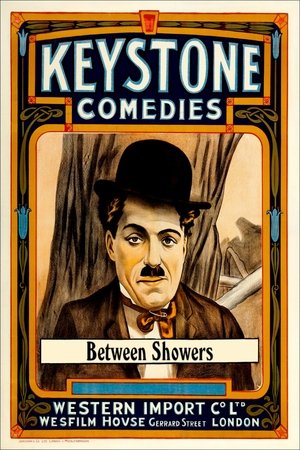
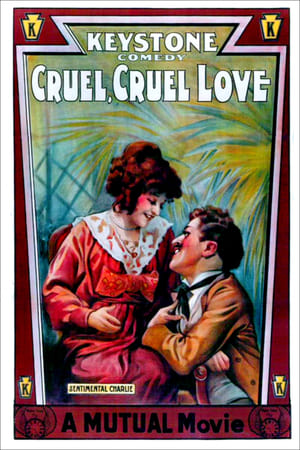
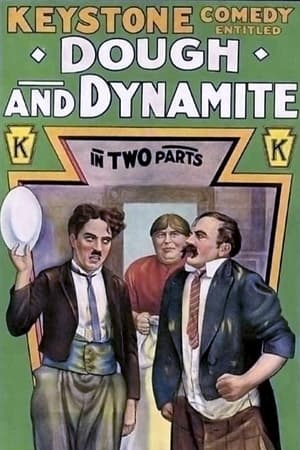
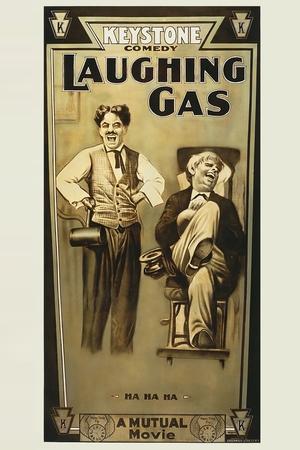
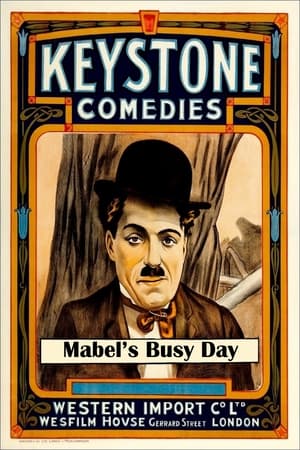
Charlie is a clumsy waiter in a cheap cabaret, suffering the strict orders from his boss. He meets a pretty girl in the park and tries to impress her by pretending to be an ambassador. Unfortunately she has a jealous fiancé.
While arguing about their favorite genre of movie Ron and Jon find The Button.
Aspiring filmmakers Mel Funn, Marty Eggs and Dom Bell go to a financially troubled studio with an idea for a silent movie. In an effort to make the movie more marketable, they attempt to recruit a number of big name stars to appear, while the studio's creditors attempt to thwart them.
Descansa muy en paz, Amancio
[…] A reel was shot of the Noh drama Momiji-gari (Maple Leaf Hunters, or Viewing Scarlet Maple Leaves), in which Danjuro played opposite Onoe Kikugoro V (1844-1903) as an ogress who has disguised herself as the Princess Sarashina. Filmed by Shibata Tsunekichi in the open air on a windy day in November 1899, Danjuro would allow only the one take, so that when his fan blew away in mid-performance the scene had to stay. The film re-emerged at the Kikikan theatre in 1907 where it was a great success and inspired a wave of fiction filmmaking based on traditional Japanese narratives. (cont. http://victorian-cinema.net/danjuro)
Re-imagined version of the now lost first Finnish film. Two siblings inherit all the essentials for a good life: moonshine equipment and a pig. As they embark on their journey, business is good until a card shark arrives.
After her father's death, socialite Elaine Fleetwood promises to marry a man she does not love. However, she leaves him at the altar during a wedding ceremony, cuts her hair and decides to disguise herself as a boy and go prospecting in northwest Tasmania. She meets a handsome miner who figures out she is a woman, saves her from a villain and marries her.
An adventure film with Benshi performers. Sometimes considered the 'first Japanese feature film', it survives today as a compilation of scenes from various different 1910s adaptations totaling nearly three hours in length. The bulk of the content comes from the 1911 adaptation by legendary Japanese filmmaker Makino Shozo.
One of the two earliest horror films ever made. This film is presumed lost. In this black comedy scene, the bottom falls out of a coffin, the corpse tumble out, and is jolted back to life. Short sequences like this, as well as street scenes and dancing geisha girls were the main subjects of early Nippon cinema, pioneered by Shiro Asano and Shibata Tsunekichi from 1897 onwards. In creating dramatic, scenes, film-makers naturally chose the most striking or bizarre. Another undocumented film, recalled by cameraman Shiro Asano.
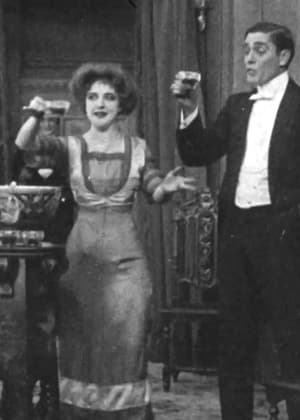
Mr. and Mrs. Hilton throw a New Year's Eve party. They agree not to drink the punch themselves, but as guests begin to arrive their resolve weakens, and soon they are both cavorting drunkenly. Next morning Mr. Hilton, feeling very sick, is conscience-stricken over his drunkenness and his behavior with another woman. He fears to face his wife until he discovers that she feels just as guilty herself.
Adrift in the vast expanse of the ocean, a solitary boat carries three castaways—a man and two women. Stranded and devoid of any glimmer of rescue, they find solace in recounting the tales of their lives to one another. As they delve into their personal narratives, reminiscing about the circumstances that led them to this desolate predicament, they navigate through the depths of three distinct destinies. Bound by the confines of their shared space, every aspect of their existence becomes a boundary, underscoring their plight.
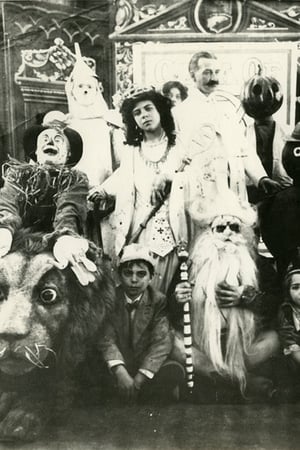
L. Frank Baum would appear in a white suit and present his live actors, slide shows and films as a live travelogue presentation of his popular fantasies. Highlights include Dorothy being swept to Oz in various ways, such as with back-projection tornadoes and storms in a chicken coop. Lack of financial backing forced the show to fold after appearing in only two cities, despite being a critical and commercial success. This film is lost.
A southern girl tries her luck as a dancer in New York City.
Considered as the one of the first feature-length Turkish movies produced during the reign of the Ottoman Empire, Casus is about a spying adventure which took place in the First World War. The copy of the movie did not survive to the present day.
This mostly lost film is often confused with director Paul Wegener third and readily available interpretation of the legend; Der Golem, wie er in die Welt kam (1920). In this version of the golem legend, the golem, a clay statue brought to life by Rabbi Loew in 16th century Prague to save the Jews from the ongoing brutal persecution by the city's rulers, is found in the rubble of an old synagogue in the 20th century. Brought to life by an antique dealer, the golem is used as a menial servant. Eventually falling in love with the dealer's wife, it goes on a murderous rampage when its love for her goes unanswered.
God and Satan wager on the soul of a learned and prayerful alchemist as part of their eternal war over Earth.
A naive young man joins the Army in order to become a pilot.
A film crew goes to a mansion to shoot a movie. The actor playing the thief is confused and is shot by the owner with a shotgun. In compensation, he is taken care of in the house and falls in love with the daughter of the owners.
A two-reel adaptation of Dante Alighieri's Inferno from the Divine Comedy by Helios Film. It is less well-known than the five-reel feature produced the same year by Milano Films, but it was released earlier in 1911.
A photo studio operator seems only interested in flirting with women. Hilarity ensues.