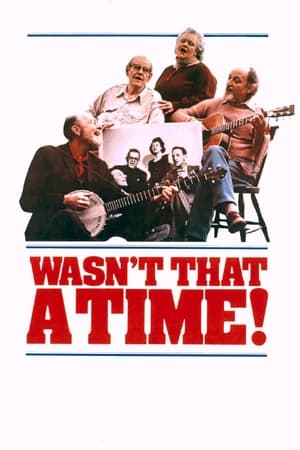
Documentary about the blacklisted folk group The Weavers, and the events leading up to their triumphant return to Carnegie Hall.
Best known as the inventor of the Moog synthesizer, Robert Moog was an American pioneer of electronic music, and shaped musical culture with some of the most inspiring electronic instruments ever created. This "compelling documentary portrait of a provocative, thoughtful and deeply sympathetic figure" (New York Times) peeks into the inventor's mind and the worldwide phenomenon he fomented.
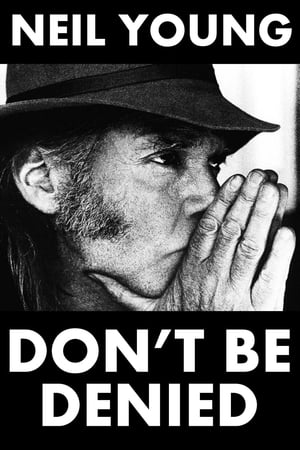
In March 2005, Neil Young was diagnosed with a brain aneurysm. Four days before he was scheduled for a lifesaving operation, he headed to Nashville, where he wrote and recorded the country folk album Prairie Wind with old friends and family members. After the successful operation and recovery period, he returned to Nashville that August to play at the famed Ryman Auditorium, once again gathering together friends and family for this special performance.
The traditional healers in the Swiss and French mountains.
In the summer of 1961, a group of young Italian anthropologists made a clandestine journey through Spain, in order to record popular songs that supported anti-Franco resistance. As a result of their work, they were prosecuted and their recordings were censored. Sixty years later, and guided by Emilio Jona, aged 92, the last living member of that group of travellers, we recover the unpublished recordings and reconstruct the journey, today, across an emotional and political landscape, regaining historical memories through these songs, as relevant today as they were then.
Moving Together is a celebratory love letter to music and dance that brims with kinetic life and energy. This documentary explores the intricate collaboration between dancers and musicians, moving seamlessly between Flamenco, Modern, and New Orleans Second Line.
"Who plays me, hears my voices”, shows a recent moment in the life of Gaston Lafourcade, a classical pianist and harpsichordist who, at the age of 83, enters a recording studio for the first time in his life to record a solo album and to join his daughter, Natalia Lafourcade, who during a recess period in her career, decides to embark on this adventure as a love letter to her father and as a way to enjoy what brings them together, beyond blood ties: their deep love for music.
An ethnographic documentary following the Folia de Reis party that is celebrated every year at Morro de Santa Marta on Rio de Janeiro.
Set in the North Carolina Appalachians, Sprout Wings and Fly honors the fiddle playing of 82-year-old Tommy Jarrell of Toast, NC. Tommy was quirky, gregarious and generous, and this film shows him at his best, in fine fiddling form.
Through concerts and interviews, folk-progressive group Harmonium takes Quebec culture to California. This documentary full of colour and sound, filmed in California in 1978, recounts the ups and downs of the journey of the Quebec musical group Harmonium, who came to feel the pulse of Americans and see if culture, their culture, can succeed in crossing borders.
Tracing his career up to the point of his 1966 motorcycle accident and subsequent disappearance from the spotlight, this unauthorized documentary uncovers a side of Bob Dylan never revealed before. Includes extensive interviews and rare footage.
Песни родной стороны
The enigma of the personality cult is revealed in the grand spectacle of Stalin’s funeral. The film is based on unique archive footage, shot in the USSR on March 5 - 9, 1953, when the country mourned and buried Joseph Stalin.
A stunning and intimate portrait of the Arhuaco indigenous community in Colombia. In 1990, in a celebrated BBC documentary, the Arhuaco made contact with the outside world to warn industrialized societies of the potentially catastrophic future facing the planet if we don’t change our ways. Now, three decades later, with the advances of audio/visual technology, we go back to the Snowy Peaks of Sierra Nevada de Santa Maria to illuminate their ethos against the backdrop of an increasingly fragile world.
Chronicles the 50-year career of singer/songwriter Jean Ritchie, from Viper, Kentucky to the New York stage. Pete Seeger, Arlo Guthrie, and her family and friends in Eastern Kentucky are among those interviewed. A 1996 KET production.
In rural Kosovo, identical houses are built for family members working abroad, in the hope that they will one day return to settle in their old homeland.
When the Sun Came for Them is a series of interviews with the nomadic Saharawi people in the Western Sahara. They discuss their remarkable history, their poetic life style and their strong morals. They recount the horrific Moroccan invasion, which forced them into the Algerian refugee camps. This is a powerful and unique movie, which not only preserves the Saharawi people’s personal and cultural history as nomads, but also documents what it means to be a “state-less” person. It is a human rights plea to a world, which has been sadly silent on the long time abuse of the Saharawi people. When the Sun Came for Them documents what it means to be a “state-less” person and how after decades of abuse even pacifist Muslims are turned into fighters committed to war. It is a timely and important film. All was shot by a crew of three recent college graduates on two iPads. It is true backpack journalism.
An unhappy family in a remote village in Calabria: Luisa is at war with the world since day one. She is juggling odd jobs, her love for her children and granddaughter, and her feuding with her mother, brother, and sister-in-law. While the two women exchange insults and call in the cops, three elderly aunts, a tragicomic chorus, try in vain to keep the peace.
Šibi-ryby, mastné ryby
In Papua New Guinea, pig tusks and shell money are currencies which can buy most things. Henry Tokubak’s dream is to create the first bank where traditional money counts as legal tender.