Earliest japanese horror film.
Yotsuya Kaidan
The movie tells the journey of a shadow, our architect, from his home to his office: a sunny bike becomes a journey into his creative process. The mind of an architect never switches off, his particular way of seeing the world and his existential experience, all of this, he attempts to synthesise and merge into a great idea: 9x9.
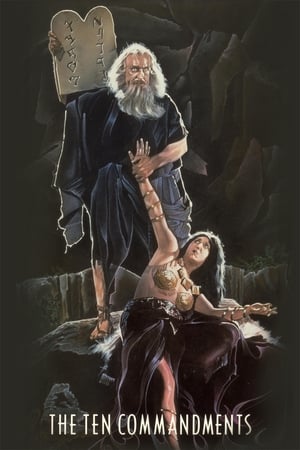
The first part tells the story of Moses leading the Jews from Egypt to the Promised Land, his receipt of the tablets and the worship of the golden calf. The second part shows the efficacy of the commandments in modern life through a story set in San Francisco. Two brothers, rivals for the love of Mary, also come into conflict when John discovers Dan used shoddy materials to construct a cathedral.
It was the first film version of the Hunchback of Notre Dame.
In 1908, Director/Producer Shozo Makino (father of Japanese cinema) directed and produced the first dramatic film in Kyoto. “Honnô-ji Gassen” was shot at Shinnyo-Do Temple. Considered a lost film.
Yeong-deuk and Jeong-sun and engaged. Yeong-deuk comes back home after completing his studies and meets the wrong kind of friends who revel in liquor and women.
First ever Bangladeshi feature film. The film about a conflict between two family members.
An adventure film with Benshi performers. Sometimes considered the 'first Japanese feature film', it survives today as a compilation of scenes from various different 1910s adaptations totaling nearly three hours in length. The bulk of the content comes from the 1911 adaptation by legendary Japanese filmmaker Makino Shozo.
Daughters of Today was a 1928 silent film from Lahore, in present-day Pakistan (then British India). It was produced by G.K Mehta and directed by Shankradev Arya. This was the first feature film made in Lahore, and helped to establish the city of Lahore as one of the centers of filming in India. The Lahore film industry is now known as Lollywood. Production started in 1924 and took three years to complete, mainly due to financial problems. Two participants later became prominent personalities of the South Asian film industry: A.R. Kardar was one of the most famous Bombay film directors in the 1930s, 1940s and 1950s; and actor M. Ismael's film career spanned over five decades.
In Scotland, a farmer wins the heart of a laird's daughter with his harp playing skills.
A Japanese merchant attempts to drive one of his rivals mad by impersonating a man he had once murdered.
Two brothers compete for the love of a woman while the impending war threatens to separate them from both sides of the border. Based on the novel "La Débâcle" by Émile Zola.
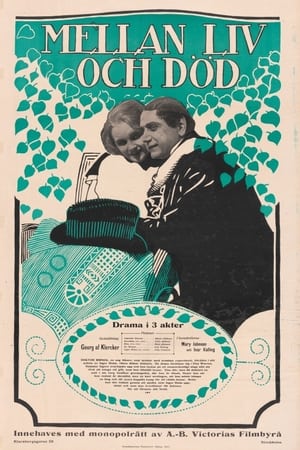
"Between life and death" - Dr Brinck and his assistant Inger Holm spend days and nights in his laboratory to experiment with a revolutionary medical cure for poisoning. Inger Holm is deeply in love with his boss. When the two scientists one day go to bed and visit an outdoor server, Brinck's manufacturer will meet Warren and his daughter Elsa and get an opportunity to help Elsa with a damaged foot. Thanks to him, he is invited to a party in the manufacturer's luxurious home...
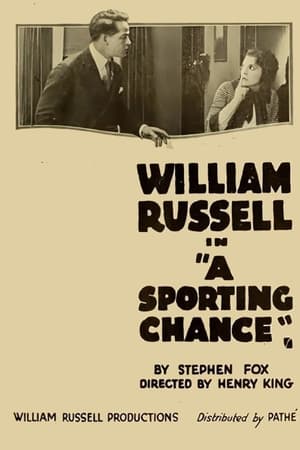
John Stonehouse (William Russell) checks into a hotel, intending to commit suicide. But instead he winds up helping a girl, Gilberte Bonheur (Fritzi Brunette), out of a jam. He finds her bending over a man who she has apparently killed, and since he's about to kill himself anyway, he offers to assume the blame. Throw a valuable emerald into the works, and the fact that the dead man suddenly comes back to life, and Stonehouse -- not to mention the audience -- becomes thoroughly befuddled by it all. Everything clears up, however, when Gilberte gives him a theater ticket -- it turns out that everything he went through was the plot to a stage play, enacted in real life by the actors. The critics roasted the play, saying it wasn't true to life, and this was their proof that the situations really could happen. Gilberte retires from acting when Stonehouse proposes.
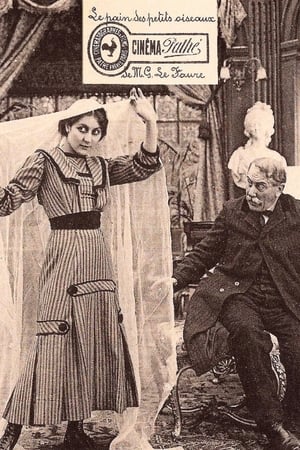
A young woman becomes infatuated with the leading man of a traveling theatrical troupe. She sneaks away to join him in the next town, but her father forces her to return home...
Plant
Like Max Ophüls, Capellani set many films in the theatre – backstage, on stage, in the public eye; Here is a rags-to-riches story of a dancer and her older benefactor, a kind-hearted piano tutor.
Don Sabino, a priest from the provinces who lives with his niece, Monica. Don Sabino is an arcane priest but his character changes radically when he is with Lucila, a girl whom he and Monica have raised since she was just a baby, when they found her abandoned at the door of their house. Don Sabino is a very helpful priest with his parishioners and life goes on without great upheavals until one day Tomasón appears, fleeing from justice after having committed a murder.
The pattern-living Paul Fowler has his routines disrupted by the contact-seeking photographer Jane.