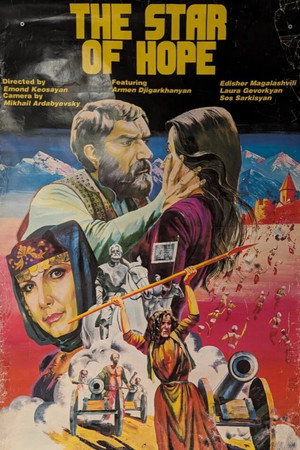
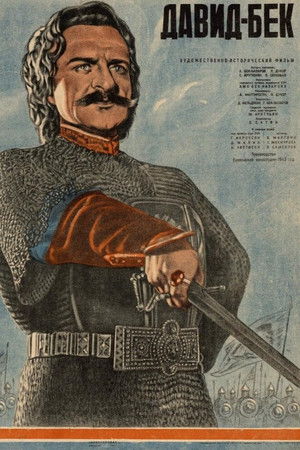
First movie of the two part film about David Bek and Mkhitar Sparapet's major Armenian uprising against Safavid Persia in the Syunik region in the 18th century. Part one tells the story of David Bek.
Second movie of the two part film about David Bek and Mkhitar Sparapet's major Armenian uprising against Safavid Persia in the Syunik region in the 18th century. Part two tells the story of Mkhitar Sparapet.
The Lark Farm is set in a small Turkish town in 1915. It deals with the genocide of Armenians, looking closely at the fortunes, or rather, misfortunes of one wealthy Armenian family.
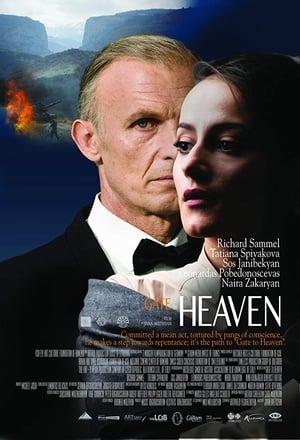
Robert Sternvall, a German journalist, returns to Artsakh in 2016 to cover the war which has been reignited after a 22-year ceasefire. In the result of his journalistic investigation, Robert meets Sophia, a young opera singer, who happens to be the daughter of missing photojournalist Edgar Martirosyan, whom Robert abandoned in captivity during the fall of the village of Talish in 1992. Robert and Sophia’s frequent rendezvouses ignite a passionate romance...
Two part film about David Bek and Mkhitar Sparapet's major Armenian uprising against Safavid Persia in the Syunik region in the 18th century.
The Armenian national hero, David Bek, leads a major Armenian uprising against Safavid Persia in the Syunik region in the 18th century.
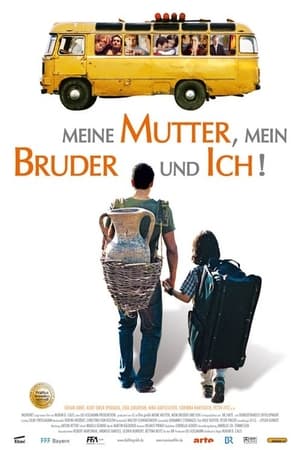
In Munich, the Armenian Areg dreams of studying cinema with his German girlfriend Lilly. Until her widowed mother fell seriously ill with diabetes. Areg and her little brother Garnik have to take care of her.
Inspired by true events, this is a film about a childhood friendship, torn apart by the horrific Hamidian massacres infiltrated by the Ottoman Empire under the rule of Sultan Abdul Hamid II (1894-1896).
In Soviet Azerbaijan, a divorced Armenian couple fights over the custody of their daughter, Ashen. Stolen from one parent to another, Ashen's guardians are tragically killed in the bloody war surrounding them. Will the arrival of a new savior finally bring Ashen freedom? Official selection of the Global Lens Collection presented by the Global Film Initiative.
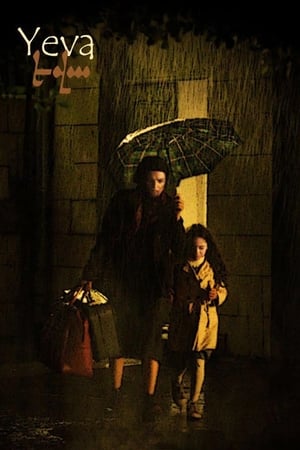
Yeva is a young woman who escapes her influential in-laws with her daughter Nareh, after her husband’s tragic death and takes refuge in one of the villages of Karabakh, Armenia… Yeva is a complete stranger in this village and is obliged to live her daily life in disguise.
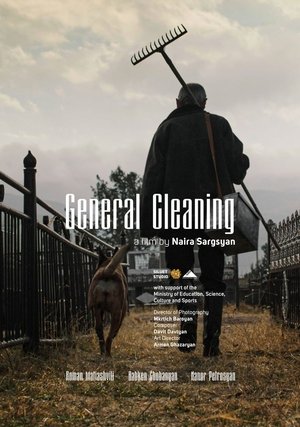
During a general cleaning weekend in his village house an old cemetery groundskeeper discovers that he is just as much of a burden for his family, as his old mementos they are throwing away in the trash.
The tranquility of a remote Armenian mountain community is disrupted when a group of shepherds affected by the pangs of an evening hunger, decide to butcher and barbecue the sheep of another's that have strayed into their herd. An official inquiry by the city police complicates matters, and questions of law, morality and community only seem to lead to further entanglements.
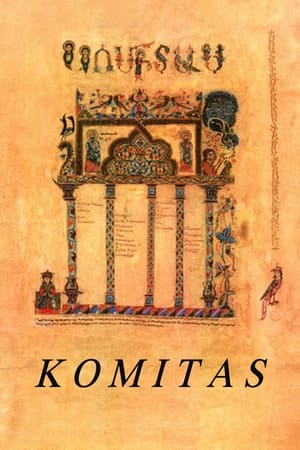
The film is dedicated to the Armenian monk and genius composer Komitas, and the 2 million victims on his people in Turkey in 1915. The final 20 years of Komitas life were spent in various mental hospitals. The destiny of Komitas? This is the magic beauty of Armenian culture and the abhorrent brutality of Armenian history. A cultural and artistic world that was slaughtered with a curved knife. A humanity that doggedly advances towards an apocalyptic catastrophe, that does not recognize its own original purpose, eradicates its own memory, its final roots.
The film consists of three parts. The first one is about a harmonious family that will be separated because of the existing situation. Little Aram carries the tragedy of the separated family. In a day, his entire childhood ends. The reason is one thing only… In the second part of the film a feminine touch is evident by Astghik’s character. One step and peace turn to war in a day, that’s when she loses her friendship, her love, and the idol. The third film tells about a 14-year old Tevanik who becomes part of the war activities. During the fights and as a result of his inability to put an end to a beauty, moments become decisive for Tevanik
An old widower, Jasper, routinely makes coffee in two mugs and picks up trash around his community. Some of his more interesting finds speckle his home. His neighbors mostly disregard him. On one of his regular hunts, he chances upon an envelope. To his surprise, he finds old wedding photos and presumes the addressee, Angie, to be the bride. Determined to complete the delivery, Jasper follows a map to the address. When he finally arrives, his excitement is upended when Angie, now divorced, rebuffs him and the photos. He leaves her with an open invitation to his home, should she change her mind. The next morning, Jasper starts his routine-only to find Angie at his door. After a heart-to-heart on loss and new life, Jasper invites Angie to pick up trash with him. Together, they go.
A defiant warrior-monk arrives at Kublai Khan's court in chains and soon earns his tragic nickname in this 30-minute origin story.
1920. Last days of the first Armenian Republic. Armenian Army fights on two fronts: war with Turkish army in the west, and Red Army incursion and Bolshevik mutiny in the northeast. Hayk Saroyan returns to his native provincial town from Russia to assume a minor post at Dashnak Army command center. His brother Gevorg, captain at the same command center, is a real patriot prefering death to "eternal exile", army power to relegious mercifullness. Very soon a suspicion creeps inside him: his beloved brother is Bolshevik spy.
A quiet killer is looking for a room. The real state agent, shy and expressionless, guides him through Tokyo, towards the ruins the decadent economy has left behind, in hopes of finding The Room.
Two years after receiving news of his father’s death in WWII a young boy continues to wait for trains from the front. The boy lives with his crippled uncle rather than with his mother, who has remarried and has another child. Then one day the father returns.
Raphael, Yervant Gianikian's father, survived the Armenian genocide in 1915 in Eastern Turkey. In April 1988, while living in Venice, he sat for his son's camera and read an excerpt from his memoirs, translated from Armenian into Italian.