Rajesh and Meena fall in love and want to get married. But Meena's grandfather rejects Rajesh without seeing him because of a terrible encounter with Rajesh's father. Rajesh pretends to be a servant and finds employment in Meena's house to try and win her family over.
Vijay Singh is a disgraced former Merchant-Navy officer who is branded as a coward after he abandons his crew during an emergency. Guilt-ridden and trying to forget his past, he takes up work at a coal mine where he gets trapped with other miners after a flood hits them.
Set in 1920, during the colonial era, Firangi tells the story of a mutiny staged by villagers against the British.
A working man's life is changed after he breaks the routine.
A man's face is disfigured in an acid attack. One day he meets a mysterious beautiful woman who claims to love him and they marry. Later, he starts to notice that she is not an ordinary woman.
Social film dealing with the topics of child marriage and widow remarriage.
A Pindari Prince goes to England to study military tactics so that he can avenge his people, but while there, he falls in love.
An emotional journey of a prison warden, driven by a personal vendetta while keeping up to a promise made years ago, recruits inmates to commit outrageous crimes that shed light on corruption and injustice, in an attempt to get even with his past, and that leads him to an unexpected reunion.
A married man and a married woman meet in a hotel room.
Garibon Ka Daata is an action film with Mithun Chakraborty and Sumeet Saigal playing the lead roles, supported by Bhanupriya, Kader Khan, Prem Chopra and Shakti Kapoor.
A pair of bodyguards for a politician find their positions under threat when their employer is implicated in a scandal. Fleeing to Mumbai they find work with a gangster, but also find that the police are onto them.
The third installment in the Kesari film series. Plot TBA, but said to be focused on Sikh General Hari Singh Nalwa.
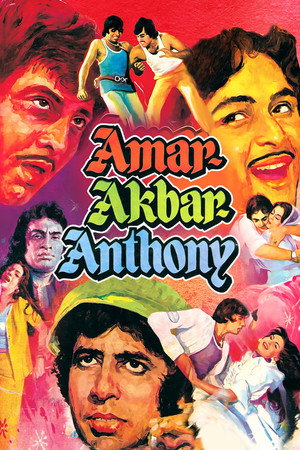
Three brothers, each raised in different religious households, reunite after many years in a chance encounter. They set out to take revenge on those responsible for separating them.
Police informer Ghulam holds the force responsible when his brother gets killed in a gang war.
After his photojournalist brother gets killed by a white tigress in the jungles of the Sundarbans, Pandit and his team of commandos enter the prohibited core area of the forest to avenge his death.
Unable to live in his father's gigantic shadow, Mahatma Gandhi's eldest son, Harilal, gets distraught and resorts to alcoholism.
An alcoholic barmaid is distraught when her former lover, a notorious gangster, re-enters her life. She is forced to relive painful past experiences and choose between the gangster and a pleasant singer she has found comfort in.
Friday the 13th is the night when the dead come back to earth. On one such night, Chander Sharma's son gets a call informing him of the murder of each of his father's four associates on the 13th of every month. Chander Sharma's son is in love with Shilpa (Tabu) and his rival is Raja (Sunil Shetty), who also becomes embroiled in the mystery. The only clue they have is a pair of gloves, leaving the police baffled. Meanwhile, the murders continue...
It is the story of a fiercely fought election campaign, where money power and corruption are the accepted norms, and where treachery and manipulation are routinely used weapons. As the personal drama of these conflict-ridden characters unfolds against this gritty backdrop, love and friendship become mere baits, and relationships get sacrificed at the altar of political alignments. The darkness that rises from their souls threatens to envelope all that they hold precious. Until eventually, in the crescendo of increasing violence, the line between good and evil blurs, making it impossible to distinguish heroes from villains. Raajneeti is the story of Indian democracy. And its ugly underside. It is about politics. And beyond.
Today, there is hardly anyone who hasn't visited the swanky shopping malls, nightclubs, lounge bars, clubs and other such lifestyle destinations that sprung up across the centre of Mumbai. However, very few know that buried deep below these glittering edifices to consumerism lies the dark, dirty and painful reality of many thousands of mill workers who once worked the cotton mills in this very same area. Rising and toiling to the wail of the mill sirens each and every day, seven days a week, these workers embodied the true unbridled zeal and unflagging spirit of the city and played a pivotal role in the evolution of Mumbai as the modern day business capital of India. And then it suddenly was as if they never existed. Following the mill workers strike in the mid-80s, these mills began closing down rapidly and the mill-workers mysteriously disappeared...