Starting with a long and lyrical overture, evoking the origins of the Olympic Games in ancient Greece, Riefenstahl covers twenty-one athletic events in the first half of this two-part love letter to the human body and spirit, culminating with the marathon, where Jesse Owens became the first track and field athlete to win four gold medals in a single Olympics.
Part two of Leni Riefenstahl's monumental examination of the 1938 Olympic Games, the cameras leave the main stadium and venture into the many halls and fields deployed for such sports as fencing, polo, cycling, and the modern pentathlon, which was won by American Glenn Morris.
One year at Malpensa: four seasons spent following the bureaucracy, the procedures, the controls and the movements that are everyday occurrences inside an intercontinental airport. A public space, in which Italian and international police forces collaborate, where every gesture is captured by closed-circuit cameras, each piece of luggage is studied in all its recesses in an attempt to ward off a potential and unknown threat. A place in which fear is the only thing not in transit.
A documentary that explores the potential dangers of toxic chemicals in consumer products and the recent spike in unexplained health phenomena.
Spies of Mississippi tells the story of a secret spy agency formed by the state of Mississippi to preserve segregation and maintain white supremacy. The anti-civil rights organization was hidden in plain sight in an unassuming office in the Mississippi State Capitol. Funded with taxpayer dollars and granted extraordinary latitude to carry out its mission, the Commission evolved from a propaganda machine into a full blown spy operation. How do we know this is true? The Commission itself tells us in more than 146,000 pages of files preserved by the State. This wealth of first person primary historical material guides us through one of the most fascinating and yet little known stories of America's quest for Civil Rights.
Vienna’s Prater is an amusement park and a desire machine. No mechanical invention, no novel idea or sensational innovation could escape incorporation into the Prater. The diverse story-telling in Ulrike Ottinger’s film “Prater” transforms this place of sensations into a modern cinema of attractions. The Prater’s history from the beginning to the present is told by its protagonists and those who have documented it, including contemporary cinematic images of the Prater, interviews with carnies, commentary by Austrians and visitors from abroad, film quotes, and photographic and written documentary materials. The meaning of the Prater, its status as a place of technological innovation, and its role as a cultural medium are reflected in texts by Elfriede Jelinek, Josef von Sternberg, Erich Kästner and Elias Canetti, as well as in music devoted to this amusement venue throughout the course of its history.
At the sea shore, a goat, a child, and a naked man. This is a photograph taken in 1954 by Agnès Varda. The goat was dead, the child was named Ulysses, and the man was naked. Starting from this frozen image, the film explores the real and the imaginary.
Started as a class project in what was likely the first filmmaking course ever taught at Harvard, Marathon documents the running of the 1964 Boston Marathon.
"My Own Breathing" is the final documentary of the trilogy, The Murmuring about comfort women during the World War II directed by BYUN Young-joo. This is the completion of her seven years work. BYUN's first and second documentaries spoke of grandmothers' everyday life through the origin of their torment, while My Own Breathing goes back to their past from their everyday life. Deleting any device of narration or music, the camera lets grandmothers talk about themselves. Finally, the film revives their deep voices trampled by harsh history.
A comic, biting and revelatory documentary following a small group of prankster activists as they gain worldwide notoriety for impersonating the World Trade Organization (WTO) on television and at business conferences around the world.
Ulrike Ottinger’s provocative mélange of ethnography, stunning tableaux and baroque vignettes was inspired by what she calls the “well-stocked miracle” of Korean wedding chests, assembled according to time-honored customs. This exploration of love and marriage in South Korea looks closely at ancient and present-day rituals, revealing what is old in the new and new in the old. Her inquiry leads us from shamans, temples and priests, to the enchanted maze of 21st-century Seoul, where vendors of medicinal herbs co-exist with high-tech beauty salons for wedding couples and secular marriage palaces. Using film much like a canvas, Ottinger creates a modern fairytale flush with mythological heroes, traditional rites, ancestral symbolism, dreams of eternal love, and a whole lot of Western kitsch. One of her most acclaimed documentaries, it captures the amazing phenomenon of new mega-cities and their contradictory societies caught in a balancing act.
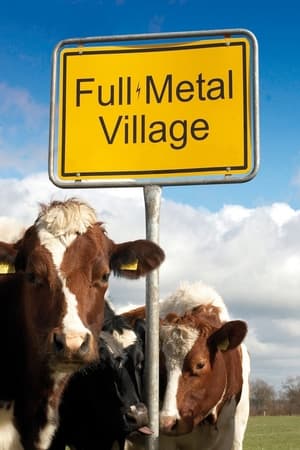
The film describes the microcosmos of the small village Wacken and shows the clash of the cultures, before and during the biggest heavy metal festival in Europe.
A biography of the Portuguese-born Brazilian singer Carmen Miranda, whose most distinctive feature was her tutti-frutti hat. From her arrival in the US as the "Brazilian Bombshell" to her Broadway career and Hollywood stardom in the 1940s.
"If buildings could talk, what would they say about us?" CATHEDRALS OF CULTURE offers six startling responses. This 3D film project about the soul of buildings allows six iconic and very different buildings to speak for themselves, examining human life from the unblinking perspective of a manmade structure. Six acclaimed filmmakers bring their own visual style and artistic approach to the project. Buildings, they show us, are material manifestations of human thought and action: the Berlin Philharmonic, an icon of modernity; the National Library of Russia, a kingdom of thoughts; Halden Prison, the world's most humane prison; the Salk Institute, an institute for breakthrough science; the Oslo Opera House, a futuristic symbiosis of art and life; and the Centre Pompidou, a modern culture machine. CATHEDRALS OF CULTURE explores how each of these landmarks reflects our culture and guards our collective memory.
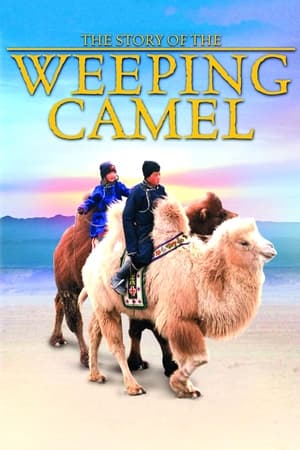
When a Mongolian nomadic family's newest camel colt is rejected by its mother, a musician is needed for a ritual to change her mind.
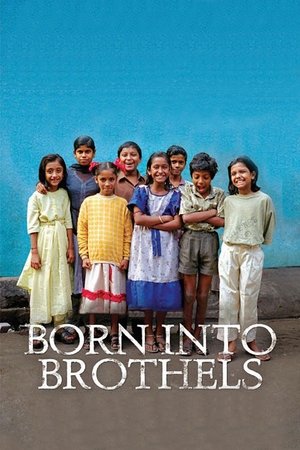
Documentary depicting the lives of child prostitutes in the red light district of Songachi, Calcutta. Director Zana Briski went to photograph the prostitutes when she met and became friends with their children. Briski began giving photography lessons to the children and became aware that their photography might be a way for them to lead better lives.
A dual portrait of young drifters on the streets of Odessa, where every day seems the same and the future keeps getting further away.
This film features two Russian communist politicians. Being committed Leninists; both of them have served several terms as city council members. Their horizons are broad, but what concerns them the most is the future of global communism. At one point, by decree of fate, their booming activities begin to expand far beyond the boundaries of their native St. Petersburg and the Russian Federation. However, the future of global communism remains unclear. What remains clear is the fact that in the modern world the tail still wags the dog. A documentary comedy.
Gunvor Nelson stares intently at her mother Carin, a woman whose body has been devastated by the challenges of her last days on this earth. In three astute shots, Nelson looks with honesty rather than awe at a woman whose spirit has somehow flown away but whose body still demands a share of our time and our space.
Documentary about red-bereted Jimmy Mirikitani, a feisty painter working and living on the street, near the World Trade Center, when 9/11 devastates the neighborhood. A nearby film editor, Linda Hattendorf, persuades elderly Jimmy to move in with her, while seeking a permanent home for him. The young woman delves into the California-born, Japan-raised artist's unique life which developed his resilient personality, and fuel his 2 main subjects, cats and internment camps. The editor films Jimmy's remarkable journey.