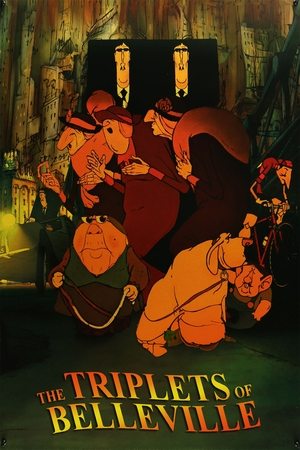
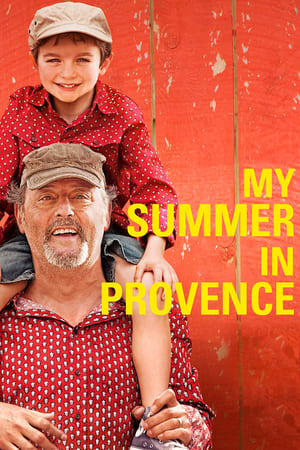
Orphaned after a Nazi air raid, Paulette, a young Parisian girl, runs into Michel, an older peasant boy, and the two quickly become close. Together, they try to make sense of the chaotic and crumbling world around them, attempting to cope with death as they create a burial ground for Paulette's deceased pet dog. Eventually, however, Paulette's stay with Michel's family is threatened by the harsh realities of wartime.
Marquise is a drama about the rise and fall of a beauteous actress. As cheerfully portrayed by Sophie Marceau, the eponymous heroine is an engagingly ribald, but perhaps rather too modern, character. She rises from an impoverished background to become a favourite of the Sun King, Louis XIV, and the mistress of the celebrated Racine, who wrote roles especially for her; but her fate, in the end, is a tragic one.
The deep conversation between a Japanese architect and a French actress forms the basis of this celebrated French film, considered one of the vanguard productions of the French New Wave. Set in Hiroshima after the end of World War II, the couple -- lovers turned friends -- recount, over many hours, previous romances and life experiences. The two intertwine their stories about the past with pondering the devastation wrought by the atomic bomb dropped on the city.
After long absence, a man returns to his hometown only to find his best friend has become an alcoholic.
A group of French soldiers, including the patrician Captain de Boeldieu and the working-class Lieutenant Maréchal, grapple with their own class differences after being captured and held in a World War I German prison camp. When the men are transferred to a high-security fortress, they must concoct a plan to escape beneath the watchful eye of aristocratic German officer von Rauffenstein, who has formed an unexpected bond with de Boeldieu.
A commanding officer defends three scapegoats on trial for a failed offensive that occurred within the French Army in 1916.
In the winter of 1959, a single mother and her young daughter arrive in a rural French town, where they open an unusual chocolate shop that disrupts the moral fiber of the strictly Catholic townsfolk and mayor.
Mr. Bean wins a trip to Cannes where he unwittingly separates a young boy from his father and must help the two reunite. On the way he discovers France, bicycling and true love, among other things.
A group of teenagers living in a housing project in the outskirts of Paris rehearse a scene from Marivaux's play of the same name. Krimo is determined not to take part, but after developing feelings for Lydia, he quickly assumes the main role and love interest in the play.
"Race d’Ep!" (which literally translates to "Breed of Faggots") was made by the “father of queer theory,” Guy Hocquenghem, in collaboration with radical queer filmmaker and provocateur Lionel Soukaz. The film traces the history of modern homosexuality through the twentieth century, from early sexology and the nudes of Baron von Gloeden to gay liberation and cruising on the streets of Paris. Influenced by the groundbreaking work of Michel Foucault on the history of sexuality and reflecting the revolutionary queer activism of its day, "Race d’Ep!" is a shockingly frank, sex-filled experimental documentary about gay culture emerging from the shadows.
A 19-year-old searches for her twin brother after he runs away from home, following a fight with their father.
From the mean streets of the Belleville district of Paris to the dazzling limelight of New York's most famous concert halls, Edith Piaf's life was a constant battle to sing and survive, to live and love. Raised in her grandmother's brothel, Piaf was discovered in 1935 by nightclub owner Louis Leplee, who persuaded her to sing despite her extreme nervousness. Piaf became one of France's immortal icons, her voice one of the indelible signatures of the 20th century.
Sophie, a quiet and shy maid working for an upper-class French family, finds a friend in the energetic and uncompromising postmaster Jeanne, who encourages her to stand up against her bourgeois employers.
Reluctantly, a sulky adolescent returns to her parents' house for yet another boring summer vacation, dabbling in desire and the art of desirability, eventually mixing reality with vision, caged fantasies with the fierce female sexuality.
During the events of May 1968 in France, different worldviews of conflicting relatives collide in their family estate.
Au revoir les enfants tells a heartbreaking story of friendship and devastating loss concerning two boys living in Nazi-occupied France. At a provincial Catholic boarding school, the precocious youths enjoy true camaraderie—until a secret is revealed. Based on events from writer-director Malle’s own childhood, the film is a subtle, precisely observed tale of courage, cowardice, and tragic awakening.
In the countryside near Normandy's beaches lives Marie, unhappy. It's 1945, she's married to Jérôme, a somewhat fussy milquetoast, diffident to the war around him and unwilling to move his wife to Paris, where she longs to live, shop, and party. A German outfit is bivouacked at Jérôme and Marie's crumbling château because its commanding officer is pursuing Marie. She's also eyed by a French spy working with the Allies as they plan D-Day. He woos her (posing to the Germans as her brother) and, in his passion, forgets his mission. Heroics come from an unexpected direction, and Marie makes her choice.
Danton and Robespierre were close friends and fought together in the French Revolution, but by 1793 Robespierre was France's ruler, determined to wipe out opposition with a series of mass executions that became known as the Reign of Terror. Danton, well known as a spokesman of the people, had been living in relative solitude in the French countryside, but he returned to Paris to challenge Robespierre's violent rule and call for the people to demand their rights. Robespierre, however, could not accept such a challenge, even from a friend and colleague, and he blocked out a plan for the capture and execution of Danton and his allies.
A history of the French Revolution beginning from the decision of the king to convene the Etats-Generaux in 1789 in order to deal with France's debt problem. Part one spans the event until August 10, 1792 (when the King Louis XVI lost all authority and was imprisoned). Part two carries the story through the end of the terror in 1794.
In a rural French village, an old man and his only remaining relative cast their covetous eyes on an adjoining vacant property. They need its spring water for growing their flowers, and are dismayed to hear that the man who has inherited it is moving in. They block up the spring and watch as their new neighbour tries to keep his crops watered from wells far afield through the hot summer. Though they see his desperate efforts are breaking his health and his wife and daughter's hearts, they think only of getting the water.