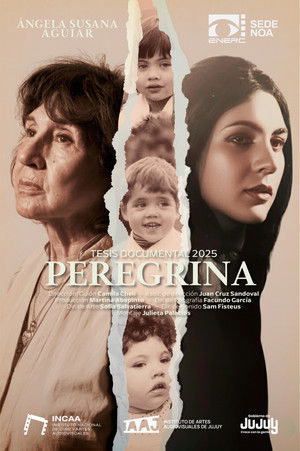
In December 2024, Ramón Inama received a phone call that would change his life: after nearly thirty years of searching, his sister, one of the nearly 500 babies stolen during Argentina’s last military dictatorship, had been found.
Documentary depicting the funeral of Argentinian First Lady Eva Perón in 1952.
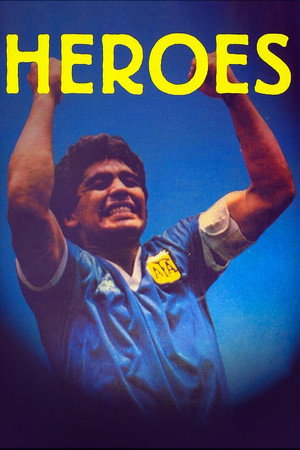
Documentary about the life story of one of Argentina's sports idols. One of the forty-three soccer players who won a World Cup, a fight. Filmed in Mendoza, Santa Fé, Rosario and Buenos Aires.
Two major events took place during 1989 in Argentina - Carlos Saul Menem was appointed new leader and the charismatic President saw off each car at the start of the Argentinian Rally at the Palermo Stadium. Local hero Recaldo with co-driver Jorge del Buono, led the field in one of the Lancia Delta Integrales but despite a flying start chose the wrong tyres. The challenge from Mikael Ericsson, Fiorio, Soto and Fischer led to some exciting duels and traumatic events which quickly whittled down the number of competitors. Only 33 crews completed the gruelling course out of the 77 starters. A memorable event faithfully recorded here for your enjoyment.
1982 Malvinas, La guerra desde el aire
Abrazando la Patagonia
Diego Tejerina, a prisoner with temporary releases, uses his knowledge of sociology to reflect on freedom and confinement.
During the 1960s there was a group of writers in Buenos Aires who, influenced by the North American Beatnik movement, called themselves Opium. Anarchists, rebels with a cause, populated Buenos Aires nights in bars like El Moderno, promoting a different movement for a different time. This film addresses not only Opium, but the sixties itself, and its collateral protagonists.
Documentary about the life and work of Jorge Luis Borges, from his own memories and reflections.
Remembering his old memories, he will leave a photograph in every place where he was happy.
Talented teen musicians from around the USA spend a week working with Grammy nominated professionals
Proyecto muerto v6 (6).mp4
A detailed account of each of the details of the Malvinas War based on interviews, dramatic scenes, maps and other elements of historical roots without ignoring the historical antecedents from the 18th century that ended in this confrontation.
"Stolen House" is a documentary short film that follows the migration story of Mark, a Russian photographer, and Katya, a Ukrainian artist, to Argentina. Through narrations, staged scenes, and archival material, fragments of their lives, feelings, and motivations are explored.
The story begins in Patagonia, deep south in Argentina, where researchers look for the remains of a German U-boat landing. This search leads them to Argentina during the '30s before Second World War, a time when anti-Semitism flourished in the country.
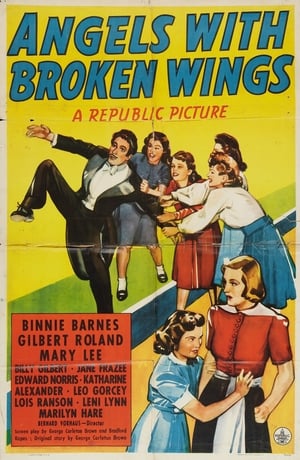
An all-girl band flees to Argentina to avoid their creditors. Comedy with songs.
Jeff Towne revisited four years after the release of the original film.
The third installment in Dan Přibáň's series of travel documentaries describes the author's journey with his friends across South America in vehicles that are often notorious but cult in their own way. The charming dynamics of the group on screen are further enhanced by the high-quality craftsmanship.
The New Tango (El Nuevo Tango) was not shown in Argentina for a long time as it deals with the ascent of Argentinean president Hector Campora in May 1973, and features Cuban and Chilean presidents, Osvaldo Dorticos and Salvador Allende. A million people gathered on the Plaza de Mayo to acclaim the new President. One of Cámpora's first presidential actions was a granting of amnesty to political prisoners who where jailed during the dictatorship. On 28 May Argentina restored diplomatic relations with Cuba, which then received Argentine aid - such as food and industrial products - to break the United States embargo against Cuba.
Documentary about the Football World Cup held in Argentina in 1978, focusing on the competition and behind the scenes of the most important soccer competition in the world. Two versions of the 1978 official film exist, the first "Copa 78 - O Poder do Futebol" was made by Brazilian directors Maurício Sherman and Victor di Mello in 1979 but was later withdrawn by FIFA because of its controversial content. The film includes an interview with Rodolfo Galimberti, one of the leaders of the Montoneros guerrilla group and also made accusations that the Argentinian competition organisation committee had deliberately hindered Brazilian chances of success by tampering with the pitch at Mar del Plata.