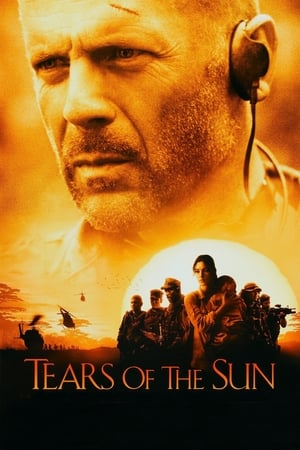
Navy SEAL Lieutenant A.K. Waters and his elite squadron of tactical specialists are forced to choose between their duty and their humanity, between following orders by ignoring the conflict that surrounds them, or finding the courage to follow their conscience and protect a group of innocent refugees. When the democratic government of Nigeria collapses and the country is taken over by a ruthless military dictator, Waters, a fiercely loyal and hardened veteran is dispatched on a routine mission to retrieve a Doctors Without Borders physician.
This is the sole surviving motion picture of Unique Film (Shanghai), one of China's three major film companies in the 1930s. The young lovers in rural China are framed by their evil landlord. The man is sent to prison; the woman is forced to get married. She tries to seek revenge but is killed. When the man is released from prison, he joins the People's Volunteer Army but is killed in battle. The film was significant in its time. Runje Shaw had imported advanced American audio film equipment and technology in 1931, making this one of the first sound films in China. As one of Unique's few ‘progress' films, it also reflects that this ‘entertainment-only', apolitical film company, under the left-wing influences in society, also needed to make films with topics such as the war effort and that criticise the bourgeoisie. Struggle is a joint effort among the best of talents in front of and behind the camera, and is also the only surviving work of director Qiu Qixiang.
1943. The affair between Anna, unhappily married to wheelchair-bound Pino, and deserter Franco unfolds in foggy Ferrara, intertwining with the power struggle taking place within local Fascist ranks that culminates in a massacre of civilians, including Franco's father – Pino sees it all from his window, but will he tell anyone?
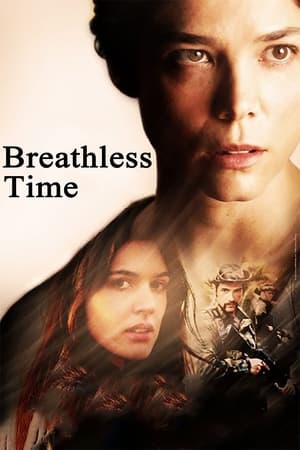
Per usual, four women meet on the bus on their commute to work. They share experiences and vent about their suffocating routines habitually, becoming a microcosm of society. Though each woman bears a distinct burden, their collective journey serves to diminish the struggle, ultimately showing us that meaning is found along the way, and not at the end of the line.
CSS Hunley tells the incredible true story of the crew of the manually propelled submarine CSS Hunley, during the siege of Charleston of 1864. It is a story of heroism in the face of adversity, the Hunley being the first submersible to sink an enemy boat in time of war. It also relates the human side of the story relating the uncommon and extaordinary temperament of the 9 men who led the Hunley into history and died valiantly accomplishing this feat.
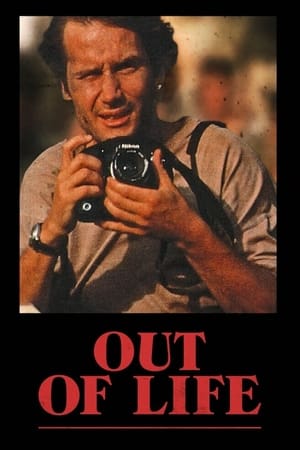
Patrick Perrault, a photo-journalist covering the war in Beirut in the late 1980s, is himself caught up in the hostilities when one day he is picked up and bundled into a car at gun-point. Blind-folded, he is taken to an unknown location where he discovers that he is being taken hostage by Lebanese guerrillas.
In 1859, idealist John Wickliff Shawnessey, a resident of Raintree County, Indiana, is distracted from his high school sweetheart Nell Gaither by Susanna Drake, a rich New Orleans girl. This love triangle is further complicated by the American Civil War, and dark family history.
During the American Civil War, two women, a wealthy white woman and a freed black slave, join forces to fight for freedom and the abolition of slavery.
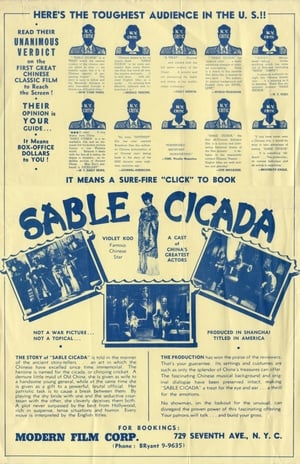
Diaochan (aka Diau Charn and Sable Cicada), one of the Four Beauties of China, is supposed to be so stunningly lovely that the moon was shamed to hide behind clouds. Despite being the only Beauty among the four who is not a real historical figure but one conjured by storytelling imagination and embellished by public fascination, her story was nonetheless incorporated by author Luo Guangzhong into his popular and influential novel Romance of the Three Kingdoms. Her tale is one of Machiavellian intrigue, in which she schemes with her godfather Wang Yun to restore moral order to the land, sowing discord between the corrupt Minister Dong Zhuo and his adopted son Lu Bu, a man of martial and military prowess.
Maria, a nurse whose daughter was killed by three militiamen, travels from Colombia to Spain with her younger son in order to get revenge.
In a small and remote Latin American mountain village, all the men are recruited to fight in the country's civil war. Left to fend for themselves, the women of the town, led by Rosalba, slowly emerge from their supporting roles as wives and daughters to become unwitting founders of a remarkable new society: an all female utopia. When the men, led by an American reporter, return to try to reclaim their power, a clash of sexes ensues with unsuspected consequences.
An anthology of four historical love affairs: at Versailles, Louis XIV shares his mistress with one of his subjects; a courtesan tries to disfigure her lover with acid; a medieval wife faces the wrath of her husband's father, who has her condemned to death; and a stage actress provides advice on life and love to her young colleague.
When men take up arms to go against their brothers, women have to take up gravediggers’ shovels. Ceebla (Fardouza Moussa Egueh, who we also saw in Gravedigger’s Wife), refuses to bargain for the cost of her labour. When her grave finally finds a taker, the revenue logic takes an unexpected twist. The Earth Has Ears is a civil war film without gunfire. It shows how the absurdity of war also turns everyday life at the home front irrational. / MSFF
Henry Fleming is a young Union soldier in the American Civil War. During his unit's first engagement, Henry flees the battlefield in fear. When he learns that the Union actually won the battle, shame over his cowardice leads him to lie to his friend Tom and the other soldiers, saying that he had been injured in battle. However, when he learns that his unit will be leading a charge against the enemy, Henry takes the opportunity to face his fears and redeem himself.
Spain, 1973. Dictator Francisco Franco has ruled the country since 1939 with an iron fist; but he is now a very old and sick man. The future of the weakened regime is in danger. Admiral Carrero Blanco is his natural successor. The Basque terrorist gang ETA decides that he must die to prevent the dictatorship from continuing.
Based on the experiences of Agu, a child fighting in the civil war of a West African country. Follows Agu's journey as he's forced to join a group of soldiers. While he fears his commander and many of the men around him, his fledgling childhood has been brutally shattered by the war raging through his country, and he is at first torn between conflicting revulsion and fascination.
Civil war in Belgium. Charles and Bruno are childhood friends. Walloon and Flamenco. Now one is a prisoner of war in the custody of the other.
In the summer of 1863, General Robert E. Lee leads the Confederate Army of Northern Virginia into Gettysburg, Pennsylvania with the goal of marching through to Washington, D.C. The Union Army of the Potomac, under the command of General George G. Meade, forms a defensive position to confront the rebel forces in what will prove to be the decisive battle of the American Civil War.
Follow a group of international journalists into the heart of the once cosmopolitan city of Sarajevo—now a danger zone of sniper and mortar attacks where residents still live. While reporting on an American aid worker who’s trying to get children out of the country, a British correspondent decides to take an orphaned girl home to London.
Confederate Col. Lafe Harvey (Earl Ross) travels home after the Civil War, where he must tell his niece, Betty (Frances Grant), that her father is presumed dead. Soon after he returns, scavengers destroy the family home and he and Betty escape westward. Meanwhile, Gen. John Harvey (William Welch), Betty's father, has been seriously injured but is not dead. He arrives at the deserted plantation with the help of Union soldier Tom (Bob Steele), who then pledges to help John find his family