Based on an idea by the writer Francis Marmande, Michel Portal, jazz clarinetist, leads young virtuoso musicians for this concerto.
Mozart's life and music are described against a background of the 18th century and of the European cities which influenced his career. Stresses the classic character of his compositions.
In the spotlight of global media coverage, the first transgender woman ever to perform as Don Giovanni in a professional opera, makes her historic debut in one of the reddest states in the U.S.
For the first 18 years of her life, Mozart’s sister shared equal billing with her brother. Musical partners and collaborators, Wolfgang Mozart and Maria-Anna Mozart played together before Kings and Queens, and were the talk of Europe. What happened to her? Forced into retirement by age 16 because she was a woman, a stunning new investigation explores why she was retired against her will and the explosive theory: did Maria-Anna Mozart continue to compose in secret?
“As death, when we come to consider it closely, is the true goal of our existence, I have formed during the last few years such close relationships with this best and truest friend of mankind that death's image is not only no longer terrifying to me, but is indeed very soothing and consoling” - thus said Mozart about death. Mozart died in 1791 and was buried in a mass grave, as standard at the time in Vienna for a person of his social and financial situation. In 2000, 452 of Riga’s deceased — people without relatives, the homeless and the unidentified — were buried at the Jaunciems cemetery. But this film is not about death: it's about Mozart, The Magic Flute, Riga, and love. A short commissioned for the Latvian exhibition at Venice Biennale.
Der Wadenmesser
Lucy Worsley traces the forgotten and fascinating story of the young Mozart's adventures in Georgian London. Arriving in 1764 as an eight-year-old boy, London held the promise of unrivalled musical opportunity. But in telling the telling the tale of Mozart's strange and unexpected encounters, Lucy reveals how life wasn't easy for the little boy in a big bustling city. With the demands of a royal performance, the humiliation of playing keyboard tricks in a London pub, a near fatal illness and finding himself heckled on the streets, it was a lot for a child to take. But London would prove pivotal, for it was here that the young Mozart made his musical breakthrough, blossoming from a precocious performer into a powerful new composer.
Made to celebrate the 250th anniversary of Mozart's birth, IN SEARCH OF MOZART is the first feature-length documentary on Mozart's life. Produced with the world's leading orchestras and musicians, told through a 25,000 mile journey along every route Mozart followed, this detective story takes us to the heart of genius. Throughout, it is the music that takes center stage, with the jigsaw of Mozart's life fitting around it.
Documentary about Wolfgang Amadeus Mozart.
In Baden-Baden, Nayo Titzin follows the producers of the opera Don Giovanni, created for the Innsbruck Festival of 2006. He is looking for a musical truth... What if Mozart's masterwork Don Giovanni had been interpreted in a wrong way for more than two centuries? Conductor René Jacobs, famous for his performance of Così fan tutte and laureate of a Grammy Award for his innovative recording of The Marriage of Figaro, comes back with new ideas on the comprehension of one of the greatest operas of all times. In this relevant documentary, Nayo Titzin clarifies and highlights all the brightness of those melodies and recitatives. Rewarded with many praises in the international press, this production shows the dramaturgical perfection of the "opera of the operas," the absolute of the genre, as Wagner once said. Once more, the Bulgarian director offers a fun and subtle report, and makes sure that everyone will understand this myth.
Mozart: Requiem KV 626 – Chor und Symphonieorchester des Bayerischen Rundfunks, Mariss Jansons
A drama based on the life of 18th century Italian lyricist Lorenzo da Ponte, who collaborated with Mozart on his "Don Giovanni" opera.
This release contains the celebrated 2006 production of Mozart's Nozze di Figaro that was directed for the stage by Claus Guth at that year's Salzburg Festival. Ildebrando D'Arcangelo takes the title role, and gets support from Anna Netrebko as Sussanna, Bo Skovhus as Il Conte Di Almaviva, and Dorothea Roschmann as La Contessa. Nikolaus Harnoncourt conducts the orchestra.
Count Almaviva lives with his Countess on their estate near Seville. The Count has his eye on his wife’s maid Susanna, who is betrothed to the Count’s servant, Figaro. Much to Figaro’s dismay, the Count plans to seduce Susanna on wedding night. Meanwhile, Cherubino, the Count’s young page, is infatuated with the Countess, but has just been dismissed after being discovered with Barbarina, the gardener Antonio’s daughter.
Mozart's second collaboration with the mercurial librettist Lorenzo da Ponte is among the very blackest of black comedies. Glyndebourne welcomes back the winning team of director Jonathan Kent and designer Paul Brown, while the music is conducted by Vladimir Jurowski. In the title role, the bass-baritone Gerald Finley, joined by Luca Pisaroni, Kate Royal and the young Russian soprano Anna Samuil.
Mozart’s Requiem – his final and unfinished masterpiece – is an extraordinary work. Discover the piece at the Salzburg Festival in the hands of conductor Teodor Currentzis, the ensemble musicAeterna, Anna Prohaska (soprano), Katharina Magiera (contralto), Mauro Peter (tenor), and Tareq Nazmi (bass). Few musical works are as steeped in legend as Mozart’s Requiem in D minor, K. 626. Commissioned anonymously by the eccentric count Franz von Walsegg, the funereal oeuvre would become Mozart’s last: when he died on December 5, 1791, only the Requiem aeternam and Kyrie movements were fully composed and orchestrated. Completed by other composers (Mozart’s student Franz Xaver Süssmayer in particular) using Mozart’s sketches and notes, the resulting work weaves the emotions we associate with death into a timeless musical exploration of every human being’s destiny, and constitutes a powerful final testament to its creator’s genius.
W. A. Mozart's childhood was very busy, connected with constant travelling, full of fame and admiration. His father Leopold, an accomplished musician, led his son purposefully towards the role of child prodigy. However, their travels in Europe were not only associated with success, but also with the family's struggle for subsistence and the mother's eternal fear for the fragile health of her children. And so we follow Mozart's first steps in the world of music to the premiere of his first opera, La finta semplice, which he wrote at the age of twelve.
How do we live together in an age of conflict? How do you heal a divided and angry people? In their 2017 production of Mozart’s La clemenza di Tito, Peter Sellars and Teodor Currentzis examine these questions through the story of a warrior-emperor who brings peace to his divided land and pardons his own would-be assassins. Written under a time crunch (legend has it that it was written in only 18 days, although it is likely an exaggeration) during the last year of Mozart’s life, the opera is based on a libretto written more than half a century earlier by Pietro Metastasio. It was commissioned for the coronation of Leopold II as King of Bohemia, and received its first public performance at the Estates Theatre in Prague on September 6, 1791.
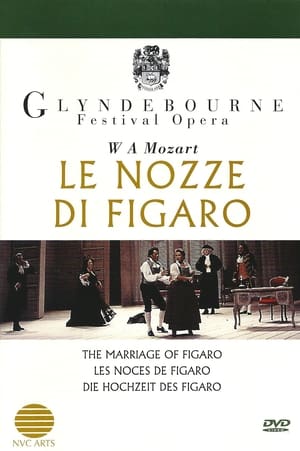
Live from Glyndebourne 1994. The first production to be filmed Live in Glyndebourne´s new opera house May 1994. The Marriage of Figaro is a continuation of the plot of The Barber of Seville several years later, and recounts a single “day of madness” in the palace of the Count Almaviva near Seville, Spain. Rosina is now the Countess; Dr. Bartolo is seeking revenge against Figaro for thwarting his plans to marry Rosina himself; and Count Almaviva has degenerated from the romantic youth of Barber into a scheming, bullying, skirt-chasing baritone. This follows the Count trying to obtain favours from Susanna, Figaro’s bride to be, under the nose of the Countess.
Mozart solennel