Sir David Attenborough narrates a documentary about the Kea, the world's only alpine parrot. Playful and destructive, it attacks cars, starts landslides and terrorises New Zealand ski resorts but behind the bad behaviour there's a sharp mind at work. David tries to play chess with a kea and discovers how its cheeky character is the key to its survival.
Norfolk Island, 800 miles off the coast of Australia, is home to some of the largest tiger sharks in the world. As strange as it sounds, some think this small island in the middle of the South Pacific has become like a drive-thru burger joint for tiger sharks to gorge on meat. For the first time, scientists are diving in to answer why there are so many huge tigers there. Shark biologists Lauren Meyers, Charlie Huveneers and Adam Barnett lure the giants to their boat to investigate and make a surprising discovery.
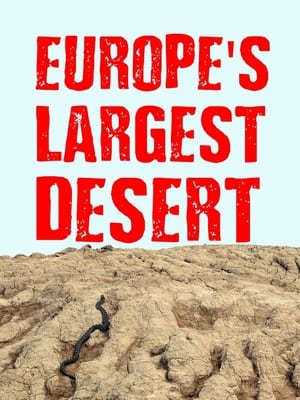
An apocalyptic sound of roaring machines incessantly intrudes into the habitats of man and nature. Barren landscapes and deserted villages linger in hypnotic restlessness. A self-destructive system meets resistance.
Attack of the Red Sea Sharks investigates why sharks killed three people in less than a year in the coastal waters of Red Sea resorts. Multiple witnesses captured the gruesome attacks, with the videos quickly going viral, sparking confusion and hysteria. Are these attacks part of a growing trend that is becoming more common worldwide? A team of scientists launches a global pursuit to answer that question and find ways to prevent future attacks.
How did humanity's earliest ancestors evolve into one of the most successful species on Earth? An extraordinary journey tracing the footsteps of early hominids. Using the latest paleoanthropological findings mixed with the latest CGI from Square Enix, this story is finally told.
An Otter Study is a 1912 British short black-and-white silent documentary film, produced by Kineto, featuring an otter in its natural habitat, including groundbreaking footage of underwater hunting scenes. The film provided a novel treatment of the creature, which had previously appeared on film only as the victim of hunt films, with the unique underwater footage, shot by a cameraman behind glass in a tank concealed on the bed of the river in the opening scene, and a concluding scene, excised from the surviving print, in which it escapes the hunters. It was long thought lost until footage from a 1920s Visual Education re-release of the film, re-edited under the supervision of Professor J Arthur Thomson of Aberdeen University's Natural History Department, was rediscovered.
Follows the story of "Grizzly Man" Timothy Treadwell and what the thirteen summers in a National Park in Alaska were like in his attempt to protect the grizzly bears. The film is full of unique images and a look into the spirit of a man who sacrificed himself for nature.
This is the story of the water spider, which, unlike land spiders, does not weave its web in the corners of rooms or in the tops of trees or bushes, but in the water.
Castor, la force de la nature
The deep waters of the Southern and Pacific Oceans still hold many mysteries. Two international teams of scientists set out to explore the icy depths of Antarctica and the abysses of the Mariana Trench. Filmed for the first time, creatures seemingly from another galaxy cohabit with champions of survival in extreme conditions.
This is the story of sound. Everything in the universe produces a unique acoustic signature called a soundscape. From Arctic ice sheets, to viruses, from planets to human beings. Sound is part of our culture, our heritage and an often overlooked part of all ecosystems on Earth. It is the music of the living world, but as we lose natural habitats all across the globe, we also lose its soundscapes. This film centers around the life work of Bernie Krause, a legend in the world of acoustics and soundscape ecology. To date, Bernie has recorded over 1200 individual habitats among his collection of over 50,000 individual recordings (his collection is now the largest collection of wilderness sounds in the world that spans decades of time).
Val Plumwood, environmental philosopher returns to Kakadu, where she was the victim of a crocodile attack. Against the backdrop of the steamy, intensely beautiful Kakadu National Park, she shares her thoughts on wilderness and wildlife.
Cuba's enforced isolation has resulted in the unlikeliest of marine reserves: a huge, rambling archipelago known as Jardines de la Reina, or "Gardens of the Queen." Stretching around 140 miles along the southern coast of Cuba, it's one of the longest barrier reef systems in the world. Get an up-close look at Fidel Castro's diving playground, a forgotten ocean paradise unseen for half a century, and witness exotic species rarely seen elsewhere in the region. It's the lost jewel of the Caribbean, but how long can this pristine wilderness survive?
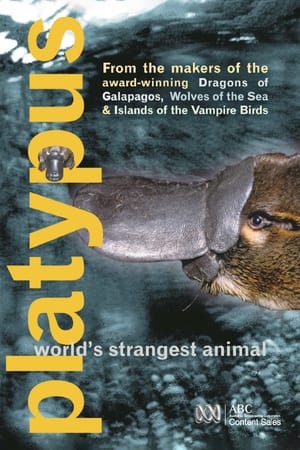
In a time of hardship, Hobart resident Peter Walsh turns to the secretive platypus for solace, only to discover it is the platypus that need his help to survive in a habitat under threat.
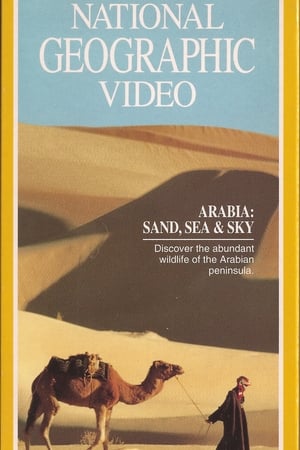
Sir David Attenborough unveils the two stunning underwater realms of Saudi Arabia - the flamboyant Red Sea and the contrasting hot muddy Gulf, capturing for the first time the rare event of Palolo worms spawning at night.
The Atlantic Flyway, the easternmost migration path in North America, is among the most vital ecological phenomenons in the world. Join explorer Tomas Koeck as he examines several unlikely relationships along this massive migratory chain.
Filmmaker Werner Herzog combs through the film archives of volcanologists Katia and Maurice Krafft to create a film that celebrates their legacy.
Introducing Gunner, a Cheetah born amidst the merciless killing fields of Botswana's Linyanti, where Africa's most formidable predators reign. In this treacherous realm, Gunner emerges as the runt of his litter, his playful nature overshadowing his instinct to hunt. Safeguarded by his vigilant brothers, fate deals a devastating blow as tragedy befalls them, leaving Gunner to face an unforgiving reality. Time is of the essence, for a ruthless coalition of cheetahs sets its sights on seizing Gunner's territory, sparing no expense. To endure against impossible odds, this underdog must swiftly forge a solitary path to survival.
LIVING WATERS: Intelligent Design in the Oceans of the Earth is a fascinating exploration of life in the liquid universe that covers more than 70% of our planet. Filmed in Canada, Bermuda, Polynesia, Mexico, and the United States, this remarkable documentary celebrates the beauty and brilliance of the biological systems that make life in the oceans possible. A spectacular tour of a dolphin’s internal sonar system—a mechanism so powerful and precise, the animals can locate and capture small fish buried in the sand. The magnetic compass embedded in the head of a sea turtle—a biological wonder that guides these long-distance travelers as they journey across thousands of miles of open sea. A Pacific salmon’s amazing sense of smell—an elaborate navigational aid that leads the fish back from years in the ocean to the gravel stream bed where it was born. The power and majestic grace of a humpback whale—a creature whose existence defies the theory of Darwinian evolution.
The documentary follows Polish artists on the first sailing expedition to Antarctica, their struggles, the first ever concert by Polish artists there, the first wet plate photography session & rare underwater encounters with leopard seals & other wildlife.