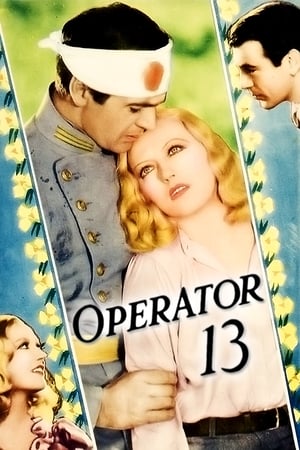
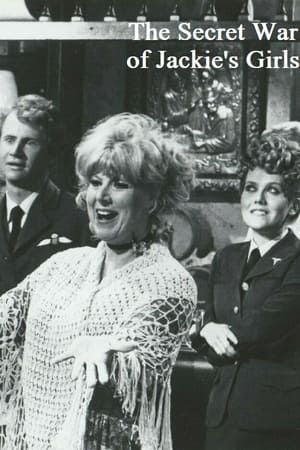
American Civil War, 1862. After the disaster of the Second Battle of Bull Run, Major Allen, chief of the Secret Service of the Union, asks actress Gail Loveless to become one of his operators and infiltrate enemy territory.
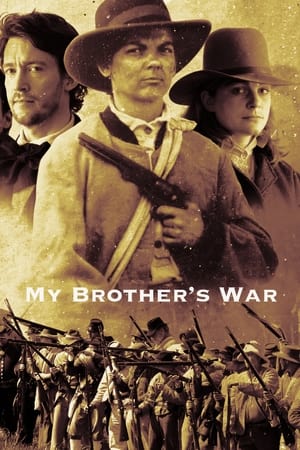
Civil War drama directed by Whitney Hamilton. Grace Kieler disguises herself as a man and takes her brother's place in the Confederate army in an effort to protect him from the horrors of the war. When she meets young war widow Virginia Klaising (Dana Bennison), the two form a bond that may get complicated once Grace reveals her true identity. My Brother's War is based on Hamilton's novel
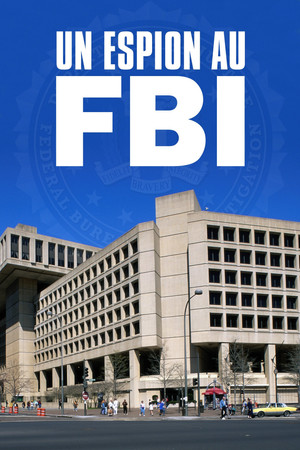
Robert Hanssen is a contradiction. On the surface he is a family man, devout Catholic, and career FBI agent. Secretly, he is a spy, betraying the trust of everyone he knows. Former FBI agents and journalists recount Hanssen’s life, what drew him to espionage, how he stayed hidden in plain sight for over 20 years, and the events that brought down the most damaging spy in American history.
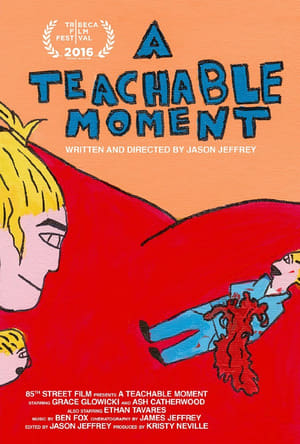
The nightmares of a woman living single in a big city are depicted in this story of newfound friendship.
A shock wave started as Stalin's daughter Svetlana Iosifovna Alliluyeva fled to the West. During her childhood, she remained at the center of power and was her father's favorite child. However, her life was overshadowed by death and violence. Her mother and brother died, family members were murdered, and her partner was exiled by Stalin. The Iron Curtain was an obstacle in her family dream. This documentary shows for the first time interviews with friends and relatives, exclusive photos and documentation, as well as the last and never broadcast interview with Alliloejeva.
Three guys decide to rob a bank but everything goes terribly wrong. One of them owns a time machine and they try robbing the bank again but fail to do so. With the time machine they start traveling to the past trying to do it right. In the journey they encounter the butterfly effect and need to get everything back to how it was.
Sifis is fed up with the smog in central Athens and decides with his family to move to the countryside to get some fresh air. But there, he gets hit by radiation from the Chornobyl nuclear reactor leak. When he decides to return to Athens to buy supplies, the side effects of the radiation begin to take effect, and not only does his hair fall out and he becomes bald, but he also becomes a laughing stock because of a tail that grows out of his backside.
Harpo played the hero, a detective named Watson who "made his entrance in a high hat, sliding down a coal chute into the basement". Groucho played an "old movie" villain, who "sported a long moustache and was clad in black", while Chico was probably his "chuckling [Italian] henchman". Zeppo portrayed a playboy who was the owner of a nightclub in which most of the action took place, including "a cabaret, [which allowed] the inclusion of a dance number". The final shot showed Groucho "in ball and chain, trudging slowly off into the gloaming". Harpo, in a rare moment of romantic glory, gets the girl in the end. This film is lost.
A group of spirited elderly citizens who rediscover their passion for life, hailing from a village where the literacy rate is pretty low, this motley group of elders will fight against the odds to achieve their graduation dreams.
Salto 15
Fed up with the violence and bullying in her city, Sydney dresses up like a bee to fight crime, but to reach her full potential she must first overcome a tragic event from her past.
The Follower is a lighthearted comedy with one central theme: "God doesn't always call the qualified, but He always qualifies the called."
In the 18th century, Emperor Chien Lung makes a journey into Southern China.
Behind the myth of Alexander the Great, romanticized by centuries of history, the reality of the character tends to fade. Here's a rereading of the story of a multi-faceted conqueror.
Another prank film by Yehuda Barkan. A gorilla reads a book on a public park bench, a waitress wears only an apron, a model becomes a fashion exhibit for a striptease show, a street full of toilet bowls and more.
XI "A" follows the story of Lina - a former dancer, who goes in for her dream job, namely to become a literature teacher.
This production of Ostrava TV Studios was inspired by actual events which occurred in the Ostrava region of Moravia during the 1920s and 1930s. A hedonistic bon vivant of a lawyer named Zajícek (played by Václav Postránecký) came up with a sophisticated finance speculation scheme which exceeded the bounds of law. When discovered it became one of the most closely-followed First Republic scandals.
Neves and his wife Celia are the owners and managers of the 'Little Star Pension', a familiar hotel that caters to bourgeois family and would-be actors, instead of the ill-reputed 'Good-Night Pension' (just across the narrow street), where gigolos, whores, and criminals of all sorts may go for a quick encounter. However, not all is well among the ten residents of 'Little Star Pension': each dialogue line from every hotel guest is evidence that he, or her, has a reason (actually, more than one) to hate Neves - to the point of wishing him dead. Carelessness (or devious intention) by one party will provide the means; another, will create the propitious moment; yet another, and then the rest of them will create the festive New Year's Eve occasion - to do with Neves forever! Obviously, only the famous world private-eye Hércules Pirôt can solve the crime... for which he is called by phone, even before the deed is done.
How does a nation slip into war? Dateline-Saigon profiles the controversial reporting of five Pulitzer Prize-winning journalists -The New York Times' David Halberstam, the Associated Press' Malcolm Browne, Peter Arnett, and legendary photojournalist Horst Faas, and UPI's Neil Sheehan -- during the early years of the Vietnam War as President John F. Kennedy is secretly committing US troops to what is initially dismissed by some as 'a nice little war in a land of tigers and elephants.' 'When the government is telling the truth, reporters become a relatively unimportant conduit to what is happening,' Halberstam tells us. 'But when the government doesn't tell the truth, begins to twist the truth, hide the truth, then the journalist becomes involuntarily infinitely more important.'