Light Upon Light: A Documentary on Hijab is an intimate and deeply personal exploration of the diverse, raw, and untold stories of hijabi women. Through open and vulnerable conversations with 7 women, the film dismantles stereotypes, highlights the challenges imposed by society, and celebrates the profound beauty of the hijab beyond a mere clothing choice. It captures the individuality of each woman’s story—how they came to wear the hijab, the struggles they’ve faced, and the strength they’ve found in it. More than just fabric, the hijab is a journey, often misunderstood, and influenced by the way the world perceives it. By amplifying voices that are often unheard, the documentary creates a space for empathy, challenges misconceptions, and invites a deeper understanding of what it truly means to wear the hijab; inspiring everyone to see hijab in a new light.
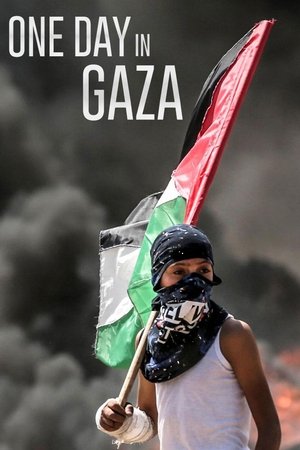
This deeply affecting documentary follows a small number of Israelis and Gazans through the most dramatic and tragic year of their lives. Using personal and previously unseen footage, it tells the story of the war in Gaza and the October 7 attacks through deeply emotional stories from both sides of the conflict. In Gaza, the film follows three individuals from reaction to the October 7th attacks to the start of the bombing by the Israeli military and to the loss of family members that all three suffer. In Israel, we witness footage of the Israeli characters, as they and their family members are attacked by Hamas on October 7th and then follow their stories through the year.
Documentary about war photographer James Nachtwey, considered by many the greatest war photographer ever.
During the Syrian civil war, the district of Yarmouk, home to thousands of Palestinians, became the scene of dramatic and ferocious fighting. The film follows the destiny of civilians during the brutal sieges, imposed by the Syrian regime, that took place in the wake of the battles. With his camera, Abdallah Al-Khatib composes a love song to a place that proudly resists the atrocities of war.
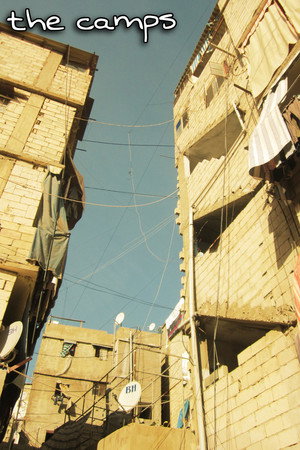
13-year-old Khodor is a child whose family tries to issue him an ID document that proves his existence and gives him the right to education, health-care and movement outside of the Palestinian refugee camp of Shatila in Beirut, Lebanon. Through the process, many of the family's old secrets are revealed.
A humor-inflected history of the of the number one, covering military applications in ancient Rome, the measurement of distances in India, and the decimal system created by Leibnitz.
Letter to My Tribe started with a question: Why don’t more Jews and Israelis speak out about Palestine? Over many years my mother, who represents a more messianic perspective, and I have had numerous arguments, some recorded, some not. These form the backbone of this video essay in which Israelis and Jews, journalists, activists and a rabbi are interviewed, and in which documentation of actions on the ground, in the West Bank, are woven with more personal family histories and journeys to Iraq and to Poland.
In an exclusive new documentary, Max Blumenthal rips the cover off the media deceptions and atrocity hoaxes Israel pushed after October 7 to create political space for its gruesome assault on the Gaza Strip. Blumenthal exposes the US mainstream media's role as a megaphone for the Israeli government, introducing new lies even after their initial ones were debunked. Atrocity Inc raises serious questions about the official narrative of October 7, while revealing how Israel's army has consciously engaged in the same hideous atrocities which it falsely accused Palestinian militants of committing.
BLESSED BLESSED OBLIVION weaves together a portrait of masculine performativity in East Jerusalem, as manifested in gyms, body shops and hair dressing parlors.
A French nurse and an Italian photographer devote their lives to the Palestinian cause but make the ultimate sacrifice. This is a story about two Europeans who devoted their lives to the Palestinian cause and paid the ultimate price.
It is May 8, 2024, and Israel is preparing to launch a destructive military operation in Rafah. Tahani, a Palestinian woman who has been internally displaced multiple times since the beginning of the attacks on Gaza, wonders where she and her children can find refuge once again. The film provides a glimpse into her family’s life before and after October 7, depicting the anguish of a mother who, marked by a painful loss, struggles to find peace.
Cinepoem about the current Palestinian tragedy, with Brazilian films from 1922 and 1932 (the indigenous catastrophe), documentaries from 2023/2024, essays by Jean-Luc Godard, Hani Jawharieh and Mustafa Abu Ali, statements by Edgar Morin and Noam Chomsky, and a poem by Mahmud Darwich.
A verité legal drama about Judge Kholoud Al-Faqih, the first woman appointed to a Shari'a court in the Middle East, whose career provides rare insights into both Islamic law and gendered justice.
Filmed in the heart of the Gaza Strip in the spring of 2025 and produced by WeWorld as part of a project funded by the European Union, in collaboration with Save the Children, the film tells everyday stories of resistance and humanity: a barber who continues to welcome his clients amid the rubble, restoring dignity and beauty; Wafa, a woman who dedicates her life to children with disabilities or those who have been orphaned, offering care, education, play, and a sense of normalcy. An intimate narrative that illuminates the strength of the community even in one of the world's most fragile and war-torn contexts, like Gaza, where the population has been under constant attack for two years and under blockade for over 18 years.
This feature length investigation by Al Jazeera’s Investigative Unit exposes Israeli war crimes in the Gaza Strip through the medium of photos and videos posted online by Israeli soldiers themselves during the year long conflict. The I-Unit has built up a database of thousands of videos, photos and social media posts. Where possible it has identified the posters and those who appear. The material reveals a range of illegal activities, from wanton destruction and looting to the demolition of entire neighbourhoods and murder. The film also tells the story of the war through the eyes of Palestinian journalists, human rights workers and ordinary residents of the Gaza Strip. And it exposes the complicity of Western governments – in particular the use of RAF Akrotiri in Cyprus as a base for British surveillance flights over Gaza.
Going behind the usual images of war-torn Gaza, Swiss documentarian Nicolas Wadimoff offers this look at how people survive despite constant threat of danger. Children still play, rappers still create music and families still love one another. In addition to visiting the United Nations Food Distribution Center, Wadimoff films at a derelict amusement park and profiles the DARG TeaM rappers, whose politically charged music proclaims their defiance.
Seven militant women (fedaiyat) of the revolutionary generation tell the story of the Palestinian resistance through accounts of their own lives. Cut from 35 hours of interviews with leaders of the armed struggle, the film presents an image of confident, unapologetic and proud feminine identity. Together, the memories of these women narrate the dream of a generation, yet unrealized.
The first documentary to present an unabashed critique of the impact of the Syrian government’s agricultural and land reforms, Everyday Life in a Syrian Village delivers a powerful jab at the state’s conceit of redressing social and economic inequities.
Here and Elsewhere takes its name from the contrasting footage it shows of the fedayeen and of a French family watching television at home. Originally shot by the Dziga Vertov Group as a film on Palestinian freedom fighters, Godard later reworked the material alongside Anne-Marie Miéville.
Amos Gitai returns to the occupied territories for the first time since his 1982 documentary FIELD DIARY. WEST OF THE JORDAN RIVER describes the efforts of citizens, Israelis and Palestinians, who are trying to overcome the consequences of occupation. Gitai's film shows the human ties woven by the military, human rights activists, journalists, mourning mothers and even Jewish settlers. Faced with the failure of politics to solve the occupation issue, these men and women rise and act in the name of their civic consciousness. This human energy is a proposal for long overdue change.