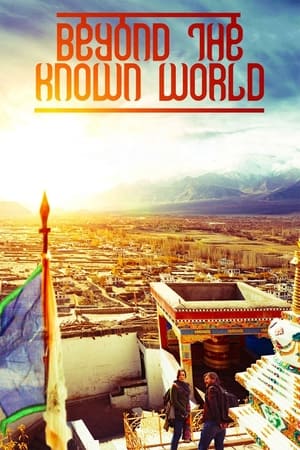
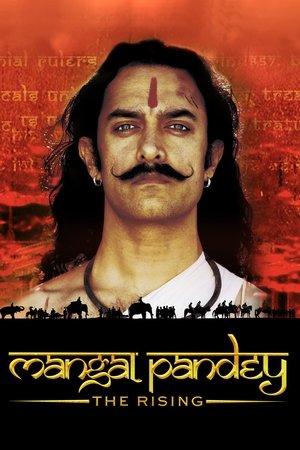
India. Smita is an untouchable. She dreams of seeing her daughter escape her miserable condition and enter school. Italy. Giulia works in her father’s workshop. When he has an accident, she discovers that the family business is ruined. Canada. Sarah, a successful lawyer, is about to be promoted to the head of her firm when she learns that she is ill. Three lives, three women, three continents. Three battles to fight. Although they don’t know each other, Smita, Giulia and Sarah are unknowingly linked by their most intimate and singular bond.
Since they graduated from school five years ago, the friends Jo and Kati have not seen one another. While one of them travels around the world and has arrived in India in the meantime, the other one is struggling with the final exams of the university. But five years are like blown away when Kati one day listens to a worrying message from her friend on her answering machine. Immediately, she drops everything and drives to her home village in order to gather together the old friends from her school days and to look for Jo in India.
A Punjabi family is thrown into chaos following the eldest son's refusal to go through with an arranged marriage to a woman who has travelled over from India.
Despite her fame and fortune, Mina, a successful Indian actress in Mumbai, can't forget her little sister Sita, from whom she was forced to separate after their mother's death in a village. Thirty years later she will finally find out that Sita is alive and well in Barcelona. However, Sita's adoptive parents have erased all traces of her past. She is now called Paula, works as a researcher in Biology and has no recollection of her Indian background, let alone of Mina. Faced with the shocking truths of her past, Paula begins a long journey of self-discovery, aided along the way by her budding romance with the handsome Indian immigrant Prakash. A story of hope and love across Mumbai and Barcelona; from India to the Mediterranean and all the way back.
Three brothers are separated after their parents are murdered by a gangster. Years later, they find their paths intertwined around a family song.
Freshly arrived Sandhurst-trained Captain Alan King, better versed in Pashtun then any of the veterans and born locally as army brat, survives an attack on his escort to his Northwest Frontier province garrison near the Khyber pass because of Ahmed, a native Afridi deserter from the Muslim fanatic rebel Karram Khan's forces. As soon as his fellow officers learn his mother was a native Muslim which got his parents disowned even by their own families, he falls prey to stubborn prejudiced discrimination, Lieutenant Geoffrey Heath even moves out of their quarters, except from half-Irish Lt. Ben Baird.
Indian parents have to meet with Chinese parents when their kids decide to get married in LA.
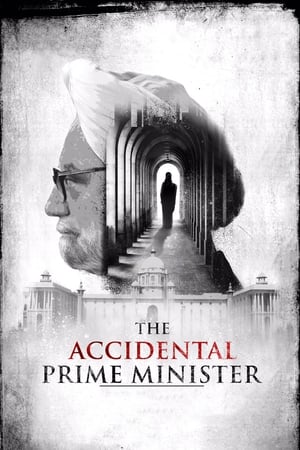
Based on the memoir by Indian policy analyst Sanjaya Baru, The Accidental Prime Minister explores Manmohan Singh's tenure as the Prime Minister of India, and the kind of control he had over his cabinet and the country.
Director Jean Renoir’s entrancing first color feature—shot entirely on location in India—is a visual tour de force. Based on the novel by Rumer Godden, the film eloquently contrasts the growing pains of three young women with the immutability of the Bengal river around which their daily lives unfold. Enriched by Renoir’s subtle understanding and appreciation for India and its people, The River gracefully explores the fragile connections between transitory emotions and everlasting creation.
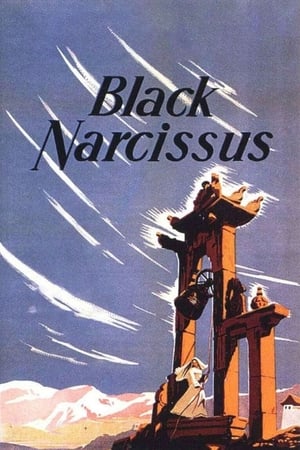
Jeff, a mental health patient in a clinic high in the Swiss Alps, escapes to his only friend Morton, while Prisha, the daughter of Indian guru Majula, mysteriously enters Jeff’s life. After an argument with Morton at his bakery where the fugitive wanted to start over, Jeff moves on and visits a monk who gives workshops for enlightenment in the Balkan mountains, in search and full of hope for redemption. Still haunted by his past, Jeff must run again and travels with Prisha, who secretly followed him, to India to find a new life and to get her father’s blessing for the two now in love. Can he fulfil his dream?
Young revolutionary Kartar Singh Sarabha fights for Indian Independence in the early 1900s.
Lahoriye is the story of love. The love which does not see boundaries, the love which does not see nations. Kikar Singh (Amrinder Gill) is a clerk at DTO office and his family holds a piece of land which is right at the LOC. The people living in Border areas are familiar with the situation. Right across the land in Pakistan is a Kinnow farm where Ameeran (Sargun Mehta) works and live with her family. Kikar falls for Ameeran and slowly slowly even Ameeran falls for Kikar. What follows next is a tale of romance which is worth watching on the big screen.
When a poisonous snake slithers onto an Englishman's stomach in India, his associate and a doctor race to save him.
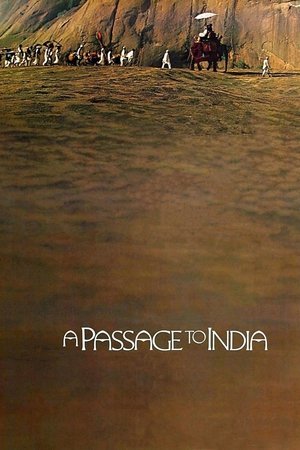
In 1870s India, Charulata is an isolated, artistically inclined woman who sees little of her busy journalist husband, Bhupati. Realizing that his wife is alienated and unhappy, he convinces his cousin, Amal, to spend time with Charulata and nourish her creative impulses. Amal is a fledgling poet himself, and he and Charulata bond over their shared love of art.
American teen Neelu feels like a fish out of water amidst preparations for her sister's wedding in Delhi until she forges a brief and unexpected connection with Zeyb, a quiet sari store clerk who moonlights as an internet drag queen.
Tara and Maya are inseparable, with the same tastes, habits, and hobbies. Years later, the two have matured but have maintained their friendship. Tara marries local prince Raj Singh, who succeeds the throne as the sole heir. After the marriage, Raj seeks another female to satisfy his sexual desires, with his sights settling on Maya, putting a perhaps unforgivable strain on a longtime friendship.
Chanel, Dorinda, and Aqua are off to India to star in a Bollywood movie. But when they discover that they will have to compete against each other to get the role in the movie, will the Cheetahs break up again?
One of a four-film series on the AIDS epidemic in India, this film examines the virus as Indian society's great class leveler, following its transmission through interweaving stories that link urban and rural India.
The film starts in the early 1950s showing Sreedharan, the protagonist, as a very popular communist leader and trade union activist. He is forced to go underground after his name was associated with the murder of the owner of a tile factory. He is considered to be dead by his party and they even erect a memorial for him. But he makes an unexpected comeback almost 10 years later, after the first communist ministry gained and lost power in Kerala and after the Communist Party of India has split. On his return, he spends his time sleeping and drinking. His come back is first a puzzle and then an embarrassment to his comrades and family. As the disappointment on his new face grows, he is found murdered. The film ends when both the communist parties jointly celebrate his martyrdom.
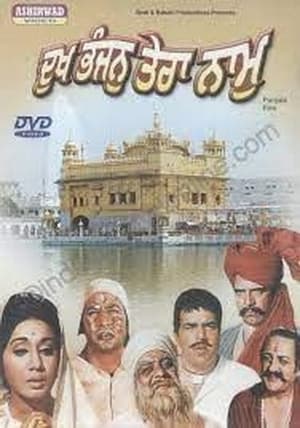
It's an ordinary winter's day when disillusioned Police Inspector Azaad Singh is tasked with delivering a very important file to his superior. Traversing expanses of rural and urban Punjab along the way, he reckons with the state's past and present realities, and faces an untimely existential crisis as a result.