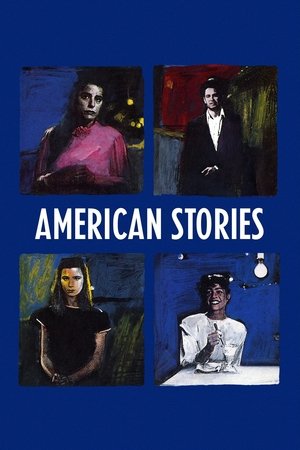
A young refugee travels from Russia to America in search of her lost father and falls in love with a gypsy horseman.
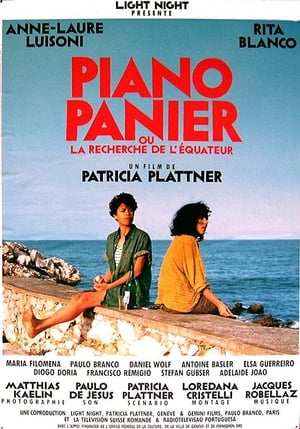
Two teenage girls with parallel lives but coming from different socio-economic backgrounds meet one summer to discover friendship and a sexual awakening.
In 1984-85, people at Lake Tahoe fell ill with flu symptoms, but they didn't get better. Medical literature documents similar outbreaks: in 1934 at LA county hospital, in 1948-49 in Iceland, in 1956 in Punta Gorda, Florida. The malady now has a name, chronic fatigue syndrome, and filmmaker Kim Snyder, who suffered from the disease for several years, tells her story and talks to victims and their families, and to physicians and researchers: is it viral, it is psychosomatic, is it one disease or several (a syndrome) ; what's the CDC doing about it; what's it like to have a disease that's not yet understood? Her inquiry takes her to Punta Gorda and to a high-school graduation.
Paul, a teenager in the underground scene of early-nineties Paris, forms a DJ collective with his friends and together they plunge into the nightlife of sex, drugs, and endless music.
A virgin, a married woman, a career woman, and the progress is made by combining the abnormal sex of each of them. This is Rumi Tama's first work in 1983, which can be called the Japanese version of the Decameron, and is a female writer who has made a point of creating enjoyable pornographic entertainment without logic.
Zolita has been suffering from nightmares and insomnia for months - so she decides to visit a priestess said to help people with similar issues. She road trips to the retreat with her girlfriend Lily, and along the way, she finds out Lily isn't who she says she is.
A collection of film clips from horror movies and interviews with the actors and directors who made them.
Terrenal is the portrait of a village in Patagonia where the forms of life of two different social groups are related. These two ways of living in the same place show a crude and hostile environment whose experience is conditioned.
This story follows a young student, who is orphaned as she grows to adulthood in the shadow of the 1956 Hungarian uprising. Coming from the Communist intelligentsia, she sees her friends and family react differently. Her lover, a married factory manager, supports the patriots and later assists fellow workers in staging a strike. Meanwhile her sister and others express anger at being forced from their homes during the revolution and continue to express a hatred for the rebels afterwards. But in the end they realize that for all people, real life is not possible after the revolt and its brutal suppression by the Soviets and their collaborators.
Seven young women from Berlin discuss their experiences with the pill in a studio setting and react to the ideas that young men of the same age have about this contraceptive. The film is based on the work of the women's group "Brot und Rosen" and their book "Frauenhandbuch Nr.1 Abtreibung und Verhütung".
“It ain’t easy…being green” is the favorite expression of Stormé DeLarverie, a woman whose life flouted prescriptions of gender and race. During the 1950s and '60s she toured the black theater circuit as a mistress of ceremonies and the sole male impersonator of the legendary Jewel Box Revue, America’s first integrated female impersonation show and forerunner of La Cage aux Folles.
Initially airing on HBO's "America Undercover" series, this riveting documentary focuses on three families shattered by the psychiatric disorder of schizophrenia. Subjects "Bob," "Missy" and "Steven" have lived for over a decade with schizophrenia. The film documents the difficult day-to-day existence of both those afflicted with this order and the families searching for answers to their loved ones' suffering. This film also shows the varied and variably successful treatment methods for each of the subjects—one is placed in a group home, one is placed in an institution, and one is cared for at home. The documentary was critically acclaimed for its compassionate treatment of mental illness.
Narcissus (from Greek Narkissos) shares the root nark-, with narcosis and narcotic. All these words have the same origin in the verb narkaō – to intoxicate through a strong smell. I was particularly interested to find out why a handsome and overall fortunate man says he never feels happy. He draws people in, but ends up hurting them, yet he is impossible to resist.
Jinx Sister is a story about Laura (Wiseman) who is convinced she is a jinx. People who get close to her have a habit of dying. She thought fleeing to the other side of the world would help. Instead, she developed a serious drink problem. Waking one night in an alley, with no recollection of who she had sex with, Laura decides its time to face up to her past.
Ai-ling married a wealthy and powerful businessman. Ching-ling married Sun Yat-sen, the revolutionary founder of modern China. Mei-ling married Chiang Kai-shek, China's leader during World War II. The sisters captured the world's fascination for their brilliant marriages and their strong influence on their nation.
An adventurous love story between two young women of different social and economic backgrounds who find themselves going through all the typical struggles of a new romance.
Documentary looking at a century of cycling. Commissioned to mark the arrival of the 2014 Tour de France in Yorkshire, the film makes full use of stunning British Film Institute footage to transport the audience on a journey from the invention of the modern bike, through the rise of recreational cycling, to gruelling competitive races. Award-winning director Daisy Asquith artfully combines the richly-diverse archive with a hypnotic soundtrack from cult composer Bill Nelson in a joyful, absorbing watch for both cycling and archive fans.
Through an intimate and artistic lens, yet investigative and political, Milk brings a universal focus on the politics, commercialization and controversies surrounding birth and infant feeding over the canvas of stunningly beautiful visuals and poignant voices from around the globe.
A nurse takes care of a patient in her house. Maria do Céu has been a nurse for more than forty years, working at an old Hospital in Lisbon. She was sixteen, when she arrived to Lisbon, coming from a small village in Alentejo. At the Hospital, she reads the file of an old patient who was also her friend. The file is then closed. Maria do Céu returns to her village, where she sings at the people’s house choir.
Margit and her older sister Katla flee for safety after their mother is burned to death for witchcraft. Finding shelter with Johan and his resentful young son, Jonas, the sisters help form an impromptu family unit that’s soon strained by Katla’s burgeoning sorcery.