In Edo-era Japan, a ukiyo-e artist languishes in his master’s shadow. Creatively stifled, he finds consolation in the company of a prostitute, and becomes entangled in a love triangle. A mystery emerges involving two portraits and the sudden disappearance of the artist Sharaku. Helmed by Cannes-selected director Tatsuji Yamazaki, the film employs kabuki-inspired sequences and stylised sets.
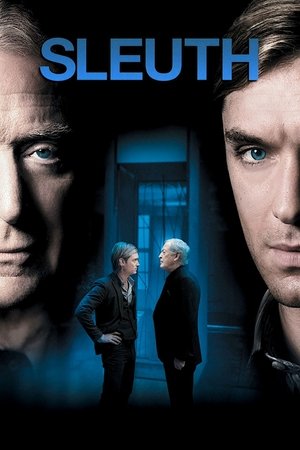
Two symbiotic sociopaths play obscurely deviant mind games with each other while engaging in perversely brutal acts of violence against victims apparently chosen at random
Maryša, a peasant daughter, is forced by her greedy parents to marry a rich miller, a widower with three children. But she loves the village scoundrel Franck, who has no hope against Vávra. Francek goes to the army and Maryša and Vávra go to catechism with the priest. Maryša and Vávra's marriage is unhappy. The parents also realize their mistake, especially Lízal, who offers his daughter to return home. Maryša refuses and also rejects the proposal of Franck, who has returned from the army and asks her to run away to Brno with him. She chooses a tragic solution...
Belisa
Vinícius, a young surfer from Rio, falls in love with Paigô, an Indigenous woman, after seeing her in a viral video shot in the Tatuyo’s village. Determined to pursue this romance, he travels to the village, where he must overcome the challenges of adapting to a new environment, cultural differences and survival tests imposed by his beloved’s family.
The story of Aapo Heikkilä, who served as a docent of orthotopology at the University of Oulu for nearly 30 years and was the world’s sole representative of this unique "scientific field" . In the 1980s, Heikkilä became a superstar in the scientific community and, at the same time, the University of Oulu’s most famous scholar.
Jejich den
Shakespeare’s Othello is revisited exactly as it was written, brought into the present through the power of dialect alone. Iago, Othello, and Desdemona are regrettably still among us, in contemporary events told through a great classic. Set in the early 2000s, it is a timeless story where good and evil intertwine in a maelstrom of deceit, betrayal and mad jealousy.
An aging king splits up his kingdom for his three daughters to govern, but is misled about their affections and driven into exile.
Bratři Karamazovi
This omnibus release consists of three playlets filmed and aired during television's Golden Age, and starring some of the legends of film and television. The collection originally ran as a two-hour segment on December 14, 1959, on the anthology series The Play of the Week, broadcast locally in New York City via the independent radio station WNTA. Each "tale" in the anthology was adapted from a single tale by the inimitable Sholom Aleichem, regarded by many as the "Yiddish Mark Twain". Included are: "A Tale of Chelm" starring Zero Mostel and Nancy Walker in the story of a bookseller attempting to buy a goat; "Bontche Schweig" about a poor man (Jack Gilford) whose recent arrival in Heaven makes the angels cry; and "The High School" about a Jewish merchant (Morris Carnovsky) persuaded by his wife (Gertrude Berg) to let their son attend a particular high school despite the enforcement of quotas for Jewish students.
A brother and sister's battle over a prized heirloom piano unleashes haunting truths about how the past is perceived — and who defines a family legacy.
An elder C.S. Lewis looks back on his remarkable journey from hard-boiled atheist to the most renowned Christian writer of the past century.
Dvaasedmdesátka
The story, set in the context of the construction of long-distance power lines, captures the life and work of a group of fitters who come to a mountain village to electrify the local cooperative. After being transferred to a lower-paid and "demeaning" job, the group's relationships begin to break down. Debut film of Slovakian director Martin Hollý.
Poslední
Útrapy z rozumu
A hack screenwriter writes a screenplay for a former silent film star who has faded into Hollywood obscurity. Film adaptation of the Andrew Lloyd Webber stage musical based on the iconic 1950 film.
A sheep farmer brings his new wife to his father's ranch and the old man takes an instant dislike to her.
The story of an old Jewish widow named Daisy Werthan and her relationship with her black chauffeur, Hoke. From an initial mere work relationship grew in 25 years a strong friendship between the two very different characters, in a time when those types of relationships were shunned.