In the beginning was sex. To the ancient cultures, sexuality, love and sex were inextricably connected with the creation of the earth, the heavens and the underworld. To the citizens of the ancient civilizations that gave birth to ours, sensuality and sexuality were an integral part of society. This series exploration of Egyptian and Roman sexual practice allows viewers the opportunity to see how attitudes and beliefs about sexuality functioned in the early civilizations, and how those attitudes reveal the unspoken rules that defined public and private behavior. Episodes cover human sex and sexuality from a historical perspective, and examines in detail different texts and images which provide us with evidence about sexual practices, beliefs and ideologies in the ancient world – from erotica on pots to legal texts, phallic votive objects, fertility ceremonies, prostitution, female and hermaphroditic creator deities, from religious rituals to sex manuals.
A short documentary film that captures the city (Cairo) in its most tranquil and calm state, from 5 am to 7 am.
For over 4000 years, the Sphinx has puzzled all who have laid eyes on it. What is this crouching lion, human-headed creature? Who built it and why? To unlock its secrets, two teams of scientists and sculptors immerse themselves in the world of ancient Egypt — a land of pharaohs and pyramids, animal gods and mummies, sun worship and human sacrifice.
Il était une fois... « La Conspiration du Caire »
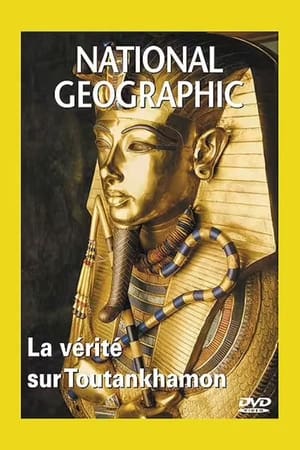
Toutankhamon : du trésor à la malédiction
Tutankhamun: Secrets of the Tomb (2022) In 1922, the tomb of Egyptian boy king Tutankhamun was unearthed. Now the extraordinary scientific truth of the 'Pharaoh's Curse' is revealed.
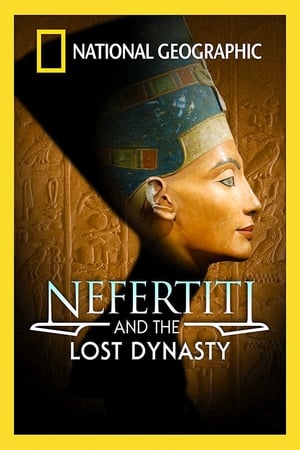
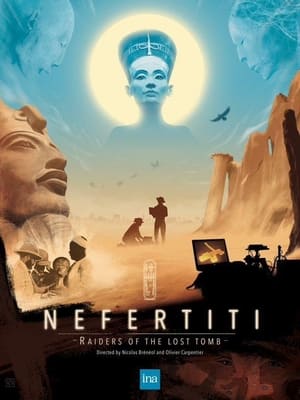
It is one of Egypt's enduring mysteries. What happened to Nefertiti and her husband, Akhenaten - the radical king, and likely father of King Tut? In a dark and mysterious tomb located in the Valley of the Kings, there is a small chamber with two mummies without sarcophagi or wrappings. At times, both have been identified as Queen Nefertiti by scholars, filmmakers and historians. But the evidence has been circumstantial at best.
A BBC News investigation has revealed how violent criminal gangs are finding, abusing and extorting people from the LGBT community they meet online in Egypt. Using masking technology to hide the identities of the people he meets, Ahmed Shihab-Eldin navigates the complex online and real-life world of people who identify as queer and who have been repeatedly targeted by a gang with violent viral video humiliations and police arrests.
Produced by CBN Documentaries and Biblical Productions, "In Our Hands" tells the story of the Battle of Jerusalem in the Six-Day War through the eyes of the IDF's 55th Paratrooper Brigade
Board a traditional felucca sailboat and travel down the Nile from Aswan to Cairo, visiting spectacular ancient Egyptian tombs and temples on the way.
Rome was famed for the decadence of its ruling class, however, what about the ordinary citizens of these ancient cultures? How did they lead their day to day lives in an age when the average life expectancy was little more than forty? Did they believe in the Pagan Gods? What were their sex lives like? What did they do for entertainment? How ordinary Romans lived is, for the most part ...
Egypt's Great Pyramid may be humanity's greatest achievement: a skyscraper of stone built without computers or complex machinery. This super-sized tomb has fascinated historians and archaeologists for centuries, but exactly how the ancient Egyptians finished the monument and fitted its two and a half million blocks in a quarter of a century has long remained an enigma. Today the secrets of the pyramid are finally being revealed thanks to a series of new findings. At the foot of the monument, archaeologists are uncovering the last surviving relic of the pharaoh Khufu, whose tomb it is: a huge ceremonial boat buried in flat-pack form for more than 4500 years. It's a clue that points to the important role that ships and water could have played in the pyramids' construction. This documentary follows investigations that reveal how strong the link between pyramids and boats is. It's a story of more than how Egypt built a pyramid: it's about how the pyramid helped build the modern world.
Has the famed Egyptian beauty, Queen Nefertiti, been found in a secret chamber deep in the Valley of the Kings? A Discovery Channel Quest expedition led by Dr. Joann Fletcher and a team of internationally renowned scientists from the University of York Mummy Research Team hopes to find out. If they find her, it will be one of the greatest archaeological discoveries since Nefertiti's stepson, King Tutankhamen, was discovered in 1922. The "Great Royal Wife" of the renegade Akhenaten, Nefertiti was a mother of six who helped lead a religious revolution that changed Egypt and the world forever. Yet after her death, her enemies destroyed all evidence of her life. Now, drawing on 13 years of research, Fletcher and her team bring Nefertiti's turbulent reign to life like never before with cutting-edge computer animations to recreate ancient Egypt's great temples, x-rays to reveal the telltale signs of foul play on her mummy, and forensic graphics to recreate the mummy's face.
Contrasts ancient and modern methods of irrigation along the Nile. Discusses the benefits of the dam at Aswan. Shows how the Nile brings fertility to Egypt and serves as a vital artery of transportation.
Travel to ancient Egypt to see how science was used to tell time, make a workable calendar, and align huge buildings. You'll learn about the connection the ancient Egyptians felt with the stars and various astronomical phenomena, and experience some of the most spectacular temples and tombs of the ancient world recreated in all of their original splendor. Telly Award winner. Narrated by John Rhys-Davies, of the Indiana Jones films and The Lord of the Rings films.
The grail is not the gold, nor the books of ancient wisdom, but the 3,000 year old DNA of the mummies, which may lead to a cure for malaria.
Oases are more than fairytale places in the desert sand. Amidst the stony heights of the Andes, the endless expanse of the Pacific, or the hectic concrete sausages of Mumbai, islands of life flourish. In breathtaking shots, the documentary explores the phenomenon of oases – and the magical places in the Saharan sand are of course included.
In a neighbourhood in Bhar Lazrak, Tunis, residents live under the imminent threat of the state, which plans to demolish the area. Built spontaneously during the 2011 revolution by a group of people without state authorisation, the neighbourhood now faces an uncertain fate. One evening, mysterious lights appear in the neighbourhood, breaking the silence of the sleepers.
Raml Station is one of the most famous places in all of Alexandria. This documentary captures the beauty of Raml Station.
As part of a high-tech forensic probe into the demise of Egyptian Pharaoh Tutankhamun, scientists use X-rays and CT scans as they attempt to reach a conclusion about just how this famed king died. In addition, they explore the mysterious curse on explorers linked to Tut's tomb excavation.