In the year 1957 the cold war expands to space. The Soviet-Union sends Sputnik as the first manmade object into earth-orbit. 3 years later Yuri Gagarin enters space as the first man in space. The so called "Space Race" seems to be decided. But in 1961 President Kennedy promised to send American Astronauts to the Moon. The Apollo Project was born. A space ship had to be built that is strong enough to escape earth's gravitation, land on the moon and bring the crew safely back to earth. Motion Designer Christian worked with his brother and Composer Wolfgang for 18 months on this shortfilm. The foundation were thousands original NASA photographies, taken from the Astronauts during the Apollo Missions, which were released in September 2015. It is an animated collage using different techniques to bring the stills to life.
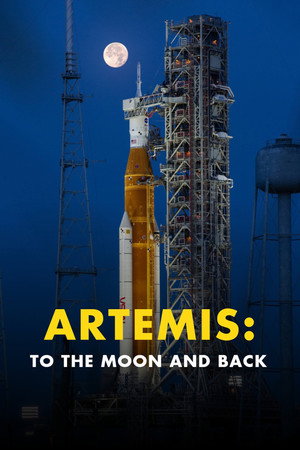
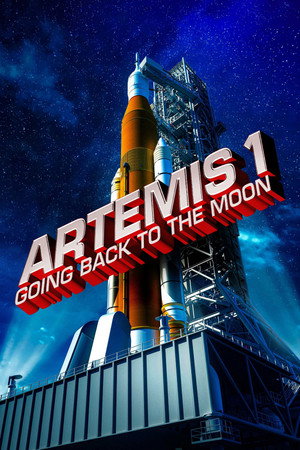
Follow the extraordinary inside story of NASA engineers as they race to build and launch Artemis I, the world's biggest rocket, as it prepares for missions that will transport humans to the moon, then launch an amazing journey to Mars and beyond.
Moonscape is a free and freely downloadable high-definition documentary about the first manned Moon landing. Funded and produced by space enthusiasts from all over the world, it shows the full, unedited Apollo 11 landing and moonwalk, using only the original TV and film footage and the original audio and photographs. All this material has been scanned, digitized and restored from the best available sources. The live TV broadcast, the 16mm color film footage shot on the Moon and in Mission Control, and the Hasselblad 70mm color photographs taken by astronauts Buzz Aldrin and Neil Armstrong, have been fully synchronized with the audio recordings (including the onboard and Mission Control recordings) and are presented in real time, as they happened, with full subtitles in English or Italian.
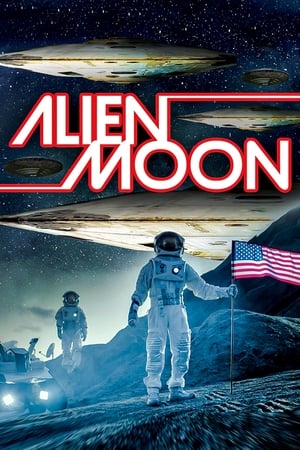
Our enigmatic moon may have a sinister origin that mankind is not prepared for. From astronaut UFO encounters, to flashing lights, to geometric anomalies on the surface that appear to be structures, it's possible that the moon my actually be the home of ancient aliens or be serving as a base of operations. For the moon to be able to perfectly eclipse the sun is a mathematical impossibility based on our current understanding of psychics but we also know that the moon could be hollow from experiments performed on Apollo missions. Clearly, there is an intelligence involved with our mysterious satellite.
Never-before-aired NASA footage presents evidence that the Moon is being used as a base.
Twelve men who belong to one of the world's most exclusive fraternities -- people who've walked on the surface of the moon -- are paid homage in this documentary. Using newsreel footage, rare NASA photographs, and digitally animated re-creations, Magnificent Desolation: Walking on the Moon examines the Apollo missions between 1969 and 1972 which put astronauts on the moon.
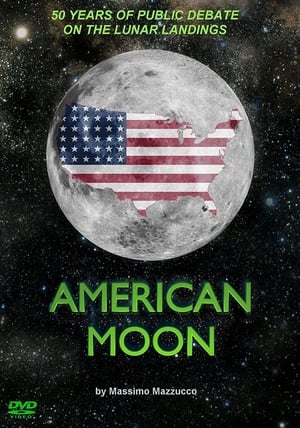
Has man really been to the moon? It’s been 50 years, and the debate rages on. For the firs time, a film compiles in a single piece of work, all the best evidence in favor of the moon landings and the evidence contrary to them. For the first time we can also analyze the Apollo pictures in detail, with the aid of some among the top photographers in the world. What was the Apollo project really? The biggest achievement in the history of mankind, or the biggest fakery of all times, watched on live television by more than half a billion people?
De l'autre coté de la lune
A dance between moon and ocean, forests and rivers. A short film by Scott Barley, originally made for a "half moon phase" sequence for Tadhg O'Sullivan's essay film, 'To the Moon' (2020). Shot on iPhone Xs with various rephotographing techniques, combined with superimposed drawings and paintings by Scott Barley. Released as a standalone short film in 2024 as part of 'Short Films (2012–2020): Solo Works by Scott Barley' on Blu-ray.
Wylie carries a telescope through the streets of Los Angeles to offer passersby a new and closer look at a familiar object: the moon. Because everyone needs to keep looking up. Because it is a beautiful and wondrous sight to behold the body of the moon.
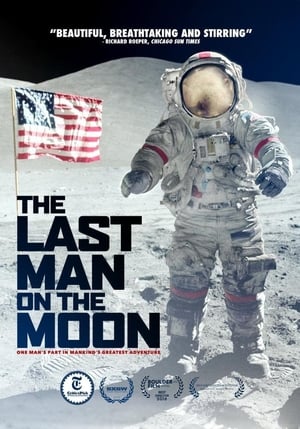
The 1960s was an extraordinary time for the United States. Unburdened by post-war reparations, Americans were preoccupied with other developments like NASA, the game-changing space programme that put Neil Armstrong on the moon. Yet it was astronauts like Eugene Cernan who paved the uneven, perilous path to lunar exploration. A test pilot who lived to court danger, he was recruited along with 14 other men in a secretive process that saw them become the closest of friends and adversaries. In this intensely competitive environment, Cernan was one of only three men who was sent twice to the moon, with his second trip also being NASA’s final lunar mission. As he looks back at what he loved and lost during the eight years in Houston, an incomparably eventful life emerges into view. Director Mark Craig crafts a quietly epic biography that combines the rare insight of the surviving former astronauts with archival footage and otherworldly moonscapes.
Humankind has always dreamt of the night sky. Of the infinite freedom offered by the black void, and of the strong, shining beacon inviting us to ascend. This is a story, a history of the events that led up to our conquest of space, and the consequences throughout wider humanity. The film is a collage. Of genres, documentary and comedy. Of media, drawing from painting and film. Of films, cannibalising all film history. Of truth, both objective and subjective. Watch the small steps and let your mind take a giant leap.
This is a beautiful and poetic cinematic ode to our moon. Made primarily from international cinematic archives in combination with literary fragments and original moonlit cinematography filmed across five continents, To the Moon steps lightly through the ages and ideas that people have drawn from the moon to create a meditative work.
Apollo Astronauts: Training NASA's Moon Men
April 13th, 1970, 180,000 miles from Earth, a devastating malfunction leaves Apollo 13 leaking previous oxygen and its crew of three astronauts facing a life and death crisis. If Mission Control cannot find a way to bring Apollo 13 home, the astronauts will be stranded 200,000 miles from Earth in their dying ship. Now with limited power and supplies on board the spacecraft, the ground teams work around the clocking, engineering creative solutions to overcome carbon dioxide poisoning, dehydration and the freezing temperatures of deep space, to ensure the crew's survival. Using spectacular NASA footage, exclusive interviews with Apollo space scientists and stunning visual effects; this film explores the thirteen remarkable factors that brought the crew safely home, and the full story of the courage and ingenuity that cemented Apollo 13 as NASA's finest hour.
A look at the Apollo 11 mission to land on the moon led by commander Neil Armstrong and pilot Buzz Aldrin.
1972 was the year a great affair ended, as the human race fell out of love with the moon. Just three years after the world was gripped by Neil Armstrong's giant leap for mankind, the last man left the moon and we have never been back. This film tells the epic story of our love affair with the moon - what inspired it, how it faded away and how we are now falling in love all over again.
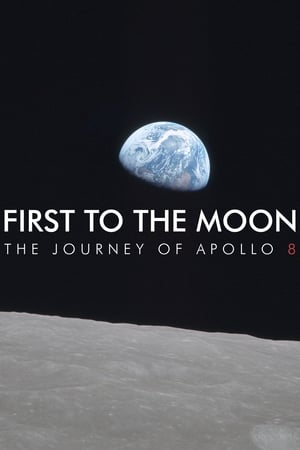
Apollo astronauts and engineers tell the inside story of Apollo 8, the first manned mission to the moon. The U.S. space program suffered a bitter setback when Apollo 1 ended in a deadly fire during a pre-launch run-through. In disarray, and threatened by the prospect of a Soviet Union victory in the space race, NASA decided upon a radical and risky change of plan: turn Apollo 8 from an earth-orbit mission into a daring sprint to the moon while relying on untried new technologies. Fifty years after the historic mission, the Apollo 8 astronauts and engineers recount the feats of engineering that paved the way to the moon.
A series of programs designed for the adult layman who has a curiosity about the skies and the makeup of the universe in which we live. The terms used during the series are fully explained and materials from a number of great observatories and institutions of learning are used for visual illustration. It begins with the solar system and works outward, stimulating interest in this area and awakening a desire for further study and investigation.
Is a spectacular journey across 4 billion years of evolution exploring how the Moon has been essential in setting up the pace to create life on Earth and how it has been a source of inspiration and fascination for men ever since