A woman of nobility battles patriarchal norms in order to improve educational access for women in early 1900s Indonesian society.
In Brunnenberg prison for men, the new warden introduces a revolutionary convict re-socializing project: training guide dogs for the blind. The perks make all convicts volunteer for only seven slots. Except burly macho Moskowitch 'Mosk', who cares only for the manly work out contest. The warden blackmails him, he can only do the contest if his assigned pup passes the first test. All dogs must pass or the project is halted. Unlike the others, Mosk only starts caring for his canine when it gets sick.
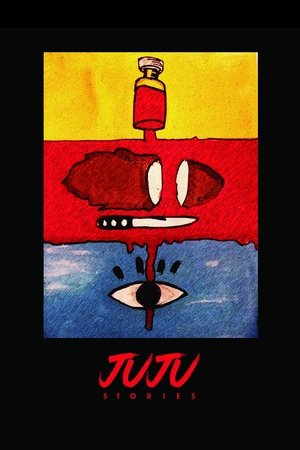
Two boys with different experiences and goals meet up in a sprawling African market. One is looking for a job, to get back what was stolen from him and return home. The other will do anything to avoid having to go back with his family. They become friends and together they reinvent the world.
The story of a group of contemporary young people, growing up in well-to-do small-town
Majid fights his own coach for Faiza's heart and the dream of playing international football.
The story of Dian Fossey, a scientist who came to Africa to study the vanishing mountain gorillas, and later fought to protect them.
An epic about anthropologists who hunt and capture pygmies for study back in Europe, in an attempt to illustrate the link between man and ape.
It tells the story of a boy Kumasenu who moves to the city of Accra from a small fishing village, encouraged by his cousin Agboh's exaggerated tales of the wonders of city life. Hungry, he steals bread and is caught by police, but is rescued by a doctor and his wife who find him work. Agboh attempts to get Kumasenu to rob the doctor, but Kumasenu foils his cousin's plans.
A young mute woman is raped and becomes pregnant, with disastrous consequences within her family. The film also sketches the social/economic situation in urban Mali in the 1970s, particularly in relation to the treatment of women.
Inspector Rizzo in Napoli gets a message from a policeman from South Africa who wants to meet him. Immediately before this meeting the South African policeman is killed. Dying he shows Rizzo a picture of his young son Bodo. Rizzo travels to Johannesburg to find out what the policeman was working on and to find Bodo.
A city with its problems. A gang of abandoned children provide for themselves and pose as heroes. The police are on their backs day and night. They are enterprising, energetic, and full of fresh vitality. Despite the fact they are rejected by their parents and ignored by the world, they form among themselves a powerful example of solidarity. Ablakon is something of a different order. He is an adult delinquent and a swindler. Posing as a businessman, he has deceived a countless number of people. When he and his accomplice return to the village, his extravagant behaviour is mistaken for a sign of success. Following his example many young people leave for the city. But they will soon understand their mistake...
Ali is the image of modern Africa. He happily returns from a football match on his motorbike but a nasty surprise is waiting for him at his parents' home: he finds Haoua, his bride-to-be, waiting for him. The wedding is celebrated shortly afterwards and the two begin living together under the same roof. They are strangers but cannot stand each other. Haoua is the classic traditional woman who has just arrived from the village, God-fearing and faithful to the laws of tradition. Ali's friends advise him to look for a second wife. He meets Henriette, an uninhibited and provocative city girl, the woman of his dreams. To meet Henriette's constant requests, Ali 'borrows' some money from the coffers of commander Soleymane, but he is discovered and ends up in prison. Henriette is furious and leaves him, whilst Haoua cries for him in despair.
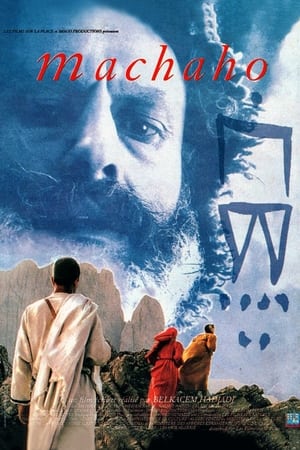
Tourneur, a self-proclaimed cinéaste, feuds with Cinema and his gang, who are obsessed with foreign action movies.
The year is 1950 and an English couple, Louise and Michael, have arrived in French-occupied Indochina to cover a story on a French-owned rubber plantation. They are to be the guests of the enigmatic plantation overseer, Daniel, and his beautiful yet difficult daughter Viola, at their elegant, decaying villa amid a tropical jungle. Michael and Louise hope that some time spent working in an exotic location will help reignite the passion in their floundering marriage. Instead they become unwittingly involved in the personal, sexual and political tensions of their hosts. Daniel is desperate to hold onto a way of life no longer possible in a country struggling for independence, bringing him into conflict with not only his daughter but also with his adopted country.
An African mother will do just about anything to protect her child. Bilaly is a simple peasant who is blind. He wants to “know” a woman before he dies, but try as his mother might, she cannot find someone to oblige. She finally gets an idea – an idea that completely stuns the village.
Run escapes... He just killed the Prime Minister of his country. In order to do so, he had to act as if he was a crazy man, wandering through the city. His life comes back by flashes; his childhood with Tourou when his dream was to become a rain miracle-worker, his adventures with Gladys the eater, and his past as a young member of militia, in the heart of the politic and military conflict in Ivory Coast. All those lives, Run didn't choose them. Every time, he felt in by running from another life. That's the reason why his name's Run.
Tabataba tells the story of a small Malagasy village during the independence uprising which took place in 1947 in the south of the country. For several months, part of the Malagasy population revolted against the French colonial army in a bloody struggle. The repression in villages that followed was terrible, leading to fires, arrests and torture. Women, children and the elderly were the indirect victims of the conflict and suffered particularly from famine and illness. One leader of the MDRM Malagasy Party, which campaigns for the independence of the country, arrives in a village. Solo (François Botozandry), the main character, is still too young to fight but he sees his brother and most of the men in his clan join up. His grandmother, Bakanga (Soavelo), knows what will happen, but Solo still hopes his elder brother will return a hero. After months of rumours, he sees instead the French army arrive to crush the rebellion.
Berlin at the end of the 19th Century. Alexander Hoffmann is an ambitious PhD student of Ethnology. When a delegation of the Herero and Nama tribes travels to Berlin during a ‘Colonial Exhibition’, he takes a special interest in their young female translator Kezia Kambazembi as subject for his studies.
John Meadham, in charge of a West African trading post, wires the home office in London that he is tired and worn out and that they need to send a replacement to take over. The company sends a stiff upper-lipper, Charles Summers, accompanied by his wife, Margaret. An antagonism develops between the two men from the moment Summers arrives.
The story of an unruly class of bright, funny history students at a Yorkshire grammar school in pursuit of an undergraduate place at Oxford or Cambridge. Bounced between their maverick English master, a young and shrewd teacher hired to up their test scores, a grossly out-numbered history teacher, and a headmaster obsessed with results, the boys attempt to pass.