Die von der Sanitätskolonne
In 1947, two years after the end of the Second World War, Film Journal No. 1 was released in Sarajevo. Fifty years later, after the collapse of the Communist bloc, this newsreel was lost in the confusion of the fighting in Yugoslavia. In Journal No. 1 Hito Steyerl attempts to find out how the footage got lost and what was on this document from the Sutjeska studio. In the simultaneous projection of Journal No. 1 the ‘unattainability of an historical zero hour of the national identity’ takes concrete form: The lost newsreel reports on a literacy campaign as well as Muslim women confidently removing their headscarves. We listen however to eyewitnesses trying to recapture the lost content and we see the artist Arman Kulasic making a number of drawings that resemble the story-boards for the lost film. What appears to be moments of great change remain limited by subjective and uncertain memory. The film was premiered at documenta 12.
Chuck Close, an astounding portrait of one of the world's leading contemporary painters, was one of two parting gifts (her second is a film on Louise Bourgeois) from Marion Cajori, a filmmaker who died recently, and before her time. With editing completed by filmmaker Ken Kobland, Chuck Close lives the life and work of a man who has reinvented portraiture. Close photographs his subjects, blows up the image to gigantic proportions, divides it into a detailed grid and then uses a complex set of colors and patterning to reconstruct each face.
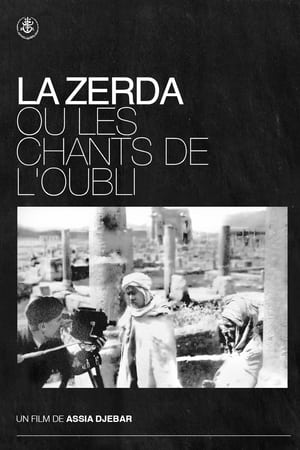
“La Zerda and the songs of oblivion” (1982) is one of only two films made by the Algerian novelist Assia Djebar, with “La Nouba des femmes du mont Chenoua” (1977). Powerful poetic essay based on archives, in which Assia Djebar – in collaboration with the poet Malek Alloula and the composer Ahmed Essyad – deconstructs the French colonial propaganda of the Pathé-Gaumont newsreels from 1912 to 1942, to reveal the signs of revolt among the subjugated North African population. Through the reassembly of these propaganda images, Djebar recovers the history of the Zerda ceremonies, suggesting that the power and mysticism of this tradition were obliterated and erased by the predatory voyeurism of the colonial gaze. This very gaze is thus subverted and a hidden tradition of resistance and struggle is revealed, against any exoticizing and orientalist temptation.
Documentary that portrays the life of the Navarrese composer Emiliana de Zubeldia, a woman ahead of her time.
Buddhist monks open up about the joys and challenges of living out the precepts of the Buddha as a full-time vocation. Controversies swirling within modern monastic Buddhism are examined, from celibacy and the role of women to racism and concerns about the environment.
Konserven für den Winter - aber nur aus dem eigenen Betrieb
Kirche und Heimat
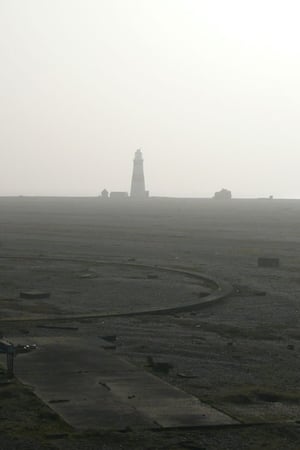
Construed in the time of running clouds, a panoramic and another examination of vacant buildings on the British shore (Orford Ness), a deserted place on Earth, place of non-specificity as a base for an open course of events that shape the sense, consisting in interaction between the image and the viewer.
They're clean, educated, articulate and rarely receive public assistance. But following a divorce, job loss or a long illness, a growing number of middle-class women are forced to live out of their cars. Directed by Michèle Ohayon (Colors Straight Up) and narrated by Jodie Foster, It Was a Wonderful Life chronicles the hardships and triumphs of six "hidden homeless" women as they struggle to survive, one day at a time.
On the evening of April 30, 1971, a standing room only audience of local literati and feminists packed New York City’s Town Hall to watch Norman Mailer, who had just written “The Prisoner of Sex,” grapple with a panel of passionate feminists. The subject was Women’s Liberation, an issue on which Mailer seemed like the devil’s own advocate.
Reporter Clay Pigeon interviews New Yorkers in October, 2008.
When filmmaker Will Lautzenheiser's limbs are amputated, his life is derailed and he turns to stand-up comedy as therapy. Meanwhile, a world-famous medical team is performing transplants that restore bodies to unprecedented levels. Despite grave risks, Will agrees to undergo an experimental double-arm transplant in the hope of reclaiming his independence.
Two actresses take us through a series of 'raps' and sketches about what it means to be beautiful and black.
In this astonishing twelve-part project for and about television — the title of which refers to a 19th-century French primer Le tour de la France par deux enfants — Godard and Miéville take a detour through the everyday lives of two children in contemporary France.
The Phantom of the Operator is a poetic film collage that documents the construction and rise of female telephone operators and their eventual replacement with computerized communications systems.
Documentary about the work of 6 criminal profilers around the world.
Creative and competitive, members of the Evil Geniuses Starcraft 2 team must prove themselves to make the cut in professional video gaming. Good Game follows the team as they discover that one wrong move could end their dreams.
Naomi Kawase's documentary about Nishii Kazuo, a photo critic. He is the last chief editor for the Camera Mainichi magazine, rushing through his time with Araki Nobuyoshi and Moriyama Daido as provocative artists in the photograph world.
It all began on a couch. He watched her undress and they made love for the first time.