In Sara's class, the popular kids, also known as the kings and queens, are subjected to daily humiliations, which include having their pants pulled down or water thrown on them, but this is only a sign of their elevated status. Sara is the only blond and blue-eyed girl in her class, and she is completely overlooked by the kings and queens who do not have blond hair and blue eyes. She has a secret crush on one of the kings, who is way out of her league, and she doesn't have any friends either, but would like to become friends with Karen, also an outsider who aspires to a better status. One day, Sara eyes an opportunity to boost her popularity by humiliating herself and thereby become queen. Karen instantly becomes her friend, she seems to catch the eye of her kingly crush and popularity appears within her reach. However, her happiness is short-lived, and in the end she learns a far more valuable lesson than how to be queen for a day.
Reform school teacher tries to carry his class to the right path by teaching them diving.
Daniel, the leader of a criminal youth gang, views new guy Victor first as a threat, then as possible addition to his gang. When Victor refuses, but sets his eyes on Daniel's Sister Nancy, Daniel orders her to get close to Victor so she can persuade him to join the gang. Daniel does not expect that instead the relationship with Victor makes Nancy longing for a life without crime. A juvenile-delinquent-crime-musical!
Stockholm, in the 1950s. Erik is expelled from the local school for getting into one brawl too many. To protect Erik from his violent stepfather’s reaction to his expulsion, Erik's mother arranges for Erik to spend a year at Stjärnsberg Boarding School, the only school willing to accept him. This is Erik's last chance to graduate to Upper School and he promises his mother, for his and her sake, to do all he can to stay out of trouble.
Following the arrest of her mother, Ramona, young Vanessa Lutz decides to go in search of her estranged grandmother. On the way, she is given a ride by school counselor Bob Wolverton. During the journey, Lutz begins to realize that Bob is the notorious I-5 Killer and manages to escape by shooting him several times. Wounded but still very much alive, Bob pursues Lutz across the state in this modern retelling of Little Red Riding Hood.
Sewashi and Doraemon find themselves way back in time and meet Nobita. It is up to Doraemon to take care of Nobita or else he will not return to the present.
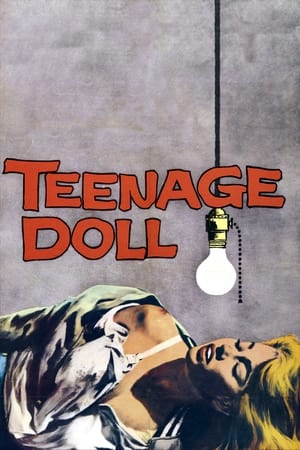
A group of bored, disaffected New York City teenagers spend a day skating, smoking, drinking, partying, deflowering virgins, and getting into fights.
One day, five kindergarten children suddenly disappear from a kindergarten in Tokyo, sending their teachers and parents into a panic. The five of them are connecting on trains and headed to an unfamiliar place for some purpose.
A New York City probation officer, noted for his sympathy with delinquents, put to a severe test when his daughter falls for a boy whom circumstances force into breaking the law.
A daughter struggles to speak with her father about her grandmother, revealing the quiet distances — and shared inheritances — that shape three generations of family.
A bright young teenager from a broken home uses his quick wits and glib tongue to get out of trouble - but they also get him into it.
With the help of her coach, her mom, and the boy who drives the Zamboni, nothing can stop Casey Carlyle from realizing her dream to be a champion figure skater.
Childhood chums Rocky Sullivan and Jerry Connelly grow up on opposite sides of the fence: Rocky matures into a prominent gangster, while Jerry becomes a priest, tending to the needs of his old tenement neighborhood.
Fifteen-year-old Mia is in a constant state of war with her family and the world around her. When she meets her party-girl mother’s charming new boyfriend Connor, she is amazed to find he returns her attention, and believes he might help her start to make sense of her life.
Trouble finds Maeda, a good-for-nothing outcast with dreams of becoming a boxing champ, soon after enrolling at Teiken High School. His cavalier clumsiness has a way of attracting attention from gang leaders, school staff, and the precocious schoolgirl Chiaki. When a dangerous new gang leader threatens to upend order in the school, Maeda puts his training to work — along with every brain cell he can muster — to protect the balance of power.
The story is about a poor lorry driver named Bhaskaran (Kalabhavani Mani), who tries to give his son Kunjunni (Ashwin Thampi), a good education by sending him to a very expensive school. The rest of the story revolves around the events Kunjunni goes through in his life.
A docudrama depicting a hypothetical nuclear attack on Britain. After backing the film's development, the BBC refused to air it, publicly stating "the effect of the film has been judged by the BBC to be too horrifying for the medium of broadcasting." It debuted in theaters in 1966 and went on to great acclaim, but remained unseen on British television until 1985.
Richard Dadier is a teacher at North Manual High School, an inner-city school where many of the pupils frequently engage in anti-social behavior. Dadier makes various attempts to engage the students' interest in education, challenging both the school staff and the pupils. He is subjected to violence as well as duplicitous schemes.
An ex-pro athlete runner and his wife find a strange boy in the middle of nowhere along with a murdered couple. He runs to a nearby town for help while she keeps the boy company. Meanwhile, escaped convicts are heading to their location.
High-school senior Peter considers the adults around him to be hypocritical, self-congratulatory, and immersed in the past. He gets suspended for writing an essay that his teachers consider to be a challenge to the state. Just Don't Think I'll Cry became one of twelve films and film projects-almost an entire year's production-that were banned in 1965-1966 due to their alleged anti-socialist aspects. Although scenes and dialogs were altered and the end was reshot twice, officials condemned this title as "particularly harmful." In 1989, cinematographer Ost restored the original version, and this and most of the other banned films were finally screened in January 1990. Belatedly, they were acclaimed as masterpieces of critical realism.