A documentary covering the harrowing tragedy of the SS Morro Castle.
WBGU-TV celebrates the 50th anniversary of the moon landing (July 2019) with a special collection of interviews from the friends and family of Neil Armstrong, the first astronaut to step on the moon. Through never-before-seen footage and home movies, interviewees share memories of growing up in Northwest Ohio. The documentary also includes as a look at the momentous 1969 Homecoming Celebration.
Fifteen Days in Space
Follows the deadly Australian bushfires of 2019-2020, known as ‘Black Summer’. Burning is an exploration of what happened as told from the perspective of victims of the fires, activists and scientists.
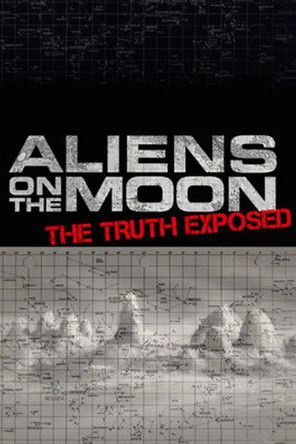
Never-before-aired NASA footage presents evidence that the Moon is being used as a base.
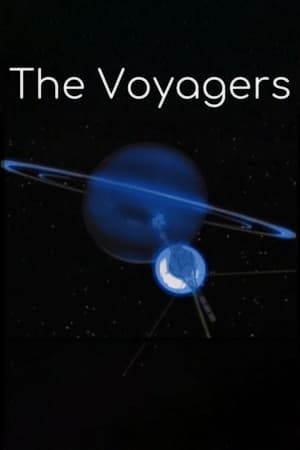
A brief visualisation of NASA’s historic spacecrafts Mariner, Pioneer, Voyager, and Dawn, exploring the solar system, culminating in the New Horizons mission.
A testament to NASA's Apollo program of the 1960s and '70s. Composed of actual NASA footage of the missions and astronaut interviews, the documentary offers the viewpoint of the individuals who braved the remarkable journey to the moon and back.
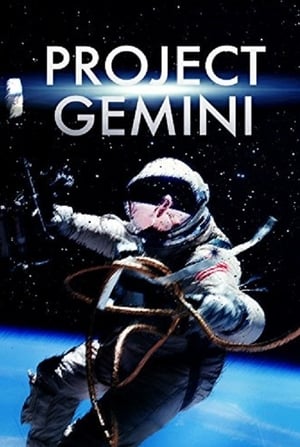
All of the necessary technologies required to reach the Moon was first tested during Project Gemini, which comprised of ten missions in the mid-1960s.
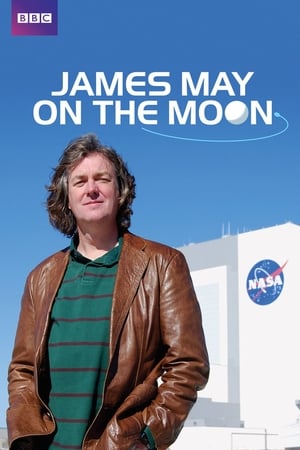
Top Gear presenter James May presents this informative program that examines the historic moon missions. Traveling to America, May meets three of the men who walked on the surface of the moon, learning how it felt and how the now antiquated technology was used to achieve such an historic feat.
With more than 27 years of service, the space shuttle Discovery has clocked more time in space than any other shuttle. She has flown more than 148 million miles, and has become one of the most storied spacecraft in American history. Join us as we celebrate her remarkable past and follow her final flight: to the Smithsonian National Air and Space Museum. It's an emotionally charged mission full of logistical challenges. Discovery is a robust, but very fragile aircraft, and getting her to D.C. in one piece will require some innovative engineering.
The 1960s was an extraordinary time for the United States. Unburdened by post-war reparations, Americans were preoccupied with other developments like NASA, the game-changing space programme that put Neil Armstrong on the moon. Yet it was astronauts like Eugene Cernan who paved the uneven, perilous path to lunar exploration. A test pilot who lived to court danger, he was recruited along with 14 other men in a secretive process that saw them become the closest of friends and adversaries. In this intensely competitive environment, Cernan was one of only three men who was sent twice to the moon, with his second trip also being NASA’s final lunar mission. As he looks back at what he loved and lost during the eight years in Houston, an incomparably eventful life emerges into view. Director Mark Craig crafts a quietly epic biography that combines the rare insight of the surviving former astronauts with archival footage and otherworldly moonscapes.
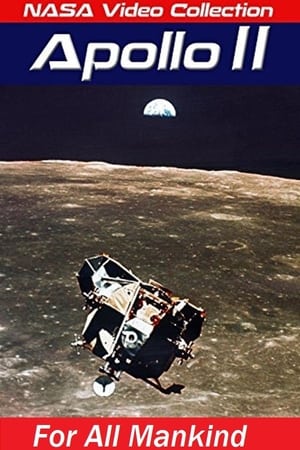
Documentary of Apollo 11 mission from NASA footage.
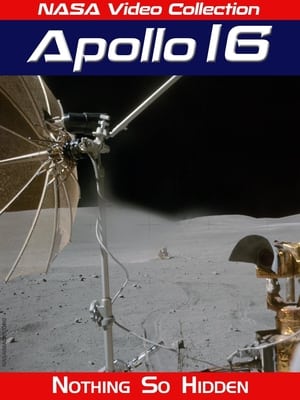
Apollo 16 mission from NASA footage.
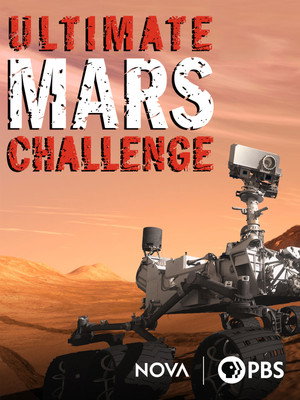
With access to the scientists and engineers responsible for the Curiosity rover's on-the-ground experiments, NOVA captures its landing on Mars
From space, 400 kilometers above our heads, one man has won the hearts of the French: Thomas Pesquet. Traveling to the stars is an almost impossible dream, but for Thomas Pesquet it is a reality that he recounts in detail in an exclusive interview. You will discover the magic of living in space, the wonder of our planet, but also the reality of everyday life in zero gravity: how they sleep, how they wash, what happens to their bodies. Why do they have to exercise for two hours a day? How do they communicate with their families? With Thomas Pesquet and the help of specialists, scientists, doctors, instructors, directors, and computer-generated images, you will discover what goes on behind the scenes of a mission and understand how the International Space Station works.
One of humanity’s greatest achievements, the International Space Station is a $150 billion science laboratory hurtling around Earth at 17,000mph, its thin metal walls shielding astronauts from the most hostile environment humans have ever endured. Microgravity, the vacuum of space, extremes of temperature, micrometeorites - life here is perilous. To mark 25 years of continuous habitation onboard, Space Station We Have a Problem reveals how astronauts are only a technical glitch or software error away from disaster. From malfunctioning spacesuits and docking disasters, critical leaks and even the entire space station backflipping out of control, this is life and death played out in low earth orbit, coupled with the bravery and brilliance that each time, saves the day.
Documentary covering the current state of both the theoretical and practical development of the various scientific basic principles that served, as per Gene Roddenberry's dictum, as a believable basis at the time for The Original Series. Several real-world scientists are interviewed, not a few of them unabashedly admitting they went into their chosen field of profession because of Star Trek: The Original Series.
The Academy Award® nominee Cosmic Voyage combines live action with state-of-the-art computer-generated imagery to pinpoint where humans fit in our ever-expanding universe. Highlighting this journey is a "cosmic zoom" based on the powers of 10, extending from the Earth to the largest observable structures in the universe, and then back to the subnuclear realm.
Archival material from the original NASA film footage – much of it seen for the first time – plus interviews with the surviving astronauts, including Jim Lovell, Dave Scott, John Young, Gene Cernan, Mike Collins, Buzz Aldrin, Alan Bean, Edgar Mitchell, Charlie Duke and Harrison Schmitt.
Neil Oliver describes the worst ever railway accident in the UK, which happened a hundred years ago on 22 May 1915, in which three trains collided at Quintinshill near Gretna Green. One of the trains was a troop train taking soldiers to fight in World War I at the Battle of Gallipoli: many of the dead were in this train which caught fire due to escaped gas from the archaic gas lighting in the carriages. The cause of the crash was attributed to a catastrophic signalman's error, but Neil examines whether there were other contributory factors and whether there was a cover-up to prevent investigation of them, making convenient scapegoats of the signalmen.