A Zen priest in San Francisco and cookbook author use Zen Buddhism and cooking to relate to everyday life.
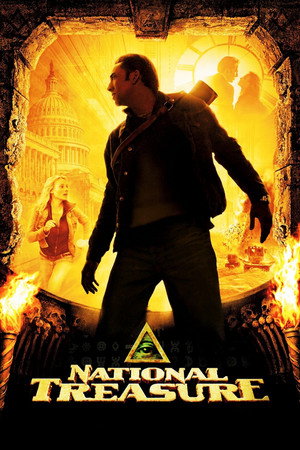
Modern treasure hunters, led by archaeologist Ben Gates, search for a chest of riches rumored to have been stashed away by George Washington, Thomas Jefferson and Benjamin Franklin during the Revolutionary War. The chest's whereabouts may lie in secret clues embedded in the Constitution and the Declaration of Independence, and Gates is in a race to find the gold before his enemies do.
Renowned oceanographer Steve Zissou has sworn vengeance upon the rare shark that devoured a member of his crew. In addition to his regular team, he is joined on his boat by Ned, a man who believes Zissou to be his father, and Jane, a journalist pregnant by a married man. They travel the sea, all too often running into pirates and, perhaps more traumatically, various figures from Zissou's past, including his estranged wife, Eleanor.
Angdu is no ordinary boy. Indeed, in a past life he was a venerated Buddhist master. His village already treats him like a saint as a result. The village doctor, who has taken the boy under his wing, prepares him to be able to pass on his wisdom. Alas, Tibet, Angdu’s former homeland and the centre of his faith, lies far away from his current home in the highlands of Northern India. On top of that, the conflict between China and Tibet makes the prospect of a trip there even more daunting. Undeterred by these harsh facts, the duo set off for their destination on foot, accompanied by questions of friendship and the nature of life. With its narrative approach steeped in a serene sense of concentration, this documentary film, composed over a period of eight years, stands as a fundamental experience in its own right.
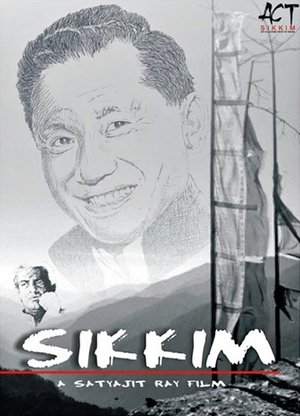
Satyajit Ray's poetic documentary was commissioned by the Chogyal (King) of Sikkim at a time when he felt the sovereignty of Sikkim was under threat from both China and India. Ray's documentary is about the sovereignty of Sikkim. The film was banned by the government of India when Sikkim merged with India in 1975. The ban was finally lifted by the Ministry of External Affairs in September 2010. Preserved by the Academy Film Archive in 2007.
Howard Langston, a salesman for a mattress company, is constantly kept busy at his job, disappointing his son. After he misses his son's karate exposition, Howard vows to make it up to him by buying an action figure of his son's favorite television hero for Christmas. Unfortunately for Howard, it is Christmas Eve, and every store is sold out of Turbo Man. Now, Howard must travel all over town and compete with everybody else to find a Turbo Man action figure.
A bright young yeti finds something he thought didn't exist—a human. News of this “smallfoot” throws the simple yeti community into an uproar over what else might be out there in the big world beyond their snowy village.
The author's personal confession. This essay film about the relationship between father and son is filmed exclusively in 16mm film in Prague, Slovenia, India, England and France. An important component of Brajnik's film narration is the musical composition and accompanying voiceover of the artist's alter ego.
Austrian mountaineer Heinrich Harrer journeys to the Himalayas without his family to head an expedition in 1939. But when World War II breaks out, the arrogant Harrer falls into Allied forces' hands as a prisoner of war. He escapes with a fellow detainee and makes his way to Lhasa, Tibet, where he meets the 14-year-old Dalai Lama, whose friendship ultimately transforms his outlook on life.
A surprise visit from Spock's father provides a startling revelation: McCoy is harboring Spock's living essence.
Set during the Cold War, the Soviets—led by sword-wielding Irina Spalko—are in search of a crystal skull which has supernatural powers related to a mystical Lost City of Gold. Indy is coerced to head to Peru at the behest of a young man whose friend—and Indy's colleague—Professor Oxley has been captured for his knowledge of the skull's whereabouts.
When you embark on an expedition to the other side of the world, things rarely go as planned. In the spring of 2024, mountaineers and friends Charles Dubouloz and Symon Welfringer flew to the Himalayas with the goal of climbing Gyachung Kang, a peak of over 8,000 meters on the Tibetan side. But faced with the conditions they encountered there, they revised their plans and headed towards Hungchi, on the Nepalese border. There, they opened a 1,700-meter route in pure alpine style, named The Headless Rider.
Gail and Tom Hartman are struggling to stay together and decide to take a white-water rafting holiday adventure in Montana for their son Roarke's 10th birthday, only to meet up with a pair of mysterious men whose desperation grows, turning their vacation into a nightmare.
Ghang-gheng, the ancient winner-take-all competition in which the deadliest fighters from around the world employ the most spectacular feats of martial arts skills ever displayed in order to win the prized Golden Dragon. But fighting prowess alone will not be enough for Chris to triumph over such daunting foes.
Trapped near the summit of K2, the world's second-highest mountain, Annie Garrett radios to base camp for help. Brother Peter hears Annie's message and assembles a team to save her and her group before they succumb to K2's unforgiving elements. But, as Annie lays injured in an icy cavern, the rescuers face several terrifying events that could end the rescue attempt -- and their lives.
Brian Blessed plays George Mallory in this intrepid recreation of his ill fated 1924 climb to Everest. Meeting Sir Chris Bonington, Rheinhold Messnerhe learns of the pitfalls that await him before setting off for his epic struggle with the mountain. Against all odds he reaches 26000 feet on the North face of Everest, and is a changed man
In October 1984, Pierre Béghin, an engineer from Grenoble, and Jean-Noël Roche, a high-mountain guide, completed the Himalayan ascent of Dhaulagiri (8,172 m). The expedition's context: seven people crossed Nepal to Muri, collected accounts from trekkers—including that of the author Robert Rieffel—and attended Sherpa prayers at base camp. Then, the two of them embarked on a rocky and snowy route without supplemental oxygen. At over 5,000 meters, on the mountain of winds, Jean-Noël Roche made a paragliding flight. The climbers brought back footage with their Super 8 camera from 6,500 meters, but only photographs have been able to confirm their presence on the summit ridge of the seventh highest peak in the world.
On April 29, 1983, three French alpinists reached the summit of Jannu, having climbed its 7,710 meters via the very steep southwest spur. The success of Luc Jourjon, Jean-Noël Roche, and Roger Fillon echoed that of the 1962 national expedition, which had been celebrated by Lionel Terray alongside the leading climbers of the time, Desmaison, Paragot, Magnone… But in 1983, the goal was no longer simply to wave a French flag on a virgin summit. The focus was already on a more "alpine" style, and there was even the idea of descending from the top… by air!
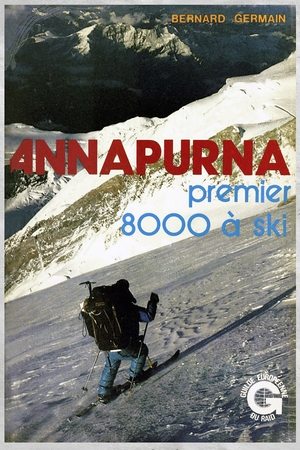
Annapurna, premier 8000 à ski
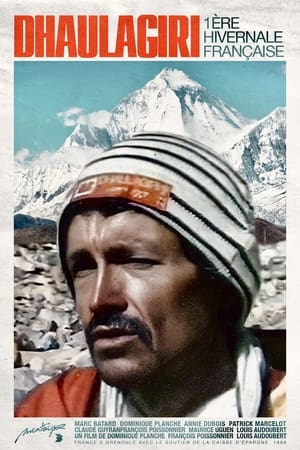
Dhaulagiri - 1ère hivernale française 1987