At a morgue, forensic pathologists conduct autopsies of the corpses assigned. "S. Brakhage, entering, WITH HIS CAMERA, one of the forbidden, terrific locations of our culture, the autopsy room. It is a place wherein, inversely, life is cherished, for it exists to affirm that no one of us may die without our knowing exactly why. All of us, in the person of the coroner, must see that, for ourselves, with our own eyes. It is a room full of appalling particular intimacies, the last ditch of individuation. Here our vague nightmare of mortality acquires the names and faces of OTHERS. This last is a process that requires a WITNESS; and what 'idea' may finally have inserted itself into the sensible world we can still scarcely guess, for the CAMERA would seem the perfect Eidetic Witness, staring with perfect compassion where we can scarcely bear to glance." – Hollis Frampton
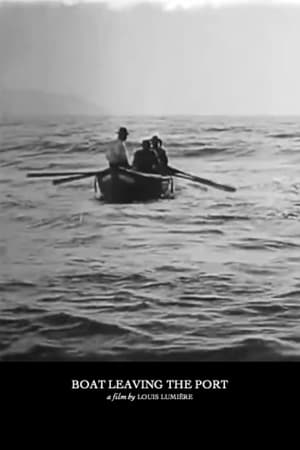
In very bad weather and a stormy sea, a small boat manned by two men is trying to leave the harbor of La Ciotat, while several people are watching them from the nearby pier.
Between 1950 and 1955, Henri Langlois tried to produce, on behalf of the Cinémathèque française, several films devoted to great artists, with their cooperation, by entrusting them with virgin film stock. Wrote Langlois on the unfinished project, epic in scope: "We had the idea of asking poets, painters, scholars, writers and even repressed filmmakers [...] to make films in 16mm, with the means at hand, without taking into account any commercial concern or censorship." What precious little came of the project was eight minutes of film from Matisse and twenty-some from Marc Chagall, released at a later date.
Kathryn Osterman, the well-known vaudeville comedienne, in a complete exposition of the methods of "making-up" the face for the stage. She shows the penciling of the eye-brows, blackening the eye lashes, rouging the lips, applying the grease paint and so forth. The work is done in a very dainty and interesting way. Only the head and shoulders of the subject are shown; the figure thus being very large. (AMB Picture Catalogue, 1902)
Kathryn Osterman was a legitimate actress who worked occasionally in the movies during the first decade and a half of the 20th century. This looks like a Mutoscope cut-down of an actuality released in 1900, "The Art of "Making Up"". In it, we see her from the rear, sitting in front of a dressing mirror, putting up her hair and powdering her face.
'Uit het rijk der kristallen' is one of several scientific films made by J.C. Mol. In the film, the crystallization processes of various chemicals are shown. There are different versions of Uit het rijk der kristallen: the original silent film was given a soundtrack in the 1930s, and there is a colour version of the film which was made using Dufay colour. A clip from the film, or other shots of identical crystallization processes, can be seen in Mol’s other films. The film was not only screened at educational and scientific presentations, but also resonated within avant-garde circles. The film was screened at the first show presented by the Harlem branch of the Filmliga. This was followed by a screening at Amsterdam’s Filmliga, and at ‘Studio 28’ in Paris. There, the film was screened as a ‘triptyque’, with three projectors side by side.
People without Hands
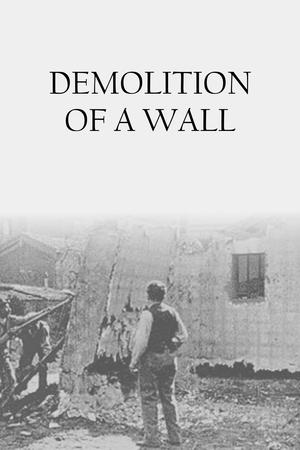
Auguste Lumière directs four workers in the demolition of an old wall at the Lumière factory. One worker is pressing the wall inwards with a jackscrew, while another is pushing it with a pick. When the wall hits the ground, a cloud of white dust whirls up. Three workers continue the demolition of the wall with picks.
1905 short film showing people walking down a Ljutomer street after mass.
The Tsar visits the Russian embassy
Experimental film fragment made with the Edison-Dickson-Heise experimental horizontal-feed kinetograph camera and viewer, using 3/4-inch wide film.
With the cameraman atop a moving train car the viewer is given a one minute glimpse of a French urban area.
Divers go to work on a wrecked ship (the battleship Maine that was blown up in Havana harbour during the Spanish-American War), surrounded by curiously disproportionate fish.
Three friends are playing cards in a beer garden. One of them orders drinks. The waitress comes back with a bottle of wine and three glasses on a tray. The man serves his friends. They clink glasses and drink. Then the man asks for a newspaper. He reads a funny story in it and the three friends burst out laughing while the waitress merely smiles.
Early Edison short showing two men fencing.
William K.L. Dickson and William Heise shake hands in this early experimental film.
A man (Thomas Edison's assistant) takes a pinch of snuff and sneezes. This is one of the earliest Thomas Edison films and was the second motion picture to be copyrighted in the United States.
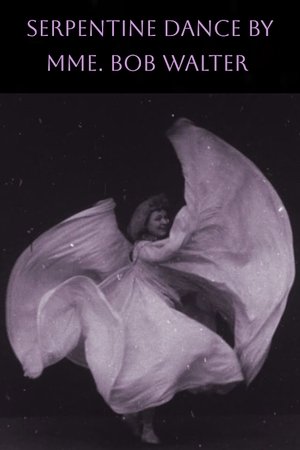
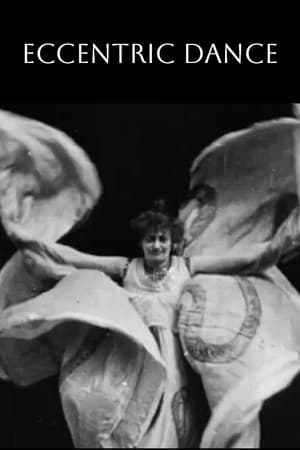
Annabelle (Whitford) Moore performs one of her popular dances. For this performance, her costume has a pair of wings attached to her back, to suggest a butterfly. As she dances, she uses her long, flowing skirts to create visual patterns.
“Shows how a full carload of coal is loaded onto a vessel every thirty seconds at the great Erie Railroad Docks, Cleveland, Ohio. Great clouds of coal dust rise as each car is unloaded.”
Directed by one of the pioneers of the cinematic industry, James Williamson, The History of a Butterfly - A Romance of Insect Life is an intriguing look at the life cycles of butterflies and moths. Caterpillars are seen hatching, feeding and ready for pupation and with three caterpillars changing into chrysalis and the birth of a peacock butterfly, this black and white silent film is an early example of British natural history filmmaking.