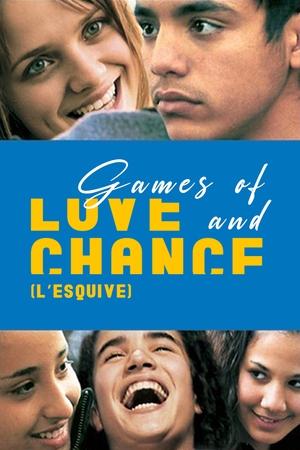
A quiet teen's life is shaken up when she's forced to be her arrogant neighbor's slave. He loves her, but they both have a lot to learn about trust.
In the future, the Japanese government captures a class of ninth-grade students and forces them to kill each other under the revolutionary "Battle Royale" act.
Brash, loudmouthed and opportunistic, Kikujiro is the unlikely companion for Masao who is determined to see the mother he has never met. The two begin a series of adventures which soon turns out to be a whimsical journey of laughter and tears with a wide array of surprises and unique characters along the way.
An America director tries to shoot a comedy film about the 2011 earthquake and devastating tsunami. Is he out of his mind or could his film bring hope and catharsis to those still struggling to recover?
Dallas, an American golf tutor, arrives in a quiet Sydney suburb to teach at the local school and sets about causing chaos with the family she stays with.
A Yakuza hitman travels to North America for his 27th job, only to find lingering memories of lost love through a chance encounter with a beautiful prostitute.
Two New York cops get involved in a gang war between members of the Yakuza, the Japanese Mafia. They arrest one of their killers and are ordered to escort him back to Japan. However, in Japan he manages to escape, and as they try to track him down, they get deeper and deeper into the Japanese Mafia scene and they have to learn that they can only win by playing the game—the Japanese way.
The plot of the lost film is divided into two acts. Ossi Oswalda and Victor Janson play two apartment seekers, while Marga Köhler is a landlady. The housing shortage is treated in sketch form and "in a joking manner [...] the real housing calamity", whereby "humorous aspects" are wrested from the "tragedy." Lubitsch and Kräly used a sketch in the film that they had written especially for Ossi Oswalda.
There were five Marines and one Navy Corpsman photographed raising the U.S. flag on Mt. Suribachi by Joe Rosenthal on February 23, 1945. This is the story of three of the six surviving servicemen - John 'Doc' Bradley, Pvt. Rene Gagnon and Pvt. Ira Hayes - who fought in the battle to take Iwo Jima from the Japanese.
A family of four are the sole inhabitants of a small island, where they struggle each day to irrigate their crops.
Returning to their lord's castle, samurai warriors Washizu and Miki are waylaid by a spirit who predicts their futures. When the first part of the spirit's prophecy comes true, Washizu's scheming wife, Asaji, presses him to speed up the rest of the spirit's prophecy by murdering his lord and usurping his place. Director Akira Kurosawa's resetting of William Shakespeare's "Macbeth" in feudal Japan is one of his most acclaimed films.
Aspiring to an easy job as personal physician to a wealthy family, Noboru Yasumoto is disappointed when his first post after medical school takes him to a small country clinic under the gruff doctor Red Beard. Yasumoto rebels in numerous ways, but Red Beard proves a wise and patient teacher. He gradually introduces his student to the unglamorous side of the profession, ultimately assigning him to care for a prostitute rescued from a local brothel.
A working-class love story set in and around the London Underground of the 1920s. Two men – gentle Bill and brash Bert – meet and are attracted to the same woman on the same day at the same Underground station. But the lady chooses Bill, and Bert isn't the type to take rejection lightly...
Else Riedel (Lissy Arna), locked out by her authoritarian father, seeks refuge with her boyfriend Hans. Complications threaten when Hans's roommate Max falls in love with her, but the situation is resolved: the three remain friends, and decide to form a music hall act. They want to ascend, but how? A way out beckons when a theatrical agent named Nevin enters Else’s life. He is played by Hubert von Meyerinck as a slick and oily villain, who oozes refinement; his experience behind bars is waved away with a silk scarf. He is cunning to the point of perfidiousness, but is not completely unsympathetic. He also embodies a new type - the scrounger.
Okoma, a witty young woman working as a conductor in an old, rickety bus in Kōfu, Yamanashi (rural Japan), has a creative idea that could avert the dwindling number of passengers when her job and the bus company itself are at stake.
Teen skater Ken Park (nicknamed Krap Nek; his name spelled and pronounced backward) kills himself at a Visalia skate park; his death bookends the lives of four other young people who knew him: Shawn, the most conventional; Tate brims with psychotic rage; Claude is habitually harassed by his brutish father and coddled, rather uncomfortably, by his enormously pregnant mother; and Peaches looks after her devoutly religious father, but yearns for freedom. They're all rather tight, or so they claim.
A father sacrifices an animal on the day of Eid al-Adha according to the traditions and customs of the past. According to the old custom, he gives the last bowl of water to the goat, but his son tries to save the goat. The father angrily looks for them. The boy makes the goat run away and puts the rope around his neck instead of the goat. This short film refers to the story of Ismail and Ibrahim in Islam.
After finding out that her husband, Rudi, has a fatal illness, Trudi Angermeier arranges a trip to Berlin so they can see their children. Of course, the kids don't know the real reason they're visiting -- and the catch is, neither does Rudi...
Sam the white-washer pines for the affluent Lindy, but she has dumped him in favor of another. Sam finds a large sum of money, and goes to New York to enjoy a shopping spree, buying new clothes, jewelry and a car with a driver. Back home, Lindy flips for Sam and his newfound wealth, and dumps the rival. Sam throws an engagement party where he indulges in a friendly game of cards with his former rival and another man, who unbeknownst to Sam, is a card shark.
In this realistic, unsentimental portrait of Germany’s dire economic situation, a middle-aged payroll clerk loses his job due to technological advances and, unable to find another, descends into despair. The film’s director, Marie Harder, was one of only a few women directors of the time and was also the head of the German Social Democratic Film Office. She made only two known films before her accidental death in exile in Mexico in 1936.