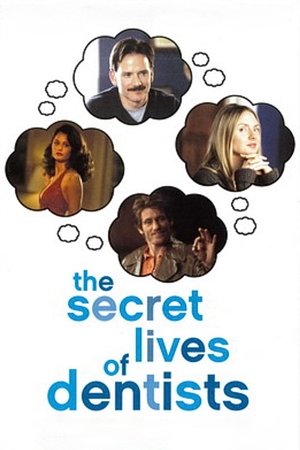
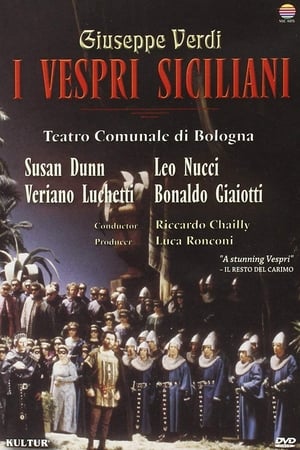
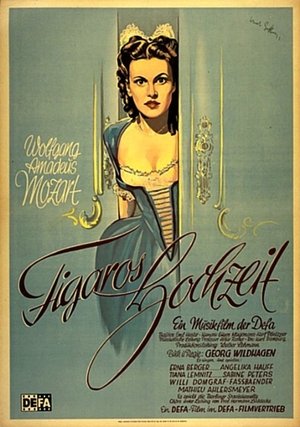
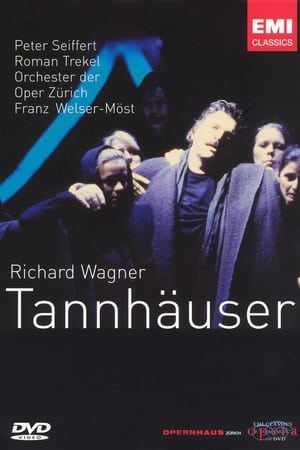
Prince Abesalom runs into an orphaned Eteri while hunting, falls for her and brings the woman to his palace as his fiancé. The Prince’s aid Murman loses his self-control at Eteri’s beauty and gives her a spelled necklace as a wedding gift. Eteri contracts a mysterious disease that only Murman is capable to heal.
Ernst Krenek's theatrical piece Karl V. consisting completely of twelve-tone series should have premiered at the Vienna State Opera. The political situation in the Vienna of 1933 and the fact that Krenek was despised by the Nazis because of this Jazz opera Jonny spielt auf, prevented the première. It only took place five years later in Prague, however Krenek had already emigrated to the USA. Karl V was the last emperor to hold to the idea of a Christian empire in which the sun never set, although its downfall was always inevitable, for numerous reasons. For the second production of Karl V. in the Nationaltheater, Carlus Padrissa in particular seeks out political power systems that are highly topical, and so very precisely analyses the treatment in the theatrical piece. At the core of the intellectually and linguistically highly qualified libretto, written by the composer himself, Karl V. reflects on his life and makes his confession to a young monk below Titian's La Gloria.
The Queen of the Night enlists a handsome prince named Tamino to rescue her beautiful kidnapped daughter, Princess Pamina. Aided by the lovelorn bird hunter Papageno and a magical flute that holds the power to change the hearts of men, young Tamino embarks on a quest for true love, leading to the evil Sarastro's temple where Pamina is held captive.
Mary, an audacious fashion photographer, one day takes something that does not belong to her from a cemetery and experiences unnatural events afterward. She assumes that by returning the object to its original place, she can avoid these occurrences, but nothing goes as she imagined.
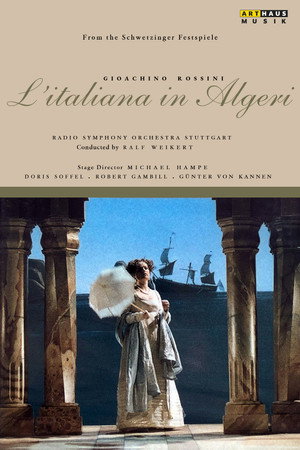
Italka v Alžíru
When Sir John Falstaff decides that he wants to have a little fun he writes two letters to a pair of Window wives: Mistress Ford and Mistress Page. When they put their heads together and compare missives, they plan a practical joke or two to teach the knight a lesson. But Mistress Ford's husband is a very jealous man and is pumping Falstaff for information of the affair. Meanwhile the Pages' daughter Anne is besieged by suitors.
37-year-old Italian-American widow Loretta Castorini believes she is unlucky in love, and so accepts a marriage proposal from her boyfriend Johnny, even though she doesn't love him. When she meets his estranged younger brother Ronny, an emotional and passionate man, she finds herself drawn to him. She tries to resist, but Ronny, who blames his brother for the loss of his hand, has no scruples about aggressively pursuing her while Johnny is out of the country. As Loretta falls for Ronny, she learns that she's not the only one in her family with a secret romance.
The man looks back on a turbulent love life, which he does not dare to opt definitively for a permanent love. He loves Tosca, but leaves her for another new love, Alpha. He cherishes the infatuation at the start of a relationship, meaning he is not yet ready for real life. However, at the end, he is able to make his choice ...
Opera in three acts, a prologue and an epilogue, by Jacques Offenbach (1819-1880), with a libretto in French by Jules Barbier (1825-1901), based on a work that Barbier himself and Michel Carré (1821-1872) had written based on stories by E.T.A. Hoffmann (1776-1822). Approximate duration: 2 h 45 min Recommended for those over 15 years old. The young poet Hoffmann, accompanied by Nicklausse, his alter ego and confidant, is in a tavern next to the theatre where Mozart's Don Giovanni is being performed. During the opera's intermission, some diners arrive at the bar who, upon seeing the poet, encourage him to sing and tell them the story of his famous love affairs. Hoffmann finally gives in and shares with them the stories of Olympia, Antonia and Giulietta. They, absorbed in the poet's stories, remain in the tavern, forgetting about the opera performance.
With his affinity for the 16th-century sculptor Benvenuto Cellini's advocacy of artistic and personal freedom, Hector Berlioz went straight for the grand gesture with his first completed opera. Returning to it years after initial production debacles, Berlioz stated that he would 'never again find such verve and Cellinian impetuosity, nor such a variety of ideas.' The plot revolves around Cellini's wooing of Teresa, a match frustrated at every opportunity by his rival, the cowardly Fieramosca. Benvenuto Cellini is a pithy work combining romance, excitement, violence, comedy and spectacle; the perfect stage for Terry Gilliam's stylishly colorful and larger than life directing.
An excellent performance of this delightful opera. The principals are superb, especially the sisters. Bruscantini as Don Alfonso is past his prime, but he knows and understands the role inside out, so one does not even notice his vocal limitations. Araiza is in top form as Ferrando, and Morris makes virile Guglielmo. The only disappointment is Battle as Despina. Unlike her partners, she does not have feel for the Mozart ensemble, and her vocal mannerisms are totally unbecoming. How the producers allowed that to happen is a mystery. Muti's conducting is terrific, much better than on his La Scala video, where he is uninvolved.
Desdemona in Verdi's Otello was a career role for soprano Renata Tebaldi, from her first operatic performance outside of Italy to her final appearance on the opera stage. Between those landmarks she performed the role nearly 100 times all over the world and made studio audio recordings that became reference recordings for the role. This 1962 production with the Deutsche Oper Berlin and Giuseppe Patane was planned as a media event from the outset and blessedly captures a consummate artist in a signature role at the peak of her gifts.
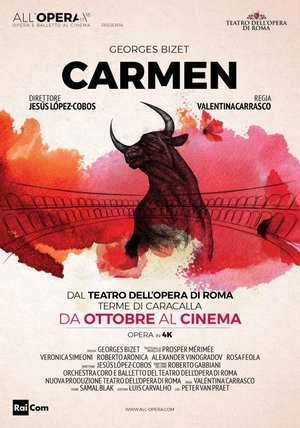
From the Teatro dell'Opera di Roma Terme di Caracalla "Carmen" by Georges Bizet. Director Jesus Lopez-Cobos. Orchestra, Chorus and Corps de Ballet of the Teatro dell'Opera di Roma.
This live version of Puccini s superbly dramatic opera was recorded in Rome in the exact locations and at the precise times of day as Puccini had written into his score. The action opens in Rome's beautiful 16th-century church of Sant Andrea della Valle, where Cavaradossi (Plácido Domingo) is innocently painting, moves to the Farnese Palace where Tosca (Catherine Malfitano) dramatically stabs the lustful Scarpia (Ruggero Raimondi), and finally to the battlements of the Castle Sant Angelo at dawn the following day where Cavaradossi is cruelly killed, and Tosca takes her own life.
The director, Roland Schwab, has created his version of Hell. The set is like a high iron walled hanger and the stage is continually occupied with people who look like fugitives from Mad Max and who interact with Mefistofele. The orchestra and choir are wonderful. Rene Pape gives a nuanced interpretation with a certain amount of sardonic humour under the evil. His singing and acting are first rate, as is that of Kristine Opolais and Joseph Calleja.
Johann Strauss, Jr., a would-be composer of waltzes in mid-19th Century Vienna, attempts to thwart his father's efforts to prevent his success when the older man becomes jealous of his melodic skill.
Brazilian "singing film" (filme cantante) directed by Alberto Botelho, featuring a screen synchronization of the famous Italian tenor aria "Amor ti vieta" (composed by Umberto Giordano for his 1898 verismo opera Fedora) and performed by Enzo Bannino.
Franz Schreker’s career was cut short by the events of 1933 in Germany but he achieved real fame with his operas, and the huge success of Der Schatzgräber (‘The Treasure Hunter’) in the 1920s was the high point of his career. In a complex and ultimately tragic tale of destructive greed, desire and toxic social hierarchy, the innkeeper’s daughter Els is forced to confront the consequences of her murderous intent in what conductor Marc Albrecht considers ‘a work of exceptional quality, concentration and significance’. Following the huge success of Korngold’s Das Wunder der Heliane (Naxos DVD 2.110584–85 / Blu-ray NBD0083V), director Christof Loy continues his exploration of strong female characters and neglected 20th-century masterpieces with this highly acclaimed Deutsche Oper Berlin production.
A film of the opera The Turn of the Screw by Benjamin Britten. A young governess arrives at an old house in the country to look after two orphans. What unfolds is a chilling tale as she experiences strange ghostly encounters with some of the previous occupants of the house and finds herself engaged in a battle to protect the children’s souls from evil. Myfanwy Piper’s libretto of Henry James’s famous short story leaves much to our imagination and Britten’s score is haunting, terrifying and brilliant. Shot on location at Wilton's Music Hall, London, the whole space of the venue, not just the stage, is used to tell the story.
Julia Bullock, Joyce DiDonato and Jakub Jozef Orlinski star in Katie Mitchell’s thrilling new production of Handel’s Theodora in an alternative modern-day reality, Theodora, a religious fundamentalist, plots for the resistance against the Roman occupation. But when her secret plan to destroy the Roman embassy is discovered, she learns the true brutality of her oppressors. Harry Bicket conducts the Orchestra of the Royal Opera House