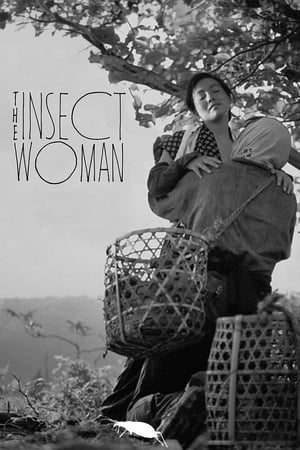
A woman, Tome, is born to a lower class family in Japan in 1918. The title refers to an insect, repeating its mistakes, as in an infinite circle. Imamura, with this metaphor, introduces the life of Tome, who keeps trying to change her poor life.
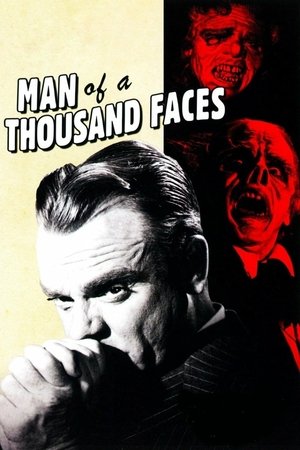
The turbulent life and professional career of vaudeville actor and silent screen horror star Lon Chaney (1883-1930), the man of a thousand faces; bearer of many personal misfortunes that even his great success could not mitigate.
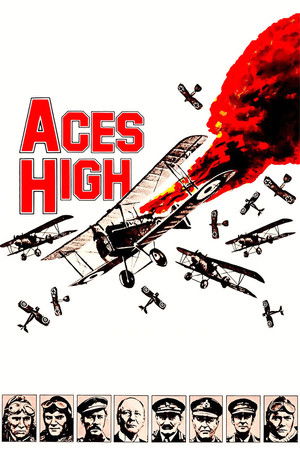
The first World War is in its third year and aerial combat above the Western Front is consuming the nation's favored children at an appalling rate. By early 1917, the average life-span of a British pilot is less than a fortnight. Such losses place a fearsome strain on Gresham, commanding officer of the squadron. Aces High recreates the early days of the Royal Flying Corps with some magnificently staged aerial battles, and sensitive direction presents a moving portrayal of the futilities of war.
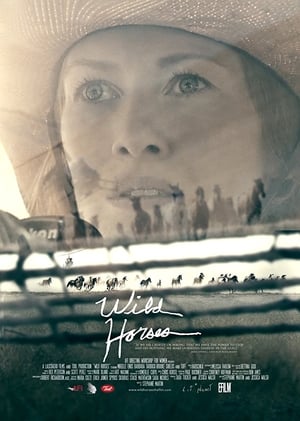
Wild Horses tells the story of Mills, an established LA photographer, who returns to her native Nevada following an urgent call from her grandmother informing her that a band of wild horses close to their hearts, faces government roundup. In this story, that spans just one day, cruelty, courage, love and memory collide as two generations of women bear witness to the brutality common to wild horse roundups in the American West. Mills is exposed to a complex issue and follows her heart, choosing to ignore the consequences.
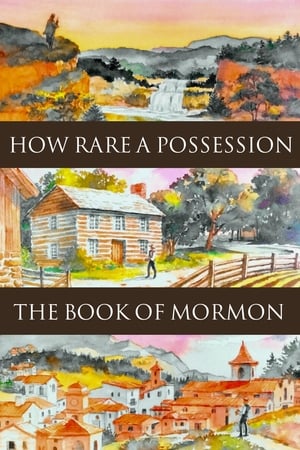
Depicts the factual accounts of Vincenzo Di Francesca and Parley P. Pratt and how they came to appreciate the contents of the Book of Mormon.
1918, Castelao leaves his public position in Pontevedra to work as a doctor in Rianxo during the Spanish flu. A hero for the town, but an absent man for his wife, Virxinia. 1929, the couple travels through Britain a few months after the loss of their only son. Two broken beings and a bond that is no longer understood. A trip will unite them forever and ever. Castelao before being Castelao. Galicia before the “xeración Nós”. Castelao and Virxinia before being “we”.
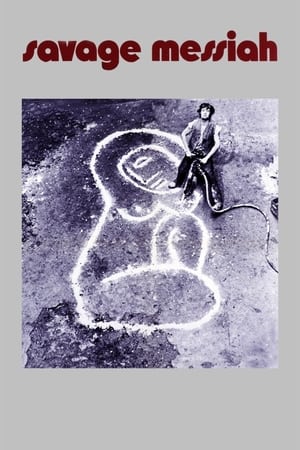
In the Paris of the 1910s, brash young sculptor Henri Gaudier begins a creative partnership with an older writer, Sophie Brzeska. Though the couple is 20 years apart in age, Gaudier finds that his untamed work is complemented by the older woman's cultural refinement. He then moves to London with Brzeska, where he falls in with a group of avant-garde artists. There, Gaudier encounters yet another artistic muse in passionate suffragette Gosh Boyle.
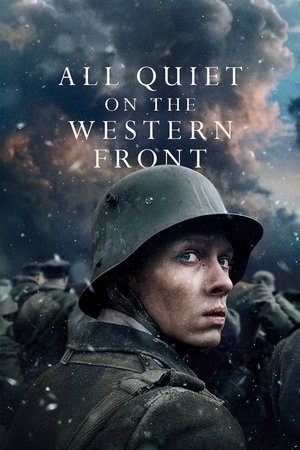
Paul Baumer and his friends Albert and Muller, egged on by romantic dreams of heroism, voluntarily enlist in the German army. Full of excitement and patriotic fervour, the boys enthusiastically march into a war they believe in. But once on the Western Front, they discover the soul-destroying horror of World War I.
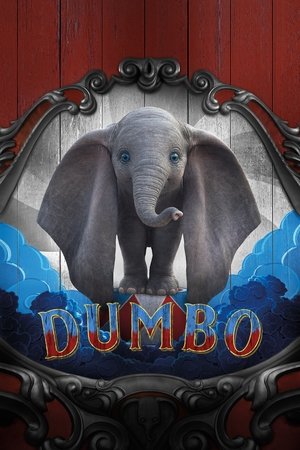
A young elephant, whose oversized ears enable him to fly, helps save a struggling circus, but when the circus plans a new venture, Dumbo and his friends discover dark secrets beneath its shiny veneer.
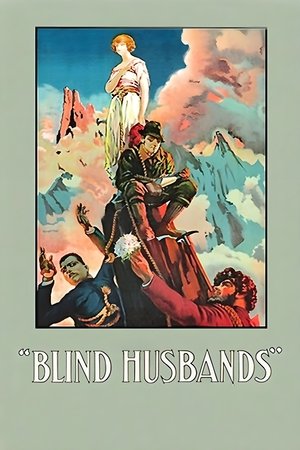
An Austrian military officer and rogue attempts to seduce the wife of a surgeon. The two men confront each other in a test of abilities that ends surprisingly.
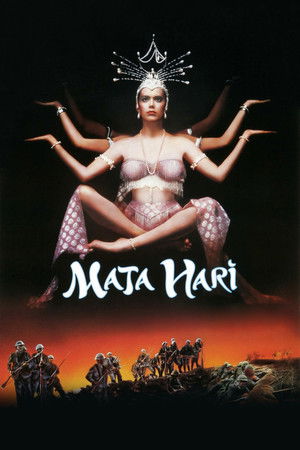
In August 1914, war between France and Germany seems imminent. Mata Hari, a beautiful Dutch-born dancer working in Paris, accepts an invitation to travel to Berlin as part of a show. On the train, she meets a young German army officer but any thoughts of romance are cut short when a French agent is murdered while in her company. She is arrested in Germany but freed when the officer intervenes. While in Germany, WWI breaks out and Hari is recruited by German Intelligence to spy on France.
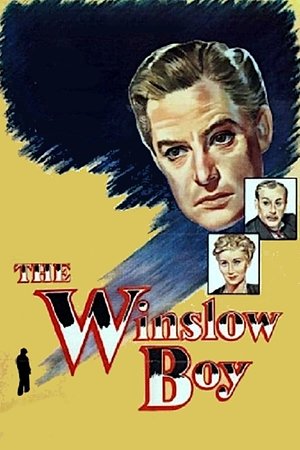
In pre-WWI England, a youngster is expelled from a naval academy over a petty theft, but his parents raise a political furor by demanding a trial.
The merging of reality with legend, the image of reality (Ruthenian Verkhovyna in the 1920s) and its reflection in people's minds - this is what characterizes the story of the modern Transcarpathian bandit Nikola Šuhaj, who "took from the rich and gave to the poor". Ivan Olbracht's novel from the 1930s, one of the artistic peaks of modern Czech prose, is a dramatic story about a war deserter, his love for the beautiful Eržica, a story about revenge for wrongs, persecution, betrayal and death. Šuhaj's fate merged with legends in people's memory. By combining elements of the past and the present, document and myth, the story turned into a ballad about how eternal and strong the human dream of freedom and happiness is.
A young man with a love of horses, Scott Jordan, lives on the family ranch with his uncle Bill. When he buys a wild stallion from his cousin, Scott names the horse Midnight and does his best to tame him. But when the sheriff suspects the stallion was stolen and his cousin's plan to get rid of the horse ends with a man being trampled, Scott must prove Midnight acted in self-defense before his uncle destroys him.
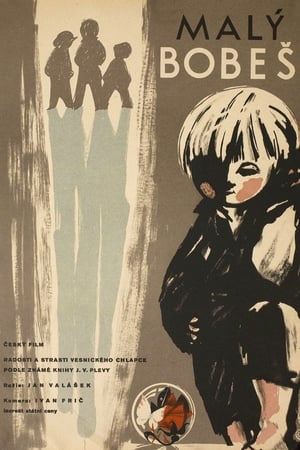
A story of a young boy called Bobesh and his funny adventures.
World War I veteran Tom Holmes is marked by the unbearable suffering caused by his battle wounds. Over the years, he comes to experience both the pain of misfortune and a love for other human beings.
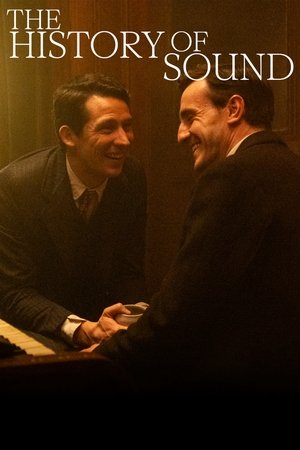
In 1917, two young music students attending the Boston Conservatory bond over a mutual love of folk music. They reconnect a few years later, embarking on a song-collecting trip in the backwaters of Maine.
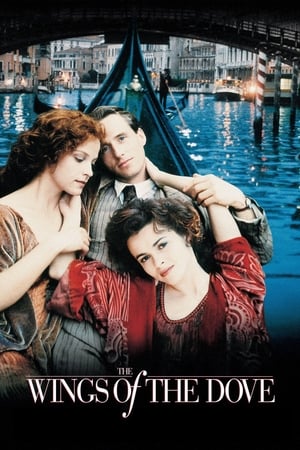
Kate is secretly betrothed to a struggling journalist, Merton Densher. But she knows her Aunt Maude will never approve of the match, since Kate's deceased mother has lost all her money in a marriage to a degenerate opium addict. When Kate meets a terminally ill American heiress named Millie traveling through Europe, she comes up with a conniving plan to have both love and wealth.
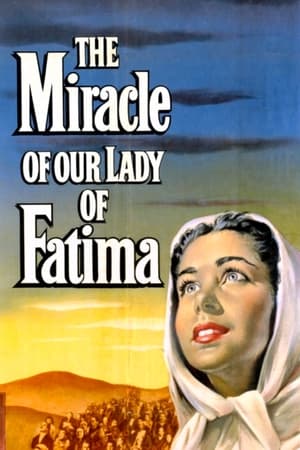
In 1917, three shepherd children living just outside Fatima, Portugal have visions of a lovely lady in a cloud. The anticlerical government wishes to squelch the Church; reports of religious experiences are cause for serious concern. Yet the children stand by their story, and the message of peace and hope the Lady brings. In the last vision, attended by thousands of people, the Lady proves her reality with a spectacular miracle that is seen by everyone present. Based on actual events at Fatima in the summer of 1917.
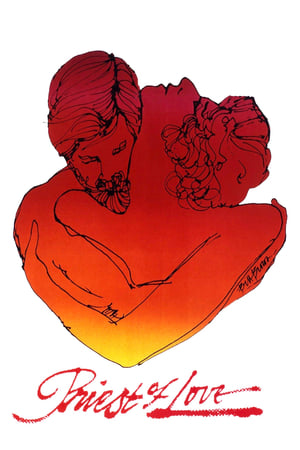
Following the banning and burning of his novel, "The Rainbow," D.H. Lawrence and his wife, Frieda, move to the United States, and then to Mexico. When Lawrence contracts tuberculosis, they return to England for a short time, then to Italy, where Lawrence writes "Lady Chatterley's Lover."