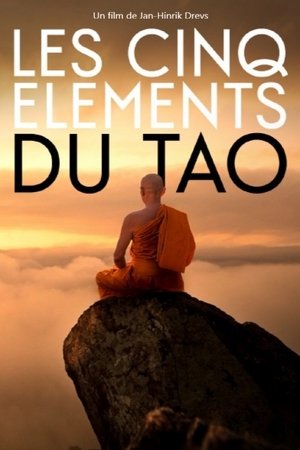
The Chinese philosophy of the Five Elements postulates that everything in our universe is based on wood, fire, earth, metal, and water. While traveling through China’s stunning landscapes and witnessing the seasons, this documentary seeks not only the roots of this ancient theory but also the continuing impacts on modern China.
Der Orient - Wiege des Christentums
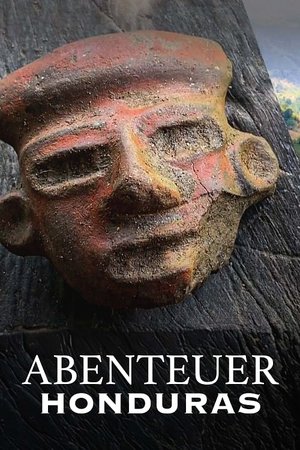
Die verschwundene Welt von Honduras
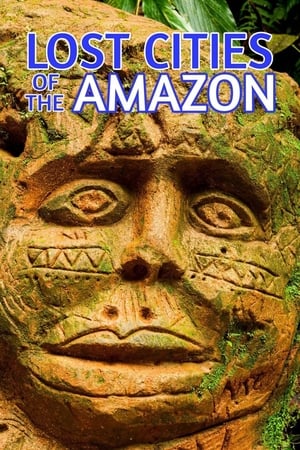
Over the centuries, explorers traded tales of a lost civilization amid the dense Amazonian rainforest. Scientists dismissed the legends as exaggerations, believing that the rainforest could not sustain such a huge population—until now. A new generation of explorers armed with 21st-century technology has uncovered remarkable evidence that could reinvent our understanding of the Amazon and the indigenous peoples who lived there. Using CGI and dramatic re-creations, National Geographic re-imagines the banks of the Amazon 500 years ago, teeming with inhabitants living in the Lost Cities of the Amazon.
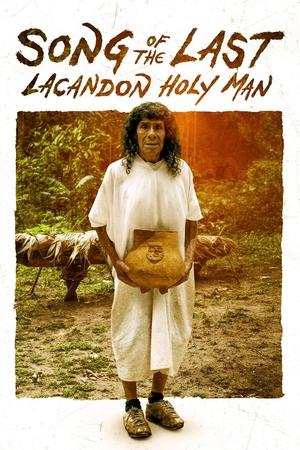
On a quest for ancestral music, musician Luis Pérez-Ixoneztli meets the spiritual elder of one of Mexico's most isolated indigenous groups, who believes danger will befall his village if his son does not take his place.
Irlande, une balade en terre celte
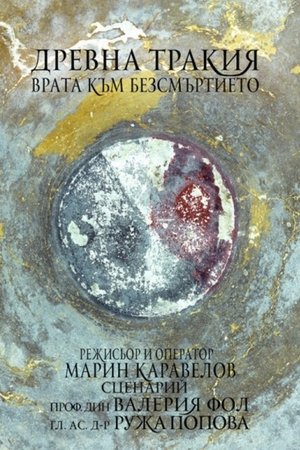
A documentary film about Ancient Thrace.
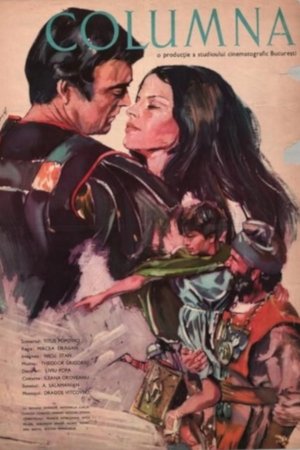
The end of Trajan's Dacian Wars (106 AD), when south western Dacia was transformed into a Roman province: Roman Dacia.
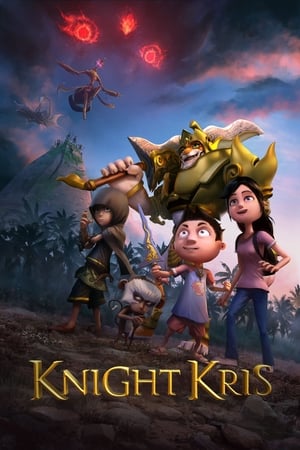
In an ancient temple, Bayu found a Keris embedded in stone. Because of his curiousity, he pulled it. Then some strange things happened! Bayu got powers to be a Mighty Warrior. Too bad that the Keris is also a seal to a ruthless giant called Asura. The giant who had been sealed for thousands of years now resurrected to spread terrors to humanity. Accompanied by Rani, his cousin and an old ape named Empu Tandra, Bayu must face Asura and the League of Shadows. Can his journey prevail?
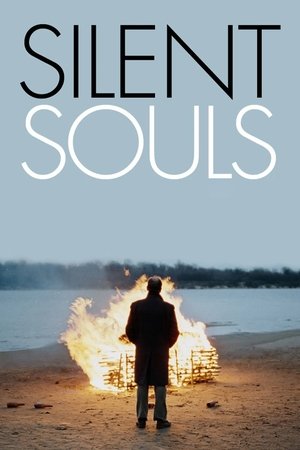
Miron Alekseevich, director of a paper and pulp mill, goes to bury his wife Tanya in the place where they once spent their honeymoon. He goes not alone, but with a photographer named Stork, to whom he tells touching details of his life with Tanya. The narrative weaves together the memories of the characters, as well as the rituals and beliefs of the Meri people, a small Finnish tribe that once lived in the Northern Volga region and dissolved among the Russians.
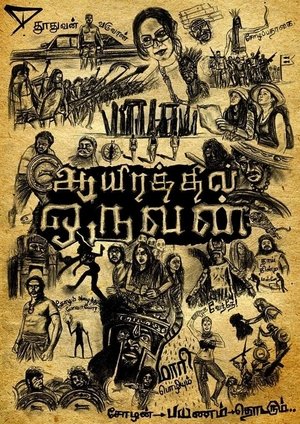
An expedition sets out to uncover the long-lost traces of the Chola dynasty, venturing into uncharted lands filled with ancient traps, hostile forces, and forgotten secrets. What begins as a search for history soon becomes a perilous struggle for survival, where myths and reality collide and the fate of an entire legacy hangs in the balance.
Holding her 16mm camera, an optical prosthesis for a 20th-century stroller, Agnès Varda filmed 42nd Street in NYC in 1967, filming crowds of passers-by to the beat of the Doors. Recovered from the French director's boxes, with images of Varda, Pasolini and New York. Pasolini is shown walking in the Big Apple (where he went to present 'Hawks and Sparrows').
A day in the life of a working man. Gathering the wires for scrap. Feeding the stray dogs. Chopping wood and lighting a furnace. Opening the gate for more important people. Channel zapping and simple food.
A fascinating insight into the life and works of photographer Imogen Cunningham. Coming into public attention around 1910, she was celebrated in the late sixties through awards, honorary degrees and exhibitions. Her photos are looked at from three focal points: nature, portraits and figure studies.
This pioneering documentary film depicts the lives of the indigenous Inuit people of Canada's northern Quebec region. Although the production contains some fictional elements, it vividly shows how its resourceful subjects survive in such a harsh climate, revealing how they construct their igloo homes and find food by hunting and fishing. The film also captures the beautiful, if unforgiving, frozen landscape of the Great White North, far removed from conventional civilization.
Starting with a long and lyrical overture, evoking the origins of the Olympic Games in ancient Greece, Riefenstahl covers twenty-one athletic events in the first half of this two-part love letter to the human body and spirit, culminating with the marathon, where Jesse Owens became the first track and field athlete to win four gold medals in a single Olympics.
Part two of Leni Riefenstahl's monumental examination of the 1938 Olympic Games, the cameras leave the main stadium and venture into the many halls and fields deployed for such sports as fencing, polo, cycling, and the modern pentathlon, which was won by American Glenn Morris.
Working men and women leave through the main gate of the Lumière factory in Lyon, France. Filmed on 22 March 1895, it is often referred to as the first real motion picture ever made, although Louis Le Prince's 1888 Roundhay Garden Scene pre-dated it by seven years. Three separate versions of this film exist, which differ from one another in numerous ways. The first version features a carriage drawn by one horse, while in the second version the carriage is drawn by two horses, and there is no carriage at all in the third version. The clothing style is also different between the three versions, demonstrating the different seasons in which each was filmed. This film was made in the 35 mm format with an aspect ratio of 1.33:1, and at a speed of 16 frames per second. At that rate, the 17 meters of film length provided a duration of 46 seconds, holding a total of 800 frames.
According to the information written in the credit roll of "Seoul 7000," the film was filmed in Seoul in November 1976 with an 'Elmo 108' 8mm camera using Kodachrome 40 film. It was also stated that "it was filmed frame by frame, and the shooting speed was adjusted differently for each shot," and "the number 7000 in the title of this film represents the total number of frames in all parts except for the title."
A documentary of legendary driver Mario Andretti's career, including the driver himself discussing his childhood and involvement in the world of racing. Having spent nearly 50 years in the sport, Andretti is still involved in racing, and this documentary shows his journey from a refugee to an icon. Drive Like Andretti was released as a half-century celebration of his 1969 Indianapolis 500 victory.