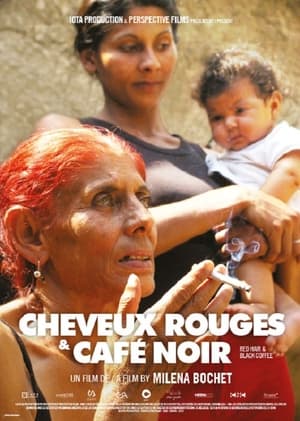
Hermanovce, Slovak Republic. A Romani village located deep down in the valley, with old shacks and newer concrete ones. Four Romani women tell us about their day-to-day life through ancient habits, along with words that travel near borders with different worlds...
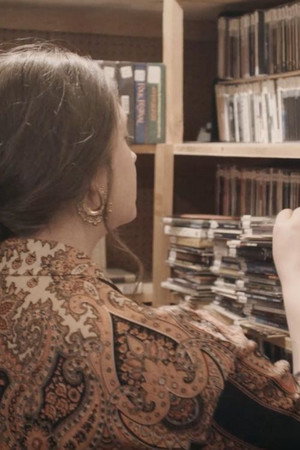
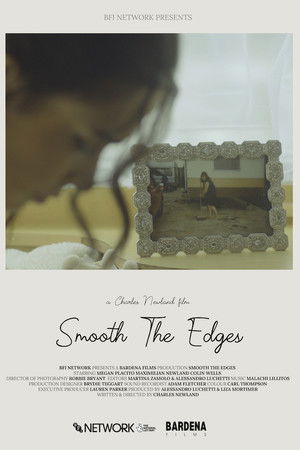
Romani filmmaker and advocate Liza Mortimer unearths her family's musical legacy in the archives of The English Folk Dance and Song Society, revealing how her great-grandmother, Minty Smith, and other Romani people played a vital role in preserving England's traditional folk songs.
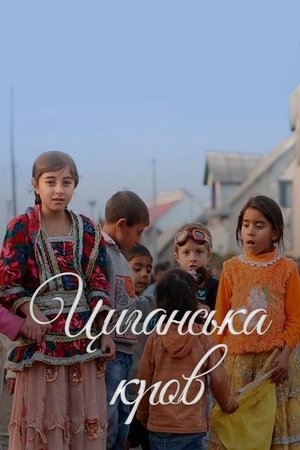
Roma are an important part of Ukraine's population. There are quite a large number of them living in the country—between fifty and one hundred thousand. This documentary shows the peculiarities of the Gypsy people's life in modern society. You will see the stories of five Gypsy barons who will talk about the traditions of their people and reveal some secrets that were previously known only to the Roma.
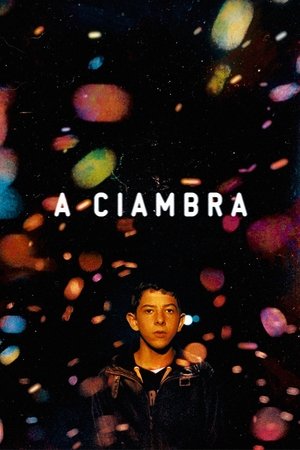
Pio Amato, a 14 year-old member of a small Romani community in southern Italian town of Gioia Tauro in Calabria, is in a hurry to grow up. Pio follows his older brother Cosimo everywhere and from him he learns how to hustle and how to navigate the streets of his hometown. One night Pio sets out to prove to his brother that he is as good or better than him but, when things go wrong, a series of events will forever change the way he sees the world.
A young woman, soon to be Gypsy bride, decides to take a stance against traditional norms and find herself a job much against the liking of her fiance. When her background becomes a burden she can’t shake, she enters her latest job interview and calls them out for their prejudice.
An educational film intended for children from 6 to 8 years of age. ‘We Grew A Frog, 1970’ tells the story of two schoolchildren, Lynne and Martin, who collect frog spawn from the village pond, take it to school, and there, in a tank, watch the spawn grow into frogs. The film shows in close-up the developmental stages of the spawn-to-frog process. This educational film features the pupils of Whatfield School in Suffolk. Headteacher, Gwen Dunn wrote and told the story.
O child, I know it can be bad. O child, sometimes you're be sad. O child, it can be true. O child, sometimes it can be all new. Here comes the sun.
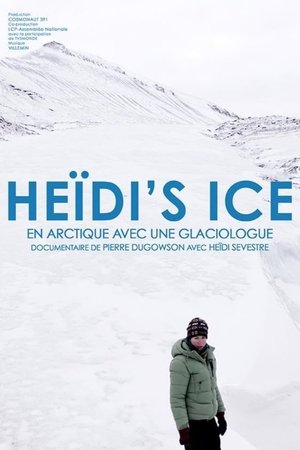
Heïdi's Ice
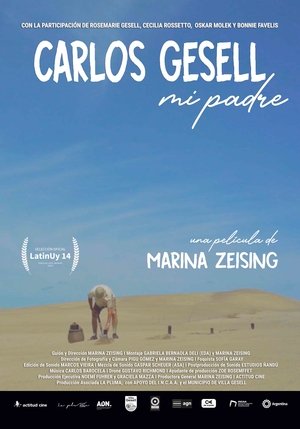
Carlos Gesell, mi padre
The Foreigner Story: Feels Like the Very First Time
Electro-Pythagorus is an intimate and subjective portrait of the late Martin Bartlett, the Canadian electronic music pioneer who studied with Pauline Oliveros, David Tudor, John Cage, and Pandit Pran Nath. His contribution as an interdisciplinary composer, educator, and founding member of Western Front, though undoubtedly extensive, is in danger of being erased from cultural memory since his death from AIDS in 1993. Navigating an array of archival materials including letters, correspondences, notebooks, personal photos, and a huge body of unreleased music and field recordings held at the archives of Simon Fraser University, Electro-Pythagoras is a journey through the evolution of Bartlett’s musical time and space, softly guided by Luke Fowler’s insightful camera and montage—creating an experimental portrait that defies one-dimensionality.
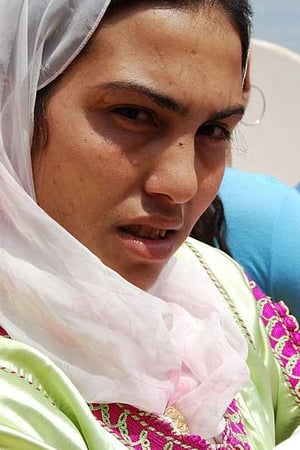
A film about a woman who doesn’t exist. Moroccan Hind was raped and consequently denied an official identity – she has no other choice but to work as a prostitute and traditional wedding dancer, but despite the odds of her situation, refuses to give up her dream of dignity, motherhood and love. This is a story of modern day outlaws, children of prostitutes, abandoned child brides and those who have had to escape to the fringes of patriarchal Moroccan society. Through the eyes of one young woman we see a life of constant struggle, but also a life free of the society’s norms and boundaries. The woman in the centre of the film, Hind, is both vulnerable and courageous as she tries to regain her life, her children and her mere right to live as an equal human being in the 21st century.
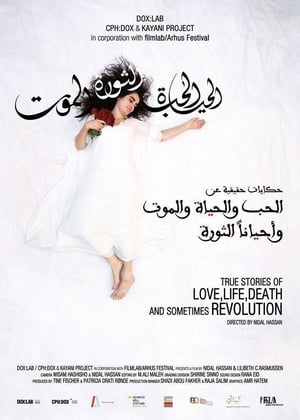
It never occurred to Syrian filmmaker Nidal Hassan and Lilibeth Rasmussen (Danish artist) that the day of their arrival to Damascus - March 16, 2011 - would be the day preceding the announcement of the uprising in Syria. Between Damascus, Sweida and Ein Al Arab, the film tries to gather details of stories of absent women and other women who would present their own testimonies about themselves and about love, life, death and sometimes about the revolution. Difficult months go by, friends disappear unwillingly in jails, and friends leave forcefully… and a longing to freedom, dignity and justice for which Syrians have conferred a lot of blood. Nidal moves around with his camera in attempt to record Syrians' daily journals subjected to pain, oppression, blood and hope. Between Damascus and Copenhagen, two filmmakers from two different cultures try to tell real stories of love, life and death in the age of the revolution.
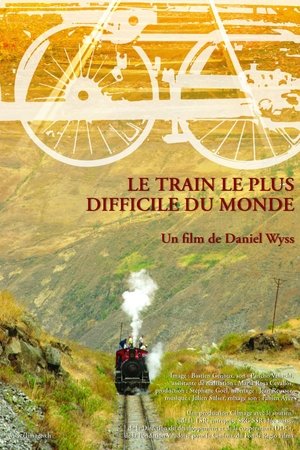
Le train le plus difficile du monde
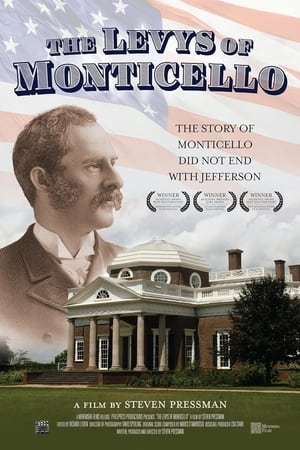
When Thomas Jefferson died in 1826, he left behind a mountain of personal debt, which forced his heirs to sell his beloved Monticello home and all of its possessions. The Levys of Monticello is a documentary film that tells the little-known story of the Levy family, which owned and carefully preserved Monticello for nearly a century – far longer than Jefferson or his descendants. The remarkable story of the Levy family also intersects with the rise of antisemitism that runs throughout the course of American history.
Music documentary about Billo Frómeta by director Rafael Marziano Tinoco from Venezuela.
The German film industry is afflicted with cancer. A young group of filmmakers wants to free it.
An underpass in the center of Warsaw, the camera selects one woman and follows her to her workplace - a telecommunications headquarters. The message "your call is being monitored" was broadcast from there.
The film, in the distinctive style of a crime novel, explores contemporary Greek reality through the literature of Petros Markaris.
Treno 8017 - Una tragedia dimenticata