This documentary shows the fishing grounds of the far north. It provides an insight into the hard and dangerous work on a fishing trawler ; laying out and hauling in the fishing nets, processing the fish on board and storing it in the cold store.
A quiet island, lost in the pacific ocean. Nothing worth of interest, until the day a stroke of luck, phosphate, provided by the island's coral core, led the country to incredible heights: in 1975, it became the second richest country per inhabitant in the world after Saudi Arabia... Only to plunge into ruins a few years later.
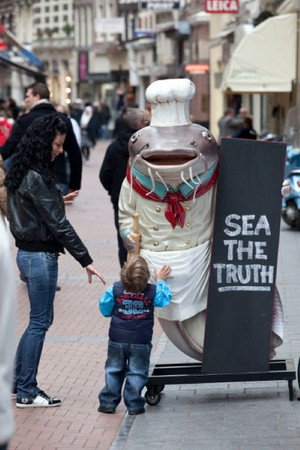
Ráj rybářů
Women have always sought ways to terminate unwanted pregnancies, despite powerful patriarchal structures and systems working against them. This film provides a historical overview of how church, state and the medical establishment have determined policies concerning abortion. From this cross-cultural survey--filmed in Ireland, Japan, Thailand, Peru, Colombia, and Canada--emerges one reality: only a small percentage of the world's women has access to safe, legal operations.
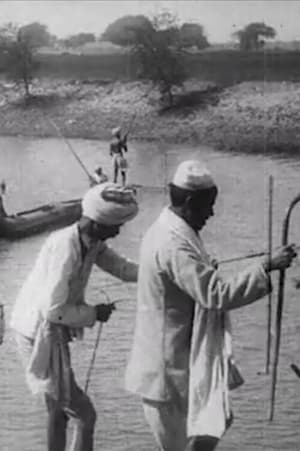
Amateur film of fishing and geese-shooting trips by a British party in India.
In 1965, on the Eastern Shore of the Chesapeake Bay, there was the last operating fleet of sailing work boats in the United States. Forty-odd "Skipjacks" were still used by Maryland watermen to dredge up oysters from the Bay. At that time, the fleet had survived because of a Maryland conservation law which prohibits the use of motor power for oyster dredging. The watermen traditionally marked the opening of each oystering season with a skipjack race which the Maryland State Tourist Board incorporated into its annual "Chesapeake Bay Appreciation Day."
There's No Fish in Lake Michigan is a short documentary exploring salmon's surprising presence in Chicago and the communities, industries, ecology, and history surrounding it. Made by Allegra Hatem, Macallister Rescorl, and Joshua Silver.
The Kabin Studio on the north side of Cork gives teenagers the mic and the confidence to use it. Writing and performing infectious Irish-language rap, they grow from shy beginners into viral sensations—their lyrics pulsing with pride, heritage and the joy of being heard.
In Paul Brandt’s filming debut, he joins friend Paul Norris and legendary fly-fishing guide, Naoto Aoki, on a journey that is both a look into his consuming passion for fly fishing and an ode to his hometown of Calgary, which he dubs as the World’s Largest Fly Fishing Lodge.
Report on a trout and pike fishing excursion on Lake Waconichi.
A poetic documentary about the lost film culture in the small villages on the Croatian islands during the SFR of Yugoslavia.
I have returned to the island were I grew up. My dad has spent thirty years alone at sea fishing lobster. He was taught the trade by his dad, who learnt from his dad. A heritage pasted down from father to son. My father never got a son, only daughters and since I was a girl no one assumed I was interested. After I turned eighteen I left Sweden and moved to Australia. After a decade abroad I started to long for home. I return to the island to see if I have it in me, can I learn the things I was never taught as a child? Will the legacy fade with me or can I become the family's next lobster fisherman? /Karolin Axelsson
Gorgona, a remote Colombian island, has a dark secret. It’s a natural fortress, surrounded by shark-infested seas, blanketed in impenetrable jungle and teaming with deadly snakes. For that reason it was chosen by the Colombian government as the site of a high security prison, Colombia’s own Alcatraz.
The story of famous actor and director Orson Welles is told through his two visits to the Republic of Ireland; first in his youth as a promising young actor and finally in later years as a washed up icon of the silver screen.
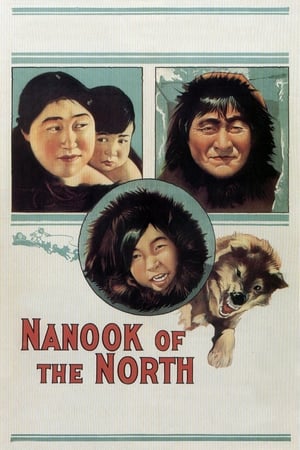
This pioneering documentary film depicts the lives of the indigenous Inuit people of Canada's northern Quebec region. Although the production contains some fictional elements, it vividly shows how its resourceful subjects survive in such a harsh climate, revealing how they construct their igloo homes and find food by hunting and fishing. The film also captures the beautiful, if unforgiving, frozen landscape of the Great White North, far removed from conventional civilization.
A local fisherwoman navigates her way through a male dominated environment to work in an industry that has been essential to island life for hundreds of years.
This was a labour of love combining the work of some incredible artists to bring Máire Mhac an tSaoi’s poetry into the medium of film. Deargdhúil: Anatomy of Passion explores the life, work and sensual poetic imagination of the revolutionary Irish poet Máire Mhac an tSaoi. Born in 1922, her story is set against a backdrop of a tumultuous century in Irish history in which she and her family were centrally involved. At a time when women's voices were being silenced, the native tradition in the Irish language was her stage to explore the depths of female sexuality and experience without shame. Featuring the movement poetry of performance artist Maureen Fleming, interview by Louis de Paor, poetry voiced by Máire Mhac an tSaoi, Ailbhe Ní Ghearbhuigh and Nuala Ní Dhomhnaill, autobiography script voiced by Olwen Fouéré.
The New Boats is an investigative documentary that presents an eye-opening look at the impact of international industrialized fishing in West African waters and its disastrous effect on local communities at a critical point in Sierra Leone's history.
Commemoration of the 1916 Easter Rising in Ireland, commissioned for its 50th anniversary.
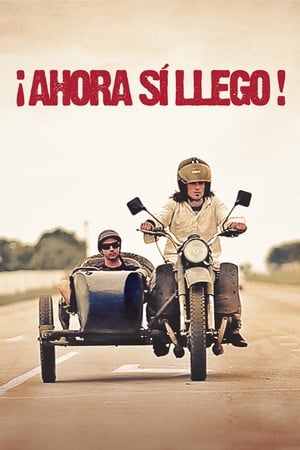
The first Road Movie feature film made by the Italian artist Sanzi together with the Cuban Balboa is inspired by friendship, the island and the motorbike. The two artists used, for the first time in Cuba, the form of the Road Movie--the cinematic genre the plot of which is developed during a trip.