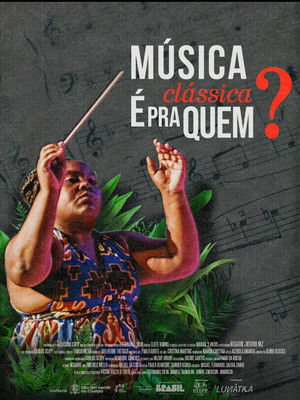
A documentary that explores the challenges that a life in music can bring.
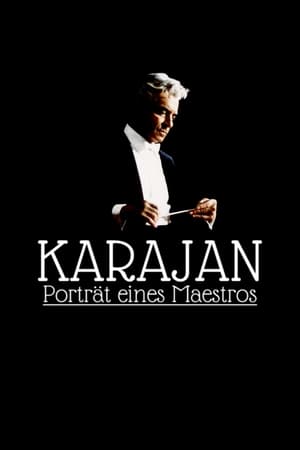
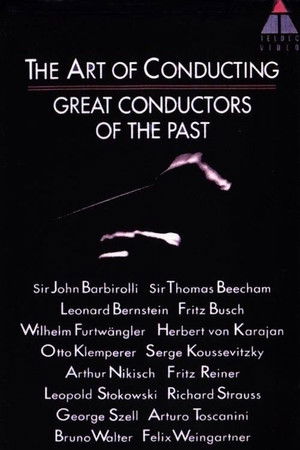
Documentary on conductor Herbert van Karajan, focusing on his early adoption of audio and video recording technology and his impetus to make use of it to preserve his musical legacy for future generations.
John Eliot Gardiner goes in search of Bach the man and the musician. The famous portrait of Bach portrays a grumpy 62-year-old man in a wig and formal coat, yet his greatest works were composed 20 years earlier in an almost unrivalled blaze of creativity. We reveal a complex and passionate artist; a warm and convivial family man at the same time a rebellious spirit struggling with the hierarchies of state and church who wrote timeless music that is today known world-wide. Gardiner undertakes a 'Bach Tour' of Germany, and sifts the relatively few clues we have - some newly-found. Most of all, he uses the music to reveal the real Bach.
This is a full-length documentary honoring the life and work of American composer and artist John Cage. Cage is considered one of the most influential composers of the 20th century. This documentary features interviews with various personalities from different fields as they introduce us to the life and work of this great American artist.
Avant-garde composer John Cage is famous for his experimental pieces and "chance music" but temporarily branched into video in 1992 with this art film about meaningless activity. The work is composed of two segments that are supposed to be played simultaneously: "One 11" contains the artistic statement, and "103" is a 17-part orchestral piece. Also included is a revealing documentary about Cage and director Henning Lohner.
"What would the world be like without Beethoven?" That’s the provocative question posed by this music documentary from Deutsche Welle. To answer it, the film explores how Ludwig van Beethoven's innovations continue to have an impact far beyond the boundaries of classical music, 250 years after his birth.
This feature length documentary tells the story of Mahani Teave who grew up on Rapa Nui (Easter Island) and left at age 9 to pursue her dream of being classical pianist-a journey that takes her from mainland Chile to The Cleveland Music Institute to Berlin and the great concert halls of Europe. At the age of 30, on the brink of international success, Teave gives up her career to pursue a new dream, coming back full circle to Rapa Nui to found a free music school for the island's children. The resulting school-named Toki, after the basalt tool once used to shape Easter Island's iconic sculptures-is a model of sustainability, incorporating tons of tires, bottles and Pacific Ocean plastic; surrounded by agri-environmental gardens to grow food. With Toki, Mahani hopes to shape a bold new future for Rapa Nui and inspire hope and change on Earth, our island home.
Welshman Sir Karl Jenkins is the most-performed living composer in the world. To mark his 70th birthday on the 17th February 2014, S4C broadcast a film portrayal of the pioneering musician in the programme Karl Jenkins: Pencerdd Penclawdd.
“Symphonic Sketches” tells the story of one classical music concert performed by the Denver Philharmonic Orchestra. Musicians from diverse racial backgrounds connect to the repertoire in unique ways and stage an unforgettable performance.
One of the world's most acclaimed conductors, Sir Georg Solti has consistently inspired audiences around the world through his extreme discipline and passion. This documentary takes us behind-the-scenes through archival footage of Solti's career and along for the ride as the great conductor travels the world.
Documentary on the master composer, from a GDR point of view.
For the first 18 years of her life, Mozart’s sister shared equal billing with her brother. Musical partners and collaborators, Wolfgang Mozart and Maria-Anna Mozart played together before Kings and Queens, and were the talk of Europe. What happened to her? Forced into retirement by age 16 because she was a woman, a stunning new investigation explores why she was retired against her will and the explosive theory: did Maria-Anna Mozart continue to compose in secret?
Vita Dolce
Mohamed Iguerbouchène was born on February 7, 1907 in Aït-Ouchen in Algeria. He left for England in 1923 where he studied music and harmony. Subsequently, he went to Vienna, Austria, to learn piano techniques where he won 1st prize in harmony and piano. Mohamed Iguerbouchen became a composer, he composed four symphonies and several film scores including the famous “Pépé le Moko” (1937) with Jean Gabin. Mohamed Iguerbouchène bowed out on August 21, 1966 following a long illness.
The film includes rare archival footage and tells in a very personal way of Gidon Kremer's encounters with Johan Sebastian Bach's music, accompanying the famous violin virtuoso in rehearsals, recording sessions and discussions with a few trusted confidants.
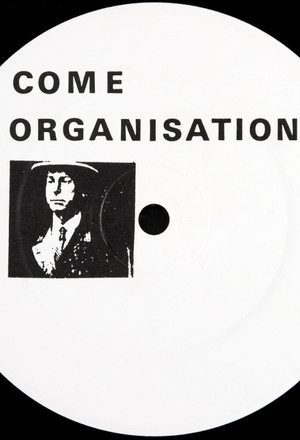
A video magazine put out by the Come Organization label. An in-depth documentary of the life & works of Peter Kurten, the monster of Dusseldorf, including previously unpublished pictures and information. With music by WHITEHOUSE, J.S.BACH & BEETHOVEN
This recording of all six cantatas from the Salle Henry Le Bœuf in the Palais des Beaux-Arts in Brussels, Belgium, in December 2012 features internationally renowned Bach expert Philippe Herreweghe and the Collegium Vocale Gent.
This fascinating musical exploration of Scotland retraces the journey taken in 1829 by acclaimed composer Felix Mendelssohn, which inspired some of his most famous works, such as the "Scottish" Symphony and "The Hebrides" overture. Travel from the majestic sites of the historic Edinburgh Castle, Scott Monument and Palace of Holyrood to the picturesque island of Staffa, home of the legendary Fingal's Cave.
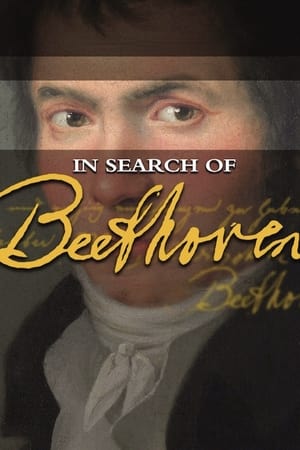
In Search of Beethoven offers a comprehensive documentary about the life and works of the great composer. Over 65 performances by the world's finest musicians were recorded and 100 interviews conducted in the making of this beautifully crafted film. Eleven interviews are included in the Extras and Six complete movements.
A look back at the violent conflict between the two leading figures of musical modernity, Arnold Schönberg and Igor Stravinsky, in the first decades of the 20th century. Although Arnold Schönberg and Igor Stravinsky both had a decisive influence on the fourth art, their creations remained diametrically opposed. While the Austrian developed the dodecaphonic method, placing the twelve notes of the chromatic scale at the heart of the composition technique to the detriment of tonality, his Russian rival based his practice on stylistic eclecticism. Their supporters formed two opposing camps, and the two composers - one the father of the Second Viennese School, the other of Neoclassicism - became, in the wake of their successes, the figureheads of a conflict that marked the history of music by its duration and intensity.