In 1943, the Imperial Japanese Secret Service made a film called Calling Australia! to show the "exemplary conditions" under which prisoners of war were kept, and to "soften up" the Australian public for the anticipated occupation of their country by Japanese forces. Prisoners of Propaganda tells why the film was made, and how it came to be forgotten.
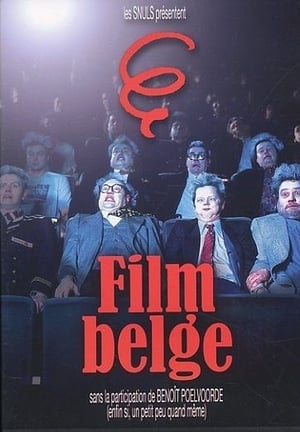
Scene 23, Slow pan The wind whistles over the dykes of the Willebroek Canal. Armand sighs. The viewer should feel goose bumps under their thick sweater. Make it clear that at this moment, Armand is craving a cup of Borain coffee. Scene 456, Armand's farm Armand puts down his coffee cup. Through the window, he sees a beautiful Romanian refugee with AIDS playing the cello in the beet field. Behind Armand, his wife, a former RTBF announcer, commits suicide by hitting herself with hot potatoes. Scene 2,347, sublime landscape of Flanders Armand can't take it anymore: will he choose the position of deputy for the Vlaamse Blok or that of puppeteer subsidized by the CUCF? No one can say.
A Nazi propaganda movie from 1941 directed by Max W. Kimmich, covering a story of Irish heroism and martyrdom over two generations under the occupation of the British.
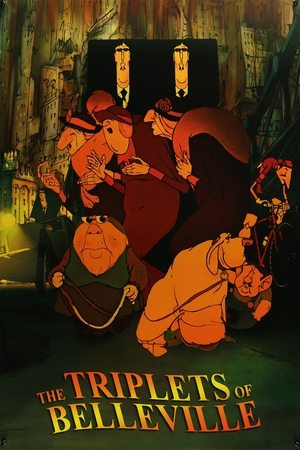
When her grandson is kidnapped during the Tour de France, Madame Souza and her beloved pooch Bruno team up with the Belleville Sisters—an aged song-and-dance team from the days of Fred Astaire—to rescue him.
Anita and Marion realize that an abandoned baby they sneaked into an orphanage was kidnapped from a millionaire. For the reward, they proceed to break into the institution at night, dressed as men to beat curfew, to get the kid out again. This film survives only in very fragmentary form.
When a calendar notification pops up, a frantic character tries to find the perfect date outfit.
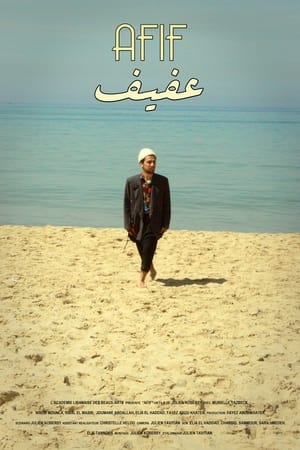
Afif is fired from his job and his home at the movie theater. He looks for a place to sleep but little does he know that he will walk the steps of glory.
In times of World War I, a group of boisterous young ladies occurs to them that they could help the boys of the front writing letters to them and, thus, becoming their godmothers of war. Madeleine writes to the soldier Jacques Bertin, but, out of prudence, instead of giving her true identity, she impersonates her late grandmother. When the soldier comes on leave and wants to see her, the mistake will bring humorous consequences.
Denise lives with her grandparents on a farm and secretly meets Robert. When she tells her grandparents that she wants to marry Robert, they refuse outright, so the two lovers will have no choice but to elope and marry in the nearby town. On the eve of having a child, war breaks out and Robert is mobilized.
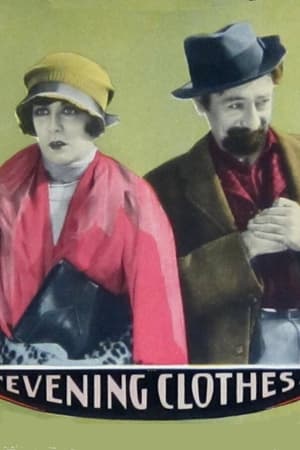
Attracted by his wealth, avaricious Germaine marries D'Artois, then leaves him for a more sophisticated man. D'Artois retaliates by moving to the city and learning the proper social graces. His new life style proves to be too expensive for him, and at the end he is left with nothing but one suit of evening clothes and his now contrite wife.
The pattern-living Paul Fowler has his routines disrupted by the contact-seeking photographer Jane.
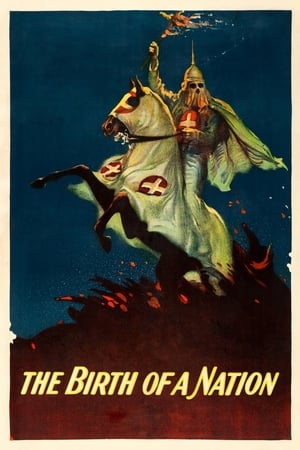
Two families, abolitionist Northerners the Stonemans and Southern landowners the Camerons, intertwine. When Confederate colonel Ben Cameron is captured in battle, nurse Elsie Stoneman petitions for his pardon. In Reconstruction-era South Carolina, Cameron founds the Ku Klux Klan, battling Elsie's congressman father and his African-American protégé, Silas Lynch.
Professor Barbenfouillis and five of his colleagues from the Academy of Astronomy travel to the Moon aboard a rocket propelled by a giant cannon. Once on the lunar surface, the bold explorers face the many perils hidden in the caves of the mysterious planet.
Karl Valentin and Liesl Karlstadt at the Oktoberfest.
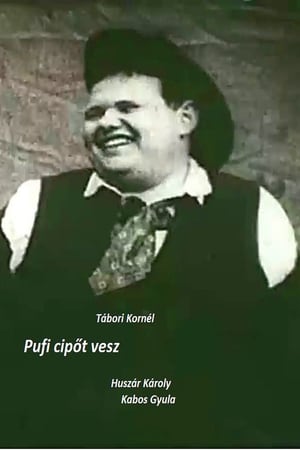
Out of the three-part burlesque, the only surviving one is the one called Pufi would buy a pair of shoes, with Hungarian inserts. The film is shot on a real-life location, in a Budapest shoe shop, and it portrays the mutual efforts of a puny sales assistant and Pufi, the bladder-of-lard customer, to find him a suitable pair of shoes. The content of the other two parts is not known.
The film consists of a series of tightly interlinked vignettes, the most sustained of which details the story of a man and a woman who are passionately in love. Their attempts to consummate their passion are constantly thwarted, by their families, by the Church and bourgeois society in general.
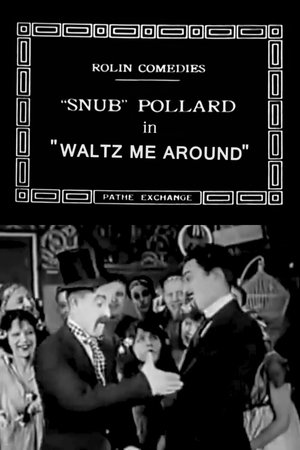
Snub, the delivery man, and his assistant, Sunny, are returning from a delivery when they almost run over a lost woman. After she asks for directions, they accompany the woman to a dance school, where Snub is mistaken for the new professor.
A jungle travelogue looking for monkeys.
"All sounds travel in waves much the same as ripples in water." Educational film produced by Bray Studios New York, which was the dominant animation studio based in the United States in the years surrounding World War I.
A group of people is having a barbecue party when two Krishnas appear at their doorstep, both of which transform into hideous monsters and start killing everybody in gory ways. The survivors retreat to a friend's house and realize something bigger is going on...