The Stooges are actors who can't hold a job, so they decide to jump off a high building and end it all. On the roof top they meet three pretty dancers with the same idea. Before they can jump, they meet a millionaire Broadway producer who hires them all for his next show. The rehearsal goes so well that he doubles their salary, but it all comes to naught when they discover that the "producer" is an escaped patient from Dr. Dippy's retreat.
Set in Arthurian times, the Stooges decide to help their friend Cedric the Blacksmith win the hand of the fair princess Elaine. At night the group sneaks into the castle to serenade Elaine, but pick the wrong window and are caught by the King. Tossed in the dungeon, the boys escape with Cedric's help and manage to foil the plans of the Black Prince who was plotting against the King. All turns out well when the grateful King allows Cedric to marry Elaine.
The stooges are discharged from the army and go to see their fiancée, but find they have been dispossessed and the wedding is off until they find a home. The boys have trouble finding a vacant apartment so they set up housekeeping in a vacant lot. Their housing problems seem to be solved until a farmer destroys their new home with a tractor. The stooges then build a house of their own, but the girls aren't impressed with the one room mansion and walk out on them.
The Stooges are managers of "Chopper", a beefy boxer, and they bet their bankroll on his next fight.
The stooges witness an armed robbery and are brought in by the cops as suspects. After passing a lie detector test, the boys are freed but are now the only ones who can identify the crooks. Meanwhile, their friend Gladys has inherited a house in the country and the boys go with her to inspect it so she won't be gypped when its sold. The house turns out to be the crook's hideout, and when they abduct Gladys, the stooges must rescue her.
What Doesn't Kill Us is a mockumentary about rehabilitated zombies facing the adversities of living in a time when they aren't yet treated equally to humans.
A lost film. A man digging inside an Egyptian tomb chops up a mummy, then resurrects the woman inside it. This film is presumably lost.
A policeman spots a dog stealing a piece of meat from a butcher's shop, and gives chase. Soon several more policemen have joined the pursuit. But the chase does not turn out as the policemen expect.
"Max quarrels so with his wife that the lady leaves him. Our hero then attempts to do his own cooking, etc. He buys a fowl, but it proves to be still alive, and after he has chased it with a revolver, partly plucked it, shaved and finally half-roasted it, the bird is still alive and wings its way off. Max next turns his attention to blacking his boots, upsets the liquid blacking, spoons it up, and a minute later is using the same spoon to stir the broth. He writes for his wife to return home, but soon after sending the letter hears he is heir to a large fortune, and lives in the seventh heaven of delight - until his wife returns." (The Bioscope, Feb. 15, 1912)
The Rascals have a boxing arena that could pack them in if they could find fighters who would actually mix it up. Harry and Farina notice a rivalry between two very large young kids, Joe and Chubby, that would fill the bill if only the two heavyweights would put aside their gentle natures. Farina gets an idea: tell each of the lads that the other will take a dive in the second round. So the fight begins and the stands are filled; but will the combatants actually throw a punch? Ernie has one more trick up his sleeve to get the fists flying and the crowd on its feet. Sweet science indeed.
The gang is playing around the railroad station, and Joe and Chubby's father, an engineer, lectures against the kids playing in such a dangerous area. True to his word, after Joe and Chubby's father leaves, a crazy man starts a train with most of the kids on it, save for Farina who is nearly run over several times. Once Farina manages to climb aboard himself, the kids attempt to stop the runaway locomotive, but have no luck until the engine crashes into a grocery truck. As it turns out, however, the entire incident is revealed to be a dream Farina had as Joe and Chubby's father lectured the kids about rail-yard safety.
A man peeping through a keyhole at an attractive young woman gets his comeuppance. This film, presumed lost, is often mistaken for Ferdinand Zecca's "What Is Seen Through a Keyhole" (1901).
“A comic subject, clear, bright and characteristic. Shows four girls in their night dresses, engaged in an animated pillow fight. During the action the pillows become torn, and the feathers fly over their heads and about the room in great numbers, producing with the white dresses and the black background a novel effect. Sharp, full of action, and popular in character.” (Edison Catalog)
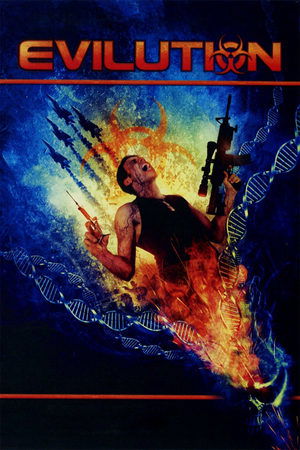
To stop the collapse of humanity, an elite team of soldiers must descend on a radiation-poisoned town and perform the ultimate stealth mission using high-tech armor and weapons.
A group of cute meerkats painstakingly care for their beloved and unique fruit, but a vulture has a mind to disturb their peace of mind.
After being dumped by his girlfriend Winnie, Andy Mott is determined to win her back -- the only problem is, he's got a LOT of growing up to do.
A man hides his valuables under his mattress before going to sleep, blissfully unaware of the two burglars on his roof.
A constable and a subway attendant are working late at night in an underground station when a well-dressed man with a cigar in his teeth enters with his arms around two women dressed in long skirts and jackets, gloves, and fancy hats. The trio laugh and stumble on the platform as if having a hilarious time, getting the attention of the policeman who attempts to stop their bawdy behavior.
A man in black tie and tails enters a high-society parlor where a settee sits beneath an open window. He goes to the window and gestures to someone. From outside, a man in a burglar's outfit (watch cap, wide striped shirt, and dark jacket) appears and gets his instructions from the man in tails. A woman wearing a jeweled tiara enters with a second man who leaves her in the company of our mastermind. He sits her on the settee, chats her up, leaning toward her with one arm curling behind her head.
A man and a woman, both dressed in rough clothing, go around and around, half dancing and half wrestling, until they tumble to the ground in a heap. The Apache dance was named not after the Indians of the American Southwest, but the lower class demimondaines of Paris. Acts like this were popular because they permitted their audiences to go slumming, attending events that looked and seemed risky but in truth were not. Acts like this were part of the reason that public dancing was often seen as disreputable. Polite society restricted their dancing to private parties where dances like the waltz and polka -- which had been shocking half a century earlier -- were performed. It would take the influence of Vernon and Irene Castle and the rise of night clubs during Prohibition to make public dancing respectable again. In the meantime, there's this. It's not very graceful.