Tribal Strands is about two self-made Brooklyn hair artists, who create authentic hairstyles, leading the anti-hair discrimination movement. In addition, they inspire Black people to embrace their natural hair worldwide while exploring the intersections between modern and ancient African indigenous hairstyles.
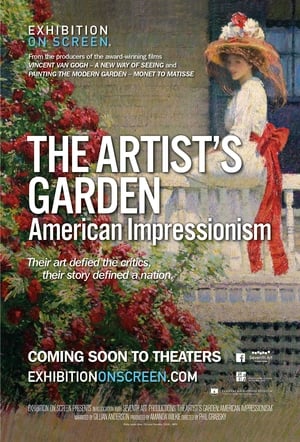
Taking its lead from French artists like Renoir and Monet, the American impressionist movement followed its own path which over a forty-year period reveals as much about America as a nation as it does about its art as a creative power-house. It’s a story closely tied to a love of gardens and a desire to preserve nature in a rapidly urbanizing nation. Travelling to studios, gardens and iconic locations throughout the United States, UK and France, this mesmerising film is a feast for the eyes. The Artist’s Garden: American Impressionism features the sell-out exhibition The Artist’s Garden: American Impressionism and the Garden Movement, 1887–1920 that began at the Pennsylvania Academy of the Fine Arts and ended at the Florence Griswold Museum, Old Lyme, Connecticut.
Tattooing — "the world's oldest skin game" — is the subject of this iconic documentary. Writer/director Geoff Steven scored a major coup by signing Easy Rider legend Peter Fonda as his presenter. Travelling to Aotearoa, Samoa, Japan and the United States, the doco traces key developments in tattooing, including its importance in the Pacific, prison-inspired styles, and the influence of 1960s counterculture. Legendary tattooists feature (including Americans Ed Hardy and Jack Rudy), while the closing credits parade some eye-opening full body tattoos.
This is a 1991 documentary film about the legendary artist and filmmaker, Joseph Cornell, who made those magnificent and strange collage boxes. He was also one of our great experimental filmmakers and once apparently made Salvador Dali extremely jealous at a screening of his masterpiece, Rose Hobart. In this film we get to hear people like Susan Sontag, Stan Brakhage, and Tony Curtis talk about their friendships with the artist. It turns out that Curtis was quite a collector and he seemed to have a very deep understanding of what Cornell was doing in his work.
New York based artist, Cindy Sherman, is famous for her photographs of women in which she is not only the photographer, but also the subject. She has contributed her own footage to the programme by recording her studio and herself at work with her Hi-8 video camera. It reveals a range of unexpected sources from visceral horror to medical catalogues and exploitation movies, and explores her real interests and enthusiasms. She shows an intuitive and often humorous approach to her work, and reflects on the themes of her work since the late 1970s. She talks about her pivotal series known as the `Sex Pictures' in which she addresses the theme of sexuality in the light of AIDS and the arts censorship debate in the United States.
A contemplation of art and adventure in the southern wilds of New Zealand by both a landscape photographer and an adventure filmmaker. This film is the unexpected result of their two unique perspectives.
Art in an Age of Mass Culture pulls back the curtain and takes a look at the cultural climate surrounding MoMA's now famed exhibition, "High and Low: High Art and Popular Culture". Opening in the fall of 1990, the show placed a spotlight on the rapid merging of consumerism and the artistic avant-garde. Curated by Kirk Varnedoe and Adam Gopnik and featuring work from artists such as Jeff Koons and Roy Lichtenstein, "High and Low" ignites conversations of mass culture and our society's ever-changing relationship with the arts.
Hans Haacke is a key figure in contemporary art whose work intersects with conceptual, pop, minimal and land art. The artist is particularly known for his research into the hidden economies and politics of the art world and the repressed histories of places and peoples. Haacke's strong political, cultural and social concerns are reflected in his installations, texts and sculptures.
A portrait of the day-to-day operations of the National Gallery of London, that reveals the role of the employees and the experiences of the Gallery's visitors. The film portrays the role of the curators and conservators; the education, scientific, and conservation departments; and the audience of all kinds of people who come to experience it.
A short documentary illustrating how art can influence public perception towards environmental issues. Green Patriot Posters is a highly acclaimed multimedia design campaign that challenges artists to deepen public understanding and ignite collective action in the fight against climate change. So far, it has reached five million people through print media, public space and digital culture. The film features interviews with key Green Patriot Posters contributors (Shepard Fairey, Michael Bierut, DJ Spooky, Mathilde Fallot) and its founders (The Canary Project, Dmitri Siegel).
A one-of-a-kind cinematographic experiment. A grotesque fairy tale, staged in the real lives of the characters. A completely self-produced movie, designed and directed by two visual artists, with the purpose of telling the tale of Artaserse, a retired worker, boxer, trainer and life-long painter. Everything is staged in an industrial, now decadent Terni; like a steel bay without the sea, here it's difficult to dream about becoming an artist. This movie is like a suburban western movie; the boxer and the painting dancing the communal square dance together, in life and death, the meeting-match between Artaserse and an allegorical and remorseless art world, and more generically, the battle of all the colorful characters, appearing throughout.
Writer and artist Matthew Collings reveals the use of light by artist JMW Turner, through a biography of the artist's life-long fascination with the River Thames, London.
A documentary-style capturing of the life of Ab, a young struggling artist trying to find her way, all while dealing with unwanted company.
Simon Schama explains the style, theme and concept of Rembrandt's late masterpieces.
A journey into the hearts, minds and eyes of Georgia O’Keeffe, Emily Carr and Frida Kahlo - three of the 20th century’s most remarkable artists.
The Mona Lisa Myth
The Sophisticated Misfit is a long-awaited must-have for fans of the artist Shag and Tiki culture alike. This documentary traces the artist’s roots growing up in Hawaii, his artistic journey in college, his early work designing album covers, to his modern-day role as an art-world phenom. In addition to exclusive footage of Shag painting in his home studio, the film features intimate interviews with the artist, his family, artistic influences, tiki-philes, celebrity collectors, and fans.
The conflict over forestry operations on Lyell Island in 1985 was a major milestone in the history of the re-emergence of the Haida Nation. It was a turning point for the Haida and management of their natural resources.
This new documentary tells the incredible life story of an internationally renowned artist who goes to the frontline to tell the real story of the world. Irish painter and social activist Brian Maguire has been catapulted to the forefront of the international art world in recent years as it has been realized how much his challenging work contributes to and tells the real story of the world. He tells the stories of those that have lost the race, the victims of poverty, drugs and violence. All of the elements of Brian’s extraordinary life are rolled out in his artworks, experiences that have fueled his drive to bring attention to stories of injustice, stories which might not otherwise be told. He has brought his artworks to UN headquarters in New York and the European parliament to bring attention to what he calls the victims of capitalism.
The Kabul National Museum, once known as the "face of Afghanistan," was destroyed in 1993. We filmed the most important cultural treasures of the still-intact museum in 1988: ancient Greco-Roman art and antiquitied of Hellenistic civilization, as well as Buddhist sculpture that was said to have mythology--the art of Gandhara, Bamiyan, and Shotorak among them. After the fall of the Democratic Republic of Afghanistan in 1992, some seventy percent of the contents of the museum was destroyed, stolen, or smuggled overseas to Japan and other countries. The movement to return these items is also touched upon. The footage in this video represents that only film documentation of the Kabul Museum ever made.