African American soldiers throughout the 19th and 20th Centuries faced discrimination and segregation, yet many still chose to fight for their country.
An analysis of the impact on the United States Latino community of immigration policies promoted by President Donald Trump.
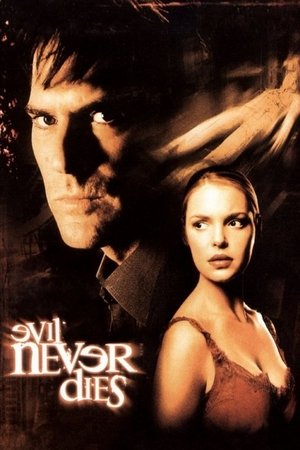
A racist officer is put in charge of an all-black squad of troops charged with the mission of blowing up an important hydro-dam in Nazi Germany. Their failure would delay the Allies' advance into Germany, thus prolonging the war.
Fracking the System is a political thriller documentary from the front lines of climate justice activism in Colorado. When a fracking mega-site gets moved from a White neighborhood to a BIPOC neighborhood, a concerned mother fights to try and stop it. This is an investigative exposé about the harms of fracking, the lengths to which the government is complacent with industrial pollution, and the nefarious tactics that the oil and gas industry uses to undermine democratic elections.
Set in New York City, the epicenter of a phenomenon cropping up in communities across the United States, "Nursery University" reveals the oddly competitive process of nursery school admissions. The film tells the story of five families attempting to place their toddlers in preschool classrooms that have limited space and high price tags.
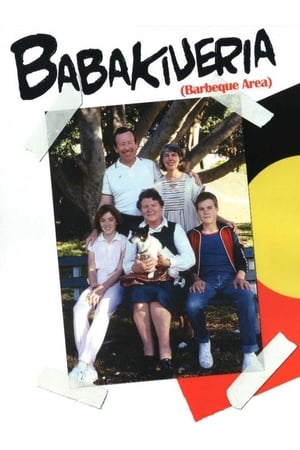
Imagine what it would be like if black settlers arrived to settle a continent inhabited by white natives? In 1788, the first white settlers arrived in Botany Bay to begin the process of white colonisation of Australia. But in Babakiueria, the roles are reversed in a delightful and light-hearted look at colonisation of a different kind. This satirical examination of black-white relations in Australia first screened on ABC TV in 1986 to widespread acclaim with both critics and audiences alike. This is the story of the fictitious land of Babakiueria, where white people are the minority and must obey black laws. Aboriginal actors Michelle Torres and Bob Maza (Heartland) and supported by a number of familiar faces from the time, including Cecily Polson (E-Street) and Tony Barry, who starred in major ABC-TV hits such as I Can Jump Puddles and his Penguin award-winning Scales of Justice. Babakiueria was awarded the United Nations Media Peace Prize in 1987.
The film focuses on Veronica Glover, a black teenager who has been elected to the Student Congress of her predominantly white high school in New Haven, Connecticut. Hoping to use her position to encourage conversation between her black and white classmates, Veronica narrates her experience in voiceover as we see brief, revealing scenes from her life: a debate in an African Literature class, discussions with her friends, and time spent with a teacher/counselor.
In THE COLOR OF FEAR, eight American men participated in emotionally charged discussions of racism. In this sequel, we hear and see more from those discussions, in which the men talk about about how racism has affected their lives in the United States. We also learn more about the relationships between them, and about their reactions during some of the most intense moments of that discussion.
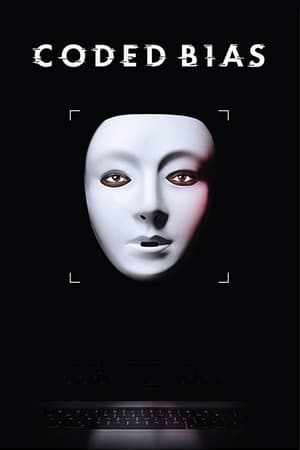
An innovative and charismatic influencer is suddenly exiled from her community of creative partners and colleagues when she states an opinion that she did not know was “unacceptable” in their eyes.
Michel Thomas is one of the most brilliant language teachers in the world. His usual clients are movie stars and business leaders. This programme takes him to a Sixth Form College in London to work with school pupils, to test his claim that he can teach anyone a language in a week - with no reading, writing or homework. The film also explores his personal history - as a hero of the French Resistance during WW II. Nigel’s documentary with the 85 year old Michel Thomas was the first time that Thomas allowed his techniques to be made public. The subsequent success of the film transformed Thomas into a global celebrity and his method into one of the most highly regarded in the world of education.
What does beauty look like? In this award-winning short, Kenyan filmmaker Ng’endo Mukii combines animation, performance, and experimental techniques to create a visually arresting and psychologically penetrating exploration of the insidious impact of Western beauty standards and media-created ideals on African women’s perceptions of themselves. From hair-straightening to skin-lightening, YELLOW FEVER unpacks the cultural and historical forces that have long made Black women uncomfortable, literally, in their own skin.
Quando Sinto que Já Sei
Inspired by the poetry of Robert Frost, this short primarily aims to capture the dynamic nature of the world around us; the ego and the id; the past and the present; everything that has, as of yet, diluted the course of life as we know it.
Človíčkové
In this short documentary, a Musqueam elder rediscovers his Native language and traditions in the city of Vancouver, in the vicinity of which the Musqueam people have lived for thousands of years. Writing the Land captures the ever-changing nature of a modern city - the glass and steel towers cut against the sky, grass, trees and a sudden flash of birds in flight and the enduring power of language to shape perception and create memory.
In the early 19th century, Dr. Frankenstein discovers the secret of life – how to create a perfect man – powerful, intelligent and immune to disease. But something goes wrong in the laboratory and the doctor’s hideous creation disappears into the night. At first, Frankenstein hoped that the horrible monster would perish in the wilderness, but now he senses that it’s alive and sets out for him. Dr. Frankenstein tracks the creature to the Arctic, where the two must battle to decide who will become the master of the other’s life…or death.
O Zé Analfabeto e o Trânsito
Les chiens-loups
In this documentary, wealthy entrepreneur Bryan Johnson puts his body and fortune on the line to defy aging and extend his life beyond all known limits.
The decades-long debate surrounding reparations is fraught, mired in racial tension and the semantics of restorative justice. While the national conversation remains stalled due to legislative inaction, communities across the country examine their histories and take it upon themselves to arrange their own form of reparations. This detailed investigation of restitution presents accounts of everyday people confronting the past and exploring the possibilities of wealth transfer.