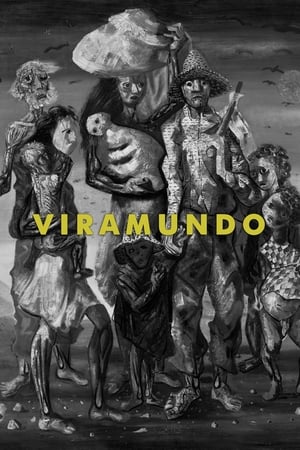
At the beginning of the 60's, thousands of Portuguese turned up in France through the underground. They were fleeing misery, war and repression. Left to unscrupulous smugglers, they had to cross the Iberian Peninsula tracked by the Portuguese and Spanish police. For many, the voyage towards France turned into a disaster. As a child in a shantytown, the author remembers having heard about these terrible odysseys. Thirty years later, he goes in search of the stories of his childhood and seeks to understand what sparked this unprecedented emigration known as the "plebiscite by foot" against Salazar. Between childhood memories and historical investigation, he looks for the images of this exodus, the largest in post-war Europe.
Exclusive access to chief diplomat of the EU Federica Mogherini as Europe faces a crumbling world order.
Enduring 28 days of relentless construction labor, Frank struggles to prep a house for painting amidst Phoenix's scorching pandemic summer.
A Sense of Justice, immerses us In a law firm in this same city. There, we can find Christine Mengus and Nohra Boukara, specialized in the rights of foreigners, supported by Audrey Scarinoff and their co-workers.. Stories from their sad, appalling or tragicomic cases alternate with their daily legal work. And as we hear snatches of consultations involving illegal entry or departure, deportation orders, the right to reside or medical assistance, we become witnesses to predictable tragedies, to the administrative or social precariousness induced by such predicaments, and to whole lives depending on court rulings.
This documentary follows various migratory bird species on their long journeys from their summer homes to the equator and back, covering thousands of miles and navigating by the stars. These arduous treks are crucial for survival, seeking hospitable climates and food sources. Birds face numerous challenges, including crossing oceans and evading predators, illness, and injury. Although migrations are undertaken as a community, birds disperse into family units once they reach their destinations, and every continent is affected by these migrations, hosting migratory bird species at least part of the year.
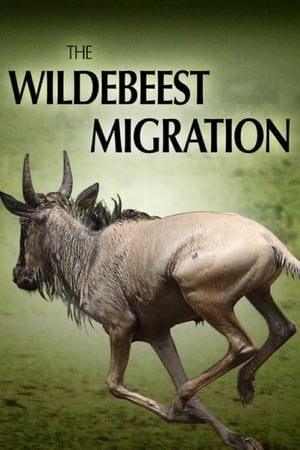
Every year, on the steppes of the Serengeti, the most spectacular migration of animals on our planet: Around two million wildebeest, Burchell's zebra and Thomson's gazelles begin their tour of nearly 2,000 miles across the almost treeless savannah. For the first time, a documentary captures stunning footage in the midst of this demanding journey. The documentary starts at the beginning of the year, when more than two million animals gather in the shadow of the volcanoes on the southern edge of the Serengeti in order to birth their offspring. In just two weeks, the animal herd's population has increased by one third, and after only two days, the calves can already run as fast as the adults The young wildebeest in this phase of their life are the most vulnerable to attacks by lions, cheetahs, leopards or hyenas. The film then follows the survivors of these attacks through the next three months on their incredible journey, a trip so long that 200,000 wildebeest will not reach the end.
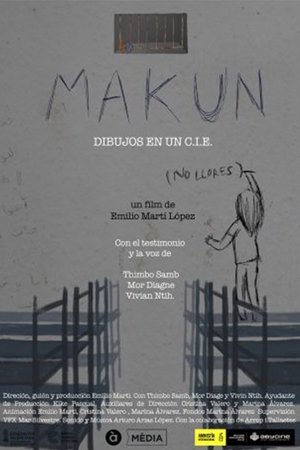
Makun (no llores) - Dibujos en un CIE
Women from Turkey and Mecklenburg are working together side-by-side at a fish-processing factory in Lübeck. As they work, they share stories about their lives, including their sorrows, griefs, hopes, and dreams, while expressing their longing for home and feelings of being lost in a foreign place.
By land, by air, and by sea, viewers can now experience the struggle that millions of creatures endure in the name of migration as wildlife photographers show just how deeply survival instincts have become ingrained into to the animals of planet Earth. From the monarch butterflies that swarm the highlands of Mexico to the birds who navigate by the stars and the millions of red crabs who make the perilous land journey across Christmas Island, this release offers a look at animal instinct in it's purest form.
La línea
Guanape Sur. A barren rock island off the coast of Peru. No soil, no water. Nothing is growing here. Around its shores a restricted area has been established. The island serves hundreds of thousands of sea birds as a breeding ground.
Rotem Genossar, a teacher at the Bialik-Rogozin campus in south Tel Aviv, founds a running group for his students, young African refugees whose families fled their homeland and now live in Israel without any legal status. At first running is just a social activity for the students, but it quickly becomes a means to fight for their civil rights, part of a struggle to secure them a place of their own, out of the margins of Israeli society.
This anthology film, whose Chinese title begins with a romantic name for human excrement, premiered internationally at Rotterdam and won Best Screenplay from the Hong Kong Film Critics Society. A variety of Hong Kong people wrestle with nostalgia when facing an uncertain future. Their stories give way to a documentary featuring a young barista turned political candidate.
YAYA is a story about a filmmaker who explores the complex relationship between his family and the domestic worker who spent decades away from her family in the Philippines to raise his. This documentary is a tribute to all the domestic workers in Hong Kong, who has served as the backbone of Hong Kong's economy by unleashing a substantial female workforce into the economy and taken care of so many lives with love and care. You are all heroes in the hearts of the Hong Kong people. - Justin Cheung, the director
The film explores the reasons for emigrating from Italy and describes the feeling of being a stranger in one's own country after many years in Switzerland. It is the sequel to Emigrazione.
In fremder Erde (In Foreign Soil) documents the Muslim traditions of burial in Turkey and Germany, but above all, the paths the dead take to return to Anatolian soil.
Djibi and Ange, two teenagers living on the streets, arrive at the Archipel, an emergency shelter in the heart of Paris. This documentary is a look at the Archipel, a shelter offering an innovative way to welcome families living on the streets.
KÖY (Turkish for village) is about the longing for home, for belonging and the freedom of the self. Three women from three generations are united by their Kurdish roots.
Over the course of thirteen years, the filmmaker and protagonist shares the experience of his binational family, taking us to his wife's country. "Becoming family" requires a significant cultural sacrifice, as they navigate the challenges of uprooting and integrating into a new society. The film offers a transformative glimpse into the realities of migration.
While millions of birds migrate freely in the skies above, Fadia, a Palestinian refugee stranded in Lebanon, yearns for the ancestral homeland she is denied. When a chance meeting introduces her to the director, Sarah, she challenges her to find an ancient mulberry tree that once grew next to her grandfather’s house in historic Palestine, a tree that stands witness to her family’s existence.