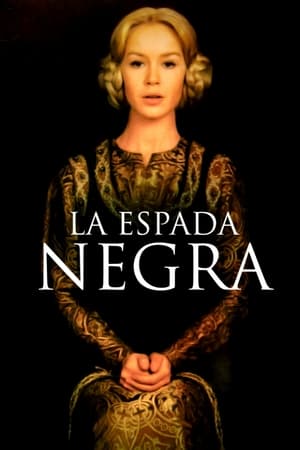
The incredible story of Lucrezia Borgia (1480-1519), daughter of Pope Alexander VI (1431-1503), deliberately used politically by her powerful family and historically slandered as a poisoner and incestuous femme fatale. But who was the real Lucrezia?
1492: Conquest of Paradise depicts Christopher Columbus’ discovery of The New World and his effect on the indigenous people.
In the XIth century Kyivan Rus' (Ukraine-Rus') reached its zenith under the reign of Yaroslav. He established enduring ties with many of the ruling European dynasties, strengthened the borders of Rus' and tried to free it from the influence of the Byzantine Empire. Since 988 the church of Rus' had been autonomous, apart from the right of Constantinople to appoint the Metropolitan.
In 1415, in the midst of the Hundred Years' War, the young King Henry V of England embarks on the conquest of France.
Thi is the story of a Kyiv boy who lives his life believing that the problems of his country do not interest him. However, everything changes when he meets in a dream a Ukrainian warrior who comes to Nazar from the last century. Or maybe it was not a dream?
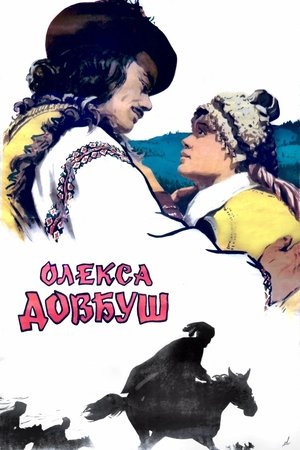
In the early eighteenth century, foreign rule means dark times for the Hutsuls of the Carpathians. The two Dovbush brothers become opryshkos - mountain outlaws. But the two brothers become enemies - one cares only about money, the other - Oleksa - fights for his people. The Carpathians are convulsed with a wave of uprisings. The aristocracy uses its military might to try to kill Dovbush and destroy his legend. But Dovbush outwits them. The desperate lords devise a devious plan and attack the invincible outlaw's Achilles heel - his love for his childhood sweetheart, Marichka. Who will be the assassin to attack the Opryshko whose immense strength and bravery inspired folk tales? Will the lords' treacherous plan destroy the hero before he can lead his people to freedom?
Knieža liptovské
Using historically-accurate, battle-filled re-enactments and interviews with expert historians and noted authors, this two-part documentary series brings to vivid life the captivating true stories behind Britain's bloody civil wars.
The story is about ordinary Ukrainian young men who become heroes. At a crucial moment, they take up arms and defend their homeland. This film is about those who have made a choice in favor of freedom, even if they have to pay with their lives for it.
Three decades after the nuclear explosion, almost everything has been said about this ecological and sanitary disaster that made Pripiat a part of History. How did the greatest industrial disaster change the course of History, disrupt global geopolitics and, directly or indirectly, redistribute the balances and power relations of the twentieth century? The world will never be the same again. By retracing the incredible battle waged by the Soviet Union against radiation, this film proposes to retrace and enlighten an extraordinary story, while exploring the historical stakes in the medium and long-term…
In the days of King Henry IV, stalwart young Myles and his sister Meg have been raised as peasants, without any knowledge of who their father really was. But one day, they journey to Macworth Castle. There, Myles falls in love with Lady Anne Macworth, makes friends and enemies, and learns to be a knight.
In 1456, French King Charles VII recalls the story of how he met the 17-year-old peasant girl Joan of Arc, entrusted her with the command of the French Army, and ultimately burned her at the stake as a heretic.
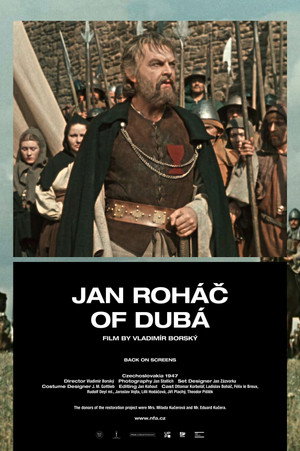
The first part of the "Hussite Revolutionary Trilogy", completed with Jan Žižka (1955) and Proti všem (Against All Odds, 1957). The film captures the period from May 1412 to the summer of 1415, a turbulent time in the Czech Kingdom, during which there were protests in Prague against the sale of "omnipotent indulgences" whose sale throughout the kingdom was announced by Pope John XXIII. The ideological leader of this movement is the preacher Master Jan Hus, whose words, calling for the elimination of church abuses, are listened to in the Bethlehem Chapel by thousands of ordinary Praguers, Czech lords and Queen Sophie, wife of the Czech King Wenceslas IV.
The second part of the revolutionary Hussite trilogy takes place in the years 1419-1420.
Nguyen Vu is the sole survivor of his family who was executed by the empress of Vietnam. Upon discovering that his family may have been framed for crimes they did not commit, he sets out to bring justice and clear his family name.
Convinced only she can lead France to victory against the invading English, Jeanne leaves her childhood home to plead with Charles, heir to the French throne, to allow her to guide his troops on the battlefield.
Jeanne has succeeded in lifting the siege of Orléans and Charles has been crowned King of France. However, she is injured in an attempt to take Paris, weakening her position at court. Captured by the enemy and put on trial, she finds both her life and the sanctity of her body at stake.
King Louis XI masquerades as a commoner in Paris, seeking out the treachery he is sure lurks in his kingdom. At a local tavern, he overhears the brash poet François Villon extolling why he would be a better king. Annoyed yet intrigued, the King bestows on Villon the title of Grand Constable. Soon Villon begins work and falls for a lovely lady-in-waiting, but then must flee execution when the King turns on him.
Witnesses, survivors and front-line heroes recall the first days of the Chernobyl disaster of April 1986. Featuring rare archive footage of the world's worst ever nuclear accident.
In December 1437, Emperor Sigismund, King of Bohemia and Hungary, returns from Prague to Hungary. Due to a prolonged illness, he stops with his entourage at Znojmo Castle. The Emperor's wife Barbora, daughter Elizabeth and her husband, Duke Albrecht of Habsburg, Supreme Chancellor Kašpar Šlik, bishop, doctors, but also a former supporter of the Hussite movement, Master Křišťan of Prachatice, all expect the Emperor's death. Family members and even the Supreme Chancellor are considering how to obtain the Czech crown for themselves. The Emperor is already dictating a will, but has not yet sealed it with a seal. He waits and takes stock of his reign. Although he defends himself, he is constantly haunted by memories of the Hussite revolutionary movement, which he so cruelly suppressed, and of Hus, for whose death he was responsible.