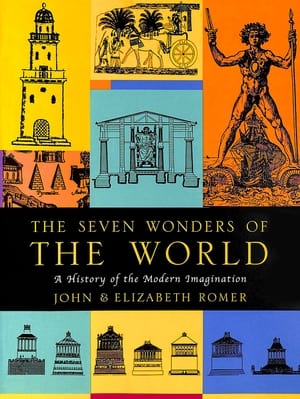
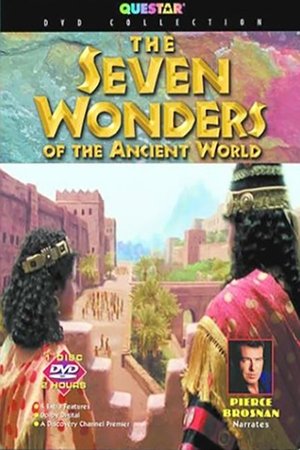
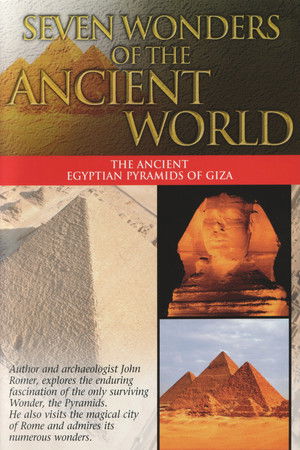
This program presents the stories of the works of architecture regarded by the Greeks and Romans as the most extraordinary structures of antiquity: the Hanging Gardens of Babylon, The Statute Of Zeus, the Temple of Artemis, the Mausoleum of Halicarnassus, the Pharos of Alexandria and the Pyramids of Egypt and more.
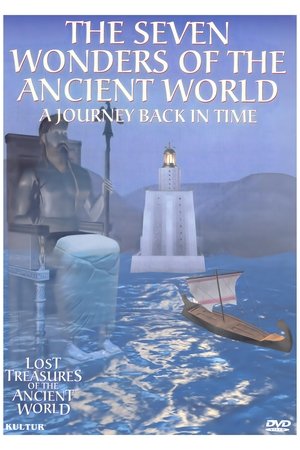
The Romans saw the Seven Wonders of the Ancient World as the crowning achievements of their predecessors. Through stunning on-location and re-created visuals, learn how and why they were built and how they dazzled the ancients.
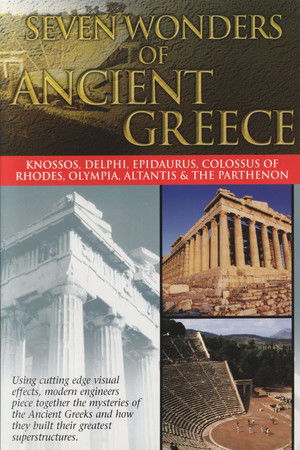
Greece, a land of breathtaking beauty and light. A land where science, art and inspiration from the gods combined to produce some of the world's greatest marvels of architecture and design. The ancient Greeks used buildings and structures to reflect the variety of life at the core of their civilisation - they built the first theatres, staged the first sports events and worshipped in some of the most spectacular temples ever built.
Documentary discussing the seven manmade wonders listed by Philo of Byzantium 2000 years ago: the Colussus of Rhodes, the statue of Zeus at Olympus, the Mausoleum at Halicarnassus, the temple to Artemis at Ephesus, the pyramid of Giza, the Pharos of Alexandria and the Hanging Gardens of Babylon.
Noted scholar John Romer takes us on a tour of the seven wonders of the ancient world. This program presents the stories of the works of architecture regarded by the Greeks and Romans as the most extraordinary structures of antiquity: the Hanging Gardens of Babylon, The Statute Of Zeus, the Temple of Artemis, the Mausoleum of Halicarnassus, the Pharos of Alexandria and the Pyramids of Egypt and more.
Author and archaeologist, John Romer, contemplates the mystical aspects of the Seven Wonders, exploring the enduring fascination of the only surviving Wonder, the Pyramids. John then focuses his attention on the city of Rome which had become a magical city, surrounded by a wall of iron enclosing seven hills, one for each day of the Creators rest. There were 365 squares in Rome, 365 streets, 365 palaces for the popes and each palace had 365 steps and each step was covered with bread enough to feed the world. It was a dream of poor people. imagining a legendary past. A past of endless wealth and wonder. Ghosts of Wonder demonstrates how the story of the Wonders is also the story of the modern imagination and has John Romere travelling from Australia to New York to illustrate how people are still haunted by ghosts of the ancient past.
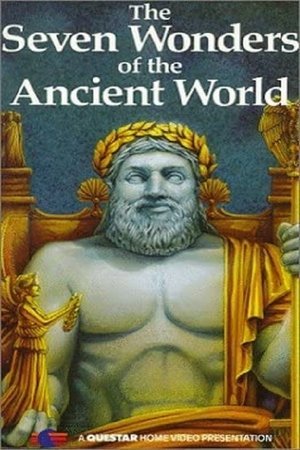
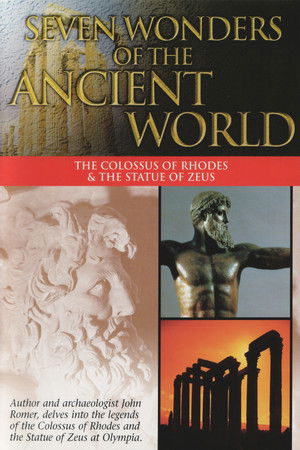
Explore the birth of the iage of "The New Man" in human hostory. Delving into the legends if the Colossus od Rhodes and the Statue of Zeus at Olympia, host John Romer demonstrates how these monuments projected a new vision of the human form into the popular consciousness. A mmoth figure of ivory and gold, the Statue of Zeus at Olympia ruled over the Olympic games. Before this venerable statue lay a huge, shallow pool of olive oil, which reflected light onto the figure. The Colossus of Rhodes was built with sheets of bronze and stood guard over the island of Rhodes. Perhaps the most astounding aspect of both monuments was that the sculptors modelled their faces in the image of man. Today, this image is mirrored in our own Statue of Liberty,
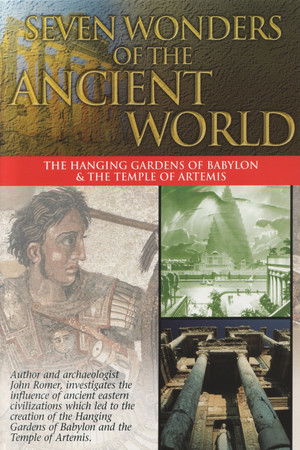
Explore with host John Romer, the influence of ancient eastern civilizations. The Hanging Gardens of Babylon, in what is now Iraq, were rumoured to be part of the palace of Nebuchadnezzar. Today, scientists believe that the exotic gardens were actually more fable than fact. The Temple of Artemis at Ephesusm in modernday Turkey, was built to honour the mother goddess. She was a powerful force for many different people - the Romans knew her as Diana, the Anatolians as Kybele - and her temple was one of the holiest shrines in Alexander the Great's world
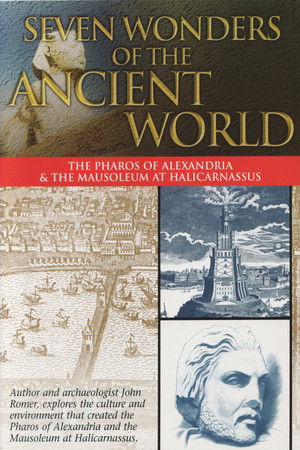
Host John Romer ventures to the sites of two ancient cities created by Alexander the Great - cities that were considered among the most beautiful and unusual the world had ever seen. We also explore the culture and environment that created several of the seven wonders. This episode examines two unparalleled testaments to the power of the era: The Pharos (Lighthouse) at Alexandria, which stood more that 300 feet, making it the tallest structure of its time, and the Mausoleum at Halicarnassus, which was considered one of the greatest tombs ever created. The Mausoleum's perimieter was not decoreated with icons of ancient gods, as was the custom of the time, but with ennobled and enlarged figures of real people. These statues are thought to have been an inspiration for the citizens - telling them they could be as great as the gods.
The story of Yuhan, a Chinese expatriate who must leave her adopted home of Los Angeles to pursue her music dreams in Hamburg, Germany. As she prepares to depart, Yuhan reflects on the excitement and loneliness that opportunity can bring.
The second of two concerts, where the boys have grey suits, was video taped by Nippon Television. The two shows were edited together and broadcast during The Beatles Recital, From Nippon Budokan, Tokyo, which was screened on NTV Channel 4 on 1 July from 9pm.
Inspired by the 1980s American soap opera, Santa Barbara, Svetlana became a mail-order bride from post-Soviet Russia to America. She took her two children with her to California to meet a stranger, a man who would soon become her husband and father to her children. The film brings together the audition process, behind- the-scenes footage, archival home movies, scripted scenes, and an interview with the director's mother, Svetlana. This project is an immersive form of visual storytelling that employs memory and performance in equal measure to show the journey of immigrating to America.
It explores the last two years of Brazilian singer Cazuza's life, from his AIDS diagnosis until his death. Nilo Romero, Cazuza's music producer and the film's director, created a collection of rarely seen and controversial images.
1969. Man lands on the moon. Half a million strong at Woodstock....and Led Zeppelin perform in the gym of the Wheaton Youth Center in front of 50 confused teenagers. Or did they? Filmmaker Jeff Krulik chronicles an enduring Maryland legend, of the very night this concert was alleged to have taken place, January 20, 1969, during the first Presidential Inauguration of Richard Nixon. Led Zeppelin Played Here presents a mid-Atlantic version of what was happening nationwide as the rock concert industry took shape. Featuring interviews with rock writers, musicians, and fans, and several who claim they were witnessing history that night.
Sex, death, reptiles, charisma and a unique variant of the electric blues gave the Doors an aura of profundity that has survived the band's demise. In September, 1968, The Doors gave a history making performance at The Roundhouse in London's Chalk Farm. They gave powerful renditions of their best songs. Part of the Pioneer Artist Concert Film Series.
Alf Bicknell, who was the Beatles' driver and road manager, shows footage, photographs and outtakes taken while he was employed by the Beatles.
This movie (Executive Producer - KORE-EDA Hirokaz) looks at three beautiful islands, shaken by climate change: Tuvalu in the South Pacific, Venice in Italy, and Shishmaref in Alaska. The islands all have different climates and cultures, but the people all love their native lands. The film, which took three years to shoot, focuses on their daily lives. It portrays festivals that foster ties among the people, traditional crafts which have been passed on for generations, and peaceful lives by the water. They are all disappearing by climate change. When these people lose their homelands, their cultures and histories face death. Their lives in the midst of all the changes suggest where our future leads.
Features gorgeous women with naturally large breasts and without muscular builds posing in swimsuits, various sexy outfits, and totally nude.
The white chalk cliffs of Rügen are among the most impressive natural monuments on earth, which the painter Casper David Friedrich immortalized for posterity as early as the 19th century. Germany's largest island with its seaside resorts from the Gründerzeit, its smaller side islands and peninsulas that give it its shape, its lagoon-like Bodden waters, the dense beech forests, the yellow rapeseed fields and the meadows, the shady tree avenues and the white sandy beaches is not only a magnet for tourists, but also a unique natural paradise in the middle of the Baltic Sea, a habitat for the rare white-tailed eagle, fallow deer, raccoon dogs and badgers as well as a resting place for huge swarms of migratory birds such as geese and cranes that can be heard trumpeting from afar. In this nature documentary, the unique landscapes and the diversity of the animal world of Rügen are captured with beautiful pictures during the changing of the seasons.
A young anthropologist reflects on her late grandmother's religious background.