Opera singer Chivo is currently playing a singing cowboy, and Mexican bandito Braganza kidnaps him (along with Jane, an heiress) so he can learn to become more like the American movie gangsters he admires.
La Scala went all out for its 1986 production of this grandest of grand operas, with a strong cast and, most important for a video recording, a larger-than-life staging. The Triumph Scene in Act II is by no means Aida's only attraction, but it is the part that makes the strongest and most lasting impression and it is the visual and musical climax of this production. Stage director Luca Ronconi brings on a procession to dwarf all processions: looted treasures, heroic statuary, miserable captives struggling under the lash of whip-bearing slave drivers. On par with these visuals is Lorin Maazel's first-class performance of the popular Grand March with the outstanding La Scala chorus and orchestra. In Act III, the contrasting tranquility of the Nile Scene also gets a visual treatment to match the music's qualities.
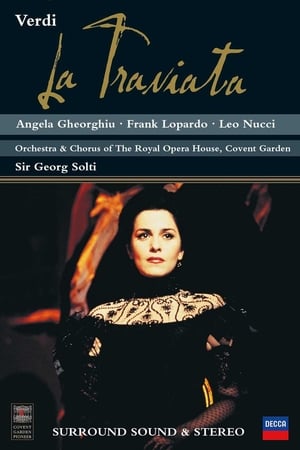
Renée Fleming has matured into one of the finest sopranos around at the moment, a true star with a sparkling personality and a velvet-toned voice that is capable of wringing the finest emotions out of works by Strauss and Tchaikovsky that from a lesser singer could sound rather cold and clinical. I wouldn't have thought her voice would be so well suited to Violetta Valéry in La Traviata, and it does take some getting used to, but I think she at least brings a distinct quality to the role with an emotional heart that isn't always necessarily there when a leading diva uses it primarily as a display for her vocal talents. It's served well also by Antonio Pappano's conducting of the Royal Opera House Orchestra in a traditional, but effective production by Richard Eyre.
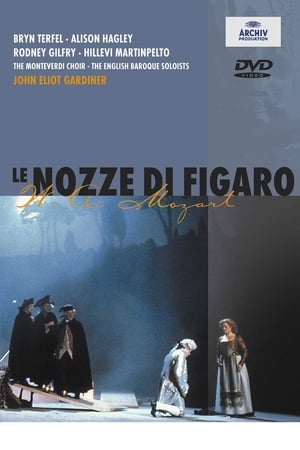
Live from Glyndebourne 1994. The first production to be filmed Live in Glyndebourne´s new opera house May 1994. The Marriage of Figaro is a continuation of the plot of The Barber of Seville several years later, and recounts a single “day of madness” in the palace of the Count Almaviva near Seville, Spain. Rosina is now the Countess; Dr. Bartolo is seeking revenge against Figaro for thwarting his plans to marry Rosina himself; and Count Almaviva has degenerated from the romantic youth of Barber into a scheming, bullying, skirt-chasing baritone. This follows the Count trying to obtain favours from Susanna, Figaro’s bride to be, under the nose of the Countess.
David McVicar’s powerful Royal Opera House 2008 production of Strauss's opera – based on a play by Oscar Wilde – takes the controversial and disturbing film 120 Days of Sodom as its visual reference. The action is set in a debauched palace, which has suggestions of Nazi Germany. Strauss’s ravishing and voluptuous score adds to the sexual alchemy that is conjured by an international cast led by Nadja Michael in the title role.
Ernani is a gripping drama about love and revenge by Giuseppe Verdi. Written in his unique style it brims with poignant arias, rousing choruses and enthralling ensemble scenes. The rebel leader Ernani recognises his father's murderer in the Spanish King Carlo and seeks revenge on him. Both men love Elvira – as does old Silva whom she is to be married to ... Director Lotte de Beer and her set and costume designer Christof Hetzer devote themselves to the fictional plot which bears references to the 16th century. They demonstrate their rich scenic imagination in this production, conducted by Enrique Mazzola who “provides musically magic moments at the stand of the Wiener Symphoniker” (Schwäbische Zeitung). “Great singers, fiery music and an action-packed staging” (Allgäuer Zeitung). “A mixture of Tarantino’s ‘Kill Bill’ and Monty Python’s ‘The Knights of the Coconut’” (Deutschlandfunk).
With the “Méditation”, Jules Massenet probably wrote one of the most famous melodies of our time. It originates from his comédie-lyrique Thaïs, which – unlike Massenet's operas Werther or Manon – never made it into the international opera repertoire. Presumably because the two main roles of Thaïs and Athanaël demand something almost superhuman from the singers. In the new production by Peter Konwitschny at the Theater an der Wien, the American soprano Nicole Chevalier is one of the most exciting singers currently on stage in the title role. At her side, the young Austrian bass-baritone Josef Wagner celebrates his house debut. This is a fascinating and musically excellent performance of a timeless classic of the opera repertoire.
Live from ROH 2009, TV relay 1/12/2009.
Halka lives with her godmother in a modest cottage in a small highland village. One day, young Janusz arrives in the village to take possession of his ancestral estate. Halka falls madly in love with Janusz, who promises her eternal love and marriage. Soon, Janusz's mother arrives at the estate to inform him that they are ruined. The only salvation is to marry the daughter of a wealthy steward. Janusz leaves with his mother, promising Halka that he will return. Halka, who is pregnant, eagerly awaits the return of her beloved. The whole village turns its back on her, and she is supported only by Jontek, whose feelings she once rejected. Unable to wait for Janusz's return, she decides to go to the city, accompanied by her faithful Jontek. There she learns of Janusz's engagement to the steward's daughter, Zofia. Heartbroken, she returns to the village. There, she suffers another blow...
The story of a disabled beggar in Charleston,S.C. who falls in love with a prostitute, this is the first filmed version of Gershwin's opera which uses Gershwin's own orchestrations and practically all of the music, with only one major cut.
David McVicar's atmospheric and brooding production captures the drama of this riveting piece of British history, retold as only Donizetti could. International superstar Anna Netrebko is Queen Anne Boleyn, trapped in an unhappy marriage to King Henry VIII (Ildar Abdrazakov) whose roving eye has settled on another woman—Jane Seymour (Ekaterina Gubanova), Anna's friend, but now her unwitting rival. Add in Anna's early love, Percy (Stephen Costello), just returned to the court from exile, and the result is a haunting, explosive account of Queen Anna's tragic final days, before she goes to her execution in one of the most moving and dazzling final scenes in all of opera.
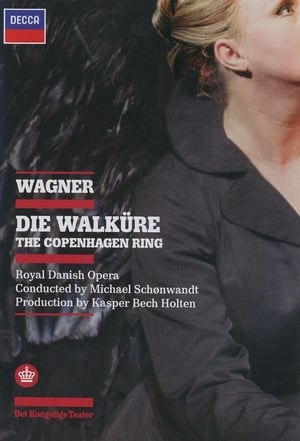
Day 3 of the Ring Cycle. DVD release June 2009.
Aldo and his girlfriend Lucy reopen an abandoned opera house, but find out that the place is inhabited by a group of Phantoms wearing the Claude Rains 1943 Phantom of the Opera costume.
David McVicar's spellbinding production of LE NOZZE DI FIGARO is set in 1830s post-revolution France, where the inexorable unravelling of an old order has produced acute feelings of loss. In the relationship between Finley's suave, dashingly self-absorbed Count and Röschmann's passionately dignified Countess, which lies at the tragic heart of the opera, the sexy ease between a feisty Figaro (Erwin Schrott) and a sassy Susanna (Miah Persson) is starkly absent, the tenacious spark between Marcellina (Graciela Araya) and Bartolo (Jonathan Veira) suggesting what might be rekindled. The production is superbly complemented by the beauty of Paule Constable's lighting and Tanya McCallin's evocative sets. Antonio Pappano conducts (and accompanies the recitatives) with invigorating wit and emotional depth.
Weber was at the forefront of the rise of German Romantic opera and sought to dethrone Rossini from his position as the leading operatic composer in Europe. In his breakthrough and most popular opera Der Freischütz (The Marksman) composed in 1821, he succeeded in his aim of establishing a truly German form. Turning to the folklore and folk songs of his native land he took a story of a marksman who makes a pact with the Devil, vesting it with powerful intensity not least in the famous Wolfs Glen scene and an astonishing control of orchestral color and atmosphere.
Mozart’s allegorical fairy tale has charmed audiences and inspired artists, for more than 200 years. A few weeks before this telecast, the Met unveiled a new production of the opera featuring the colorful designs of acclaimed artist David Hockney. His bold colors and vivid images enchanted audiences and seemed to inspire the striking cast, led by James Levine’s affectionate conducting. Francisco Araiza is the young prince Tamino, who finds himself in a strange land, forced to undergo mysterious tests so he can rescue, then marry, the woman he loves, Pamina, played by Kathleen Battle. Kurt Moll is the compassionate Sarastro and Luciana Serra is the Queen of the Night.
Live performance at Opernhaus Zürich in 2006. Nello Santi conducting Orchester der Oper Zürich and Chor der Oper Zürich. Directed for the stage by Gilbert Deflo.
Live performance, part of Monteverdi cycle staged by Oper Zürich with Nikolaus Harnoncourt conducting the Zürich Opera House Monteverdi Ensemble. Staged and directed by Jean-Pierre Ponnelle. Filmed 28 March – 20 April 1978 in Vienna, sound recorded 1 – 25 December 1977 in Zürich.
Anthony Minghella’s stunning production of Puccini’s opera opened the Met’s 2006–07 season and was seen by thousands of people around the world as part of the company’s Live in HD series. Patricia Racette is Cio-Cio-San, the trusting and innocent young geisha of the title, who disastrously falls in love with American Navy lieutenant B. F. Pinkerton (Marcello Giordani), only to be abandoned by him. Maria Zifchak is her loyal servant Suzuki and Dwayne Croft is Sharpless, the sympathetic American consul who does all he can but is unable to avert tragedy. Performance Date Mar 7, 2009
Although he is unanimously credited with having democratised opera, making it accessible to the greatest number, focus is rarely put on the strategy he devised and implemented in order to carry out his actions, nor what his actions reveal of the man and artist, and of the resulting metamorphosis from opera singer to pop artist. Through this angle, this film sets out to pay tribute to the man who summed up his credo, obsession and life’s work, in the following way: “They led the public to believe that classical music belonged to a restricted elite. I was the way to prove to the world that was wrong.