At various points in its history, tiny St. John's Island was where Singapore's colonial founder Sir Stamford Raffles docked his ship upon arrival, a quarantine centre for immigrants and pilgrims returning from Mecca, a penal colony for political detainees and secret society leaders, and a sleepy holiday resort. Unlike its neighbouring islands, however, St. John's was never fully developed. It occupies an in-between space, the vestiges of its history scattered around the land. Its indeterminacy stands in sharp contrast to Singapore, where land use is meticulously planned to fulfil economic and social functions. In this film, St. John's Island - otherwise known as 'Bukit Orang Salah', a nickname coined by the people who were quarantined there - becomes a site of and for reflection, prompting questions about our history, heritage and identity.
In a world where everyone is expected to be on point 24/7, life isn’t lived anymore — it’s performed. Always grinding. Always proving. Always “doing fine”. But the mind keeps score. And when it can’t take it anymore… the body hits pause. JEEVA is a social satire on today’s pressure culture — where being human is replaced by being perfect, and panic attacks are just the body’s way of saying: slow down. breathe. exist.
A woman returning home falls asleep and has vivid dreams that may or may not be happening in reality. Through repetitive images and complete mismatching of the objective view of time and space, her dark inner desires play out on-screen.
Everyday Portabella
In this fragile yet frightening poetic fantasy set against a dark industrial landscape, a woman sits knitting on the porch of her home when a man appears and takes the knitting from her.
In PATH OF CESSATION the image that is communicated to us by Fulton is a highly mystifying one. Rather than analyze, or enter into a dialogue with the Tibetan culture that he photographs, Fulton has succumbed to it, and through the process has presented us a work of great surface, as well as formal, beauty.
Cissie Colpitts drowns her cheating husband and, in the ensuing cover-up, enlists the help of lonely coroner Henry Madgett, an old friend with a longstanding weakness for her charms. But when Cissie's daughter and granddaughter—both also named Cissie Colpitts—decide to resort to the same methods for solving conflicts with their own frustrating husbands, the women and their repeated appeals for help begin to wear on Madgett's conscience.
A film constructed from a succession of drawings on old books.
In 1933, at age 33, Harry Alan Potamkin died of complications related to starvation, at a time when he was one of the world's most respected film critics. In his writings, he advocated for a cinema that would simultaneously embrace the fractures and polyphony of modern life and the equitable social vision of left radical politics. This film-biography is assembled out of distorted fragments of films on which he had written, an impression of erupting consciousness.
A girl reads during a bus ride
Five teenage girls gather for a party. Tensions mount as the guests exchange makeovers and hurl accusations. Tears in the bathroom lead to a ghostly kiss. In a circle around the Ouija board, they invoke a spirit. Their faces float in blackness. Five pairs of painted nails caress the planchette as it moves, swirling pale arms behind it. Our host becomes possessed. The characters overlap. Which of these women is not herself? Uzi's Party is a short experimental narrative written, directed and edited by Lyra Hill. All five characters are played by her sister Johanna Hill. Uzi's Party was filmed entirely in-camera on 16mm film, by means of intricately plotted multiple exposures and a cast of thirteen body doubles.
Lucien Bull was a pioneer in chronophotography. Chronophotography is defined as "a set of photographs of a moving object, taken for the purpose of recording and exhibiting successive phases of motion."
Experimental short film from Yugoslavia. A woman and a man are making out on a bed, when suddenly an odd fellow with a chandelier enters the room. Suspense grows as they have a drink together...
A young woman and man are riding bikes through nature, having a good time. When she speeds up, he loses her, and after a while he stumbles across her bike without any trace of her. He stumbles through the forest looking for her, imagining how she kisses him. No dialogue, just "audio credits" instead of titles, saying the name of the film, actors and director.
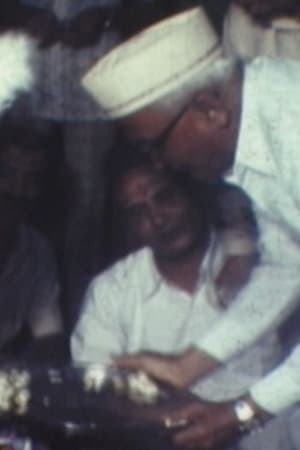
Rummaging for Pasts is an experimental juxtaposition of two cinematic documents: the video diary of an international archaeological excavation and a collection of assorted eight millimeter found footage of Indian weddings.
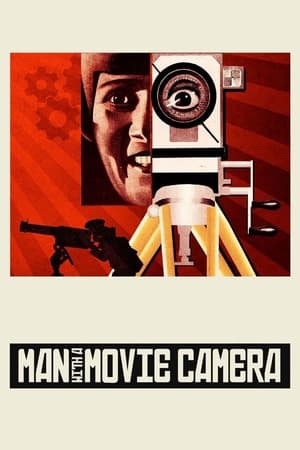
A cameraman wanders around with a camera slung over his shoulder, documenting urban life with dazzling inventiveness.
This is an experimental film featuring an allegorical audiovisual symphony of image, text (excerpts from works by Proust and verses from Rilke’s poetry) and music through the use of archival photographs taken from Illustration Magazine. It focuses on the urban establishment and links the wave of Western colonization to the period right before the Great War (1914-1918).
Experimental short film from Yugoslavia.
A cartoon with a very loose form, mostly following the very creation of images with the author's hand often in the shot.
Notes on Film 01 Else