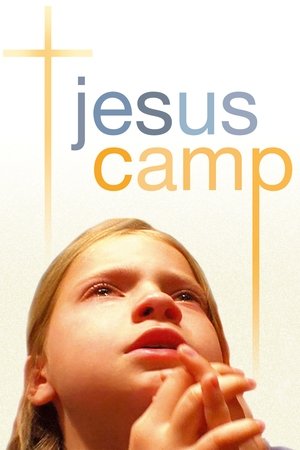
On April 19, 1993, in Waco, Texas, after several attempts at talks and negotiations, the American authorities stormed Mount Carmel, the religious campus of the prophet David Koresh at the head of the Davidian sect.
American Aloha: Hula Beyond Hawai’i shows the survival of the hula as a renaissance continues to grow beyond the islands. With the cost of living in Hawai'i estimated at 27 percent higher than the continental United States, large numbers of Hawaiians have left the islands to pursue professional and educational opportunities. Today, with more Native Hawaiians living on the mainland than in the state of Hawai'i, the hula has traveled with them. From the suburbs of Los Angeles to the San Francisco Bay Area, the largest Hawaiian communities have settled in California, and the hula continues to connect communities to their heritage on distant shores.
From time immemorial, the Bretons have fought many battles to safeguard their culture, rich in language, music and dance. However, Brittany was for a long time a forgotten land, neglected by the Republic which forbade its language. From the 1960s onwards, the agricultural revolution turned peasant life upside down. Its culture, which had long been supported by Catholic priests, was emancipated in the seventies, carried by a new breath of air that accompanied the Breton angers. The youth then reappropriated their language and culture. From the long years of relegation to their great anger, the Bretons have written a fascinating saga since the end of the 19th century.
When the Chinese Communist Party backtracks on its promise of autonomy to Hong Kong, teenager Joshua Wong decides to save his city. Rallying thousands of kids to skip school and occupy the streets, Joshua becomes an unlikely leader in Hong Kong and one of China’s most notorious dissidents.
Filmmaker Werner Herzog combs through the film archives of volcanologists Katia and Maurice Krafft to create a film that celebrates their legacy.
An exploration —manipulated and staged— of life in Las Hurdes, in the province of Cáceres, in Extremadura, Spain, as it was in 1932. Insalubrity, misery and lack of opportunities provoke the emigration of young people and the solitude of those who remain in the desolation of one of the poorest and least developed Spanish regions at that time.
This hard-hitting, eye opening documentary explores the teaching of the Seventh-day Adventist Church, it's origins and the changes which have occurred throughout the years. It examines the claims of the religion's founder, the late prophetess Ellen G. White, and compares her unique beliefs with Biblical truth. You will meet a number of former high-ranking church leaders, many of them fourth generation members, and discover what happened when they embarked on a journey to uncover the truth about their organization. You will be shocked by what they found.
An intimate portrait of the superb actress Gena Rowlands, icon of independent cinema. Together with her husband, legendary director John Cassavetes (1929-89), she lived an unusual life beyond the dream factory, a life in which reality and fiction were so perfectly intertwined that it made possible films that still today seem incredibly real.
Croquantes
A young mother’s mysterious death and her son’s subsequent kidnapping blow open a decades-long mystery about the woman’s true identity, and the murderous federal fugitive at the center of it all.
Mediocre
They are the secret protagonists of world history: dogs that became famous alongside powerful masters and mistresses. A four-legged friend helps to cultivate an image and can, depending on the calculations, make its owner appear sympathetic or threatening. In England, however, prime ministers have to get used to a cat...
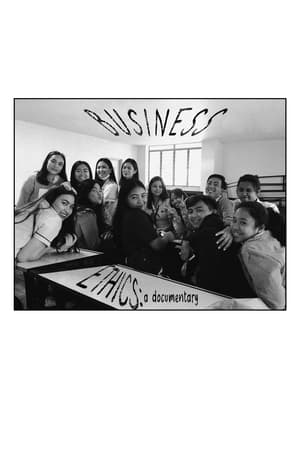
Xan García, in search of the meaning of things, interviews 13 classmates to discuss and reflect on life. They talk about death, love, happiness, and life itself. Finally, upon finishing high school, the 13 participants say goodbye and embrace the future that awaits them: the adult world. "An exhilarating story" - Ian Porto
In barely a century, French peasants have seen their world profoundly turned upside down. While they once made up the vast majority of the country, today they are only a tiny minority and are faced with an immense challenge: to continue to feed France. From the figure of the simple tenant farmer described by Emile Guillaumin at the beginning of the 20th century to the heavy toll paid by peasants during the Great War, from the beginnings of mechanization in the inter-war period to the ambivalent figure of the peasant under the Occupation, From the unbridled race to industrialization in post-war France to the realization that it is now necessary to rethink the agricultural model and invent the agriculture of tomorrow, the film looks back at the long march of French peasants.
Royaume-Uni, du Brexit au Bregret
THE ARYANS is Mo Asumang's personal journey into the madness of racism during which she meets German neo-Nazis, the US leading racist, the notorious Tom Metzger and Ku Klux Klan members in the alarming twilight of the Midwest. In The ARYANS Mo questions the completely wrong interpretation of "Aryanism" - a phenomenon of the tall, blond and blue-eyed master race.
Palermo, Sicily, Italy, 2017. Twenty-five years after the murders of anti-mafia judges Giovanni Falcone, on May 23, 1992, and Paolo Borsellino, on July 19, 1992; and on the occasion of the tributes held in memory of both heroes, skeptical photographer Letizia Battaglia, chronicler of their titanic combat, criticizes the opportunism of shady characters who, like businessman Ciccio Mira, profit from the commemoration of both tragedies.
October 1st, 1957. Dusk descends on Tiananmen Square, Peking. Fireworks crackle light across the night sky, above a city alive with National Day festivities and celebrations. Two intrepid New Zealand film-makers - Rudall and Ramai Te Miha Hayward - are there, documenting the life and times of communist China. The distinction of being the first English speaking foreigners to film unfettered in communist China was significant. The invitation to visit China was facilitated through the New Zealand China Friendship Society. They filmed in Canton, Shanghai, Peking (Beijing) and Wuhan. It was a small window of opportunity for Westerners to gaze on a country that was largely a mystery to the outside world since 1949. The unfortunate irony was that two of the documentaries; “Wonders of China”, and “Inside Red China”, were considered to be communist propaganda, and were not distributed outside of New Zealand.
On June 14, 1977, the eve of the first democratic elections after Franco's regime, Llorenç Soler and his crew go out into the street and ask passers-by which party they are going to vote for.
A feature-length documentary about our complex relationship with manufactured objects and, by extension, the people who design them.